

Motmot

ナンキョククジラドリ 対 ハシボソクジラドリ

Pachyptila desolata 対 Pachyptila belcheri

ナンキョククジラドリとハシボソクジラドリのクイズ
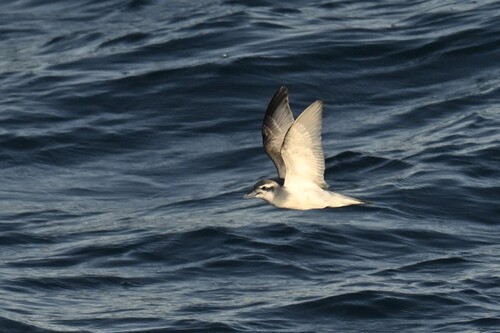
ナンキョククジラドリ (Pachyptila desolata) ナンキョククジラドリ
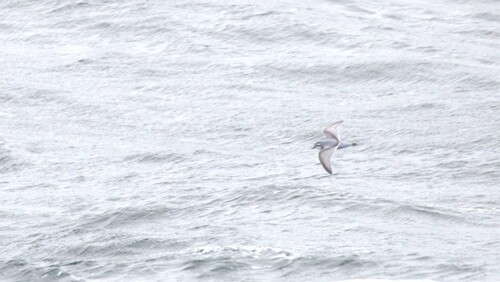
ハシボソクジラドリ (Pachyptila belcheri) ハシボソクジラドリ

メディア

読み込み中…

要点

ナンキョククジラドリとハシボソクジラドリは、すべての年齢において非常に似ており、青灰色の上面、白い下面、背中と翼に暗い'M'があります。最も信頼できるフィールドマークは、見える場合、くちばしです:ナンキョククジラドリは、明らかに幅が広く、短いくちばしを持ち、ハシボソクジラドリのくちばしは、より狭く、繊細です。両種は白い眉と黒い先端を持つくさび形の尾を示し、羽毛は特に海上ではフィールドでほとんど区別がつきません。分離は専門家でも難しく、ほとんどのフィールド識別は羽毛ではなく微妙な構造的違いに依存しています。

識別のコツ

  1. くちばしの形は重要なフィールドマーク:ナンキョククジラドリは幅広く短いくちばしを持ち、ハシボソクジラドリのくちばしは明らかに狭く、繊細です。この違いは微妙で、近距離または良い光の下で最もよく見えます;海上や飛行中に判断することはしばしば不可能です。
  2. サイズはわずかな手がかり:ナンキョククジラドリは最大のクジラドリですが、違いはわずかで、鳥が並んでいない限り信頼できません。
  3. 羽毛はほぼ同一:両種は青灰色の上面、白い下面、上翼に暗い'M'、白い眉、黒い先端を持つくさび形の尾を示します。羽毛による分離は信頼しないでください。
  4. 大覆羽と翼のパターン:ナンキョククジラドリの大覆羽はほぼ黒と記述されていますが、これはハシボソクジラドリとの一貫したまたは診断的な違いではなく、非常に似た翼のパターンを持っています。
  5. 顔のマーキング:ハシボソクジラドリは、目の下から首に向かって延びるより明確な暗い線を示すことがありますが、この特徴は微妙で変動があり、常に見えるわけではありません。
  6. 足の色:両方とも青または淡い青の足を持ち、これは分離のための有用なフィールドマークではありません。
  7. 尾のパターン:両種は黒い先端を持つ灰色のくさび形の尾を持ち、これは区別する特徴ではありません。
  8. 飛行スタイルと行動:両種は似たような飛行スタイルと採餌行動を持ち、行動による識別は使用しないでください。
  9. 年齢と換羽:これらの2種間に年齢特有または換羽に関連する違いは記述されていません;幼鳥と成鳥は似ています。
  10. 海上での識別は信頼できない:経験豊富な観察者でも、海上でこれらの種を区別できないことがよくあります;ほとんどのフィールド識別は、くちばしが明確に見えない限り、'prion sp.'として残すのが最良です。
  11. 文脈と範囲:両種は南極海で広範囲に重なり合っています;位置を主要なフィールドマークとして使用しないでください。
  12. 混合群れ:両種は混合クジラドリ群れで一緒に見られることがあり、識別をさらに難しくします。
  13. 写真:写真からの識別を試みる場合は、くちばしの形と幅に焦点を当てますが、角度や照明が誤解を招く可能性があることに注意してください。
  14. 声:フィールドでの分離に役立つ音声の違いは記述されていません。
  15. 要約:ほとんどのフィールド状況、特に海上では、ナンキョククジラドリとハシボソクジラドリの分離は、くちばしの非常に明確な視界なしには不可能です。疑わしい場合は、'prion sp.'として記録し、後でレビューするために構造的な印象をメモしてください。

大きさ

ナンキョククジラドリは最大のクジラドリ種で、平均体重は約156g [wikidata]ですが、ハシボソクジラドリはわずかに小さく、正確な体重データは提供されていません。実際には、このサイズの違いは微妙で、並んで見ない限りフィールドで診断的ではありません。両種は全体の長さと翼幅が似ていますが、ナンキョククジラドリは少しずんぐりして重い体に見えることがあります。

羽色

両種はクラシックなクジラドリの羽毛を共有しています:青灰色の上面、白い下面、上翼と背中に暗い'M'パターン、白い眉、黒い先端を持つくさび形の灰色の尾。ナンキョククジラドリの大覆羽はほぼ黒と記述されていますが、これはハシボソクジラドリとの分離のための信頼できるフィールドマークではなく、非常に似たパターンを示します。ハシボソクジラドリは、目の下から首に向かって延びる暗い線がやや目立つことがあり、これはナンキョククジラドリよりもわずかに強調されることがありますが、これは微妙で変動があります。これらの2種間に年齢特有の上翼または飛行パターンの違いは記述されておらず、成鳥と幼鳥は本質的に羽毛が同一です。海上では、経験豊富な観察者でも羽毛だけで区別することはしばしばできません。

行動

両種は外洋性で、ほとんどの生活を海で過ごし、主にくちばしを通して水を濾過することで動物プランクトンを食べます。彼らの飛行は浮力があり、滑空するもので、クジラドリに典型的で、フィールドでの分離を助ける行動の違いは記述されていません。両方とも混合クジラドリ群れで見られることがあり、識別をさらに複雑にします。

生息環境

ナンキョククジラドリとハシボソクジラドリは南極海に生息し、同様の外洋環境で見られます。フィールドでの生息地に基づく分離はなく、両種は特に非繁殖期に同じ地域で一緒に発生することがあります。

より良い説明を送る

比較と同じ項目を使ってください。文章はすぐに公開されます。

Antarctic Prion and Slender-billed Prion are extremely similar at all ages, with blue-grey upperparts, white underparts, and a dark 'M' across the back and wings. The most reliable field mark, when visible, is the bill: Antarctic Prion has a noticeably broader, stubbier bill, while Slender-billed Prion's bill is narrower and more delicate. Both species show a white eyebrow and wedge-shaped tail with a black tip, and their plumage is nearly indistinguishable in the field, especially at sea. Separation is challenging even for experts, and most field identifications rely on subtle structural differences rather than plumage.

  1. Bill shape is the key field mark: Antarctic Prion has a broader, stubbier bill, while Slender-billed Prion's bill is noticeably narrower and more delicate. This difference is subtle and best seen at close range or in good light; it is often impossible to judge at sea or in flight.
  2. Size is only a minor clue: Antarctic Prion is the largest prion, but the difference is slight and not reliable unless birds are side by side.
  3. Plumage is nearly identical: Both species show blue-grey upperparts, white underparts, a dark 'M' across the upperwings, a white eyebrow, and a wedge-shaped tail with a black tip. Do not rely on plumage for separation.
  4. Greater coverts and wing pattern: Antarctic Prion's greater coverts are described as near black, but this is not a consistent or diagnostic difference from Slender-billed Prion, which has a very similar wing pattern.
  5. Facial markings: Slender-billed Prion may show a more distinct dark line below the eye extending toward the neck, but this feature is subtle and variable, and not always visible.
  6. Feet color: Both have blue or pale blue feet, which is not a useful field mark for separation.
  7. Tail pattern: Both species have a grey, wedge-shaped tail with a black tip; this is not a distinguishing feature.
  8. Flight style and behavior: Both species have similar flight styles and feeding behaviors; do not use behavior for identification.
  9. Age and molt: No age-specific or molt-related differences are described between these two species; juveniles and adults look alike.
  10. At-sea identification is unreliable: Even experienced observers often cannot distinguish these species at sea; most field identifications are best left as 'prion sp.' unless the bill can be clearly seen.
  11. Context and range: Both species overlap extensively in the Southern Ocean; do not use location as a primary field mark.
  12. Mixed flocks: Both species may occur together in mixed prion flocks, making identification even more challenging.
  13. Photographs: If attempting identification from photos, focus on bill shape and width, but be aware that angles and lighting can be misleading.
  14. Voice: No vocal differences are described or useful for separation in the field.
  15. Summary: In most field situations, especially at sea, separation of Antarctic and Slender-billed Prion is not possible without an exceptionally clear view of the bill. When in doubt, record as 'prion sp.' and note any structural impressions for later review.

Antarctic Prion is the largest prion species, with an average mass of about 156 g [wikidata], while Slender-billed Prion is slightly smaller, though precise mass data is not provided. In practice, this size difference is subtle and rarely diagnostic in the field unless seen side by side. Both species are similar in overall length and wingspan, but Antarctic Prion may appear a bit bulkier and heavier-bodied.

Both species share the classic prion plumage: blue-grey upperparts, white underparts, a dark 'M' pattern across the upperwings and back, a white eyebrow, and a wedge-shaped grey tail with a black tip. Antarctic Prion's greater coverts are described as near black, but this is not a reliable field mark for separation from Slender-billed Prion, which shows a very similar pattern. Slender-billed Prion is noted for a dark line extending from below the eye almost to the neck, which may be slightly more pronounced than in Antarctic Prion, but this is subtle and variable. No age-specific upperwing or flight pattern differences are described between these two species, and both adults and immatures are essentially identical in plumage. At sea, even experienced observers often cannot distinguish them by plumage alone.

Both species are pelagic and spend most of their lives at sea, feeding primarily on zooplankton by filtering water through their bills. Their flight is buoyant and gliding, typical of prions, and no behavioral differences are noted that would aid in field separation. Both may be seen in mixed prion flocks, further complicating identification.

Both Antarctic and Slender-billed Prions inhabit the Southern Ocean and are found in similar pelagic environments. There is no habitat-based separation in the field, as both species can occur together in the same areas, especially during non-breeding seasons.

変更を破棄しますか?

保存していない編集があります。今離れると失われます。

ナンキョククジラドリ · ハシボソクジラドリ · 苦手な鳥