

Motmot

アメリカメンフクロウ 対 シロフクロウ

Tyto furcata 対 Bubo scandiacus

アメリカメンフクロウとシロフクロウのクイズ
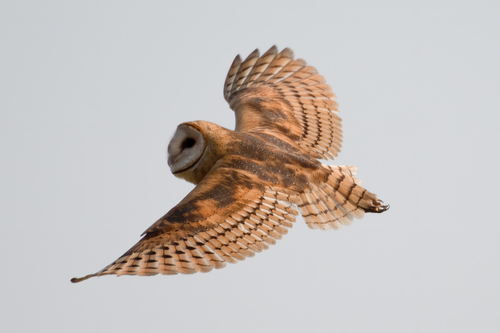
アメリカメンフクロウ (Tyto furcata) アメリカメンフクロウ
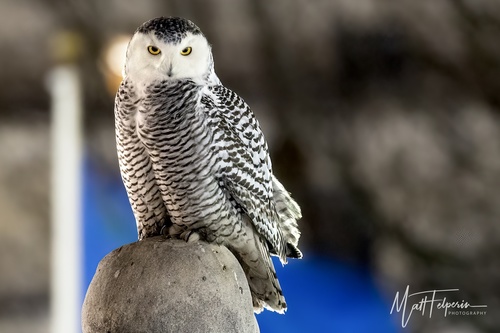
シロフクロウ (Bubo scandiacus) シロフクロウ

メディア

読み込み中…

要点

アメリカメンフクロウとシロフクロウを区別する最も信頼できるフィールドマークは、全体の色と顔の構造です:メンフクロウは特徴的なハート型の淡い(しばしば白い)顔と淡い、軽く斑点のある体を持ち、シロフクロウはよりがっしりとしており、主に白く、明るい黄色の目を持つ丸い頭をしています。飛行中、メンフクロウは長く広い翼と短く四角い尾を示し、しばしばぶら下がった羽毛のある脚を持っていますが、シロフクロウは広い翼と丸く短い尾を持ち、より重く見えます。幼鳥と雌のシロフクロウは重く縞模様や斑点があることがありますが、決してメンフクロウのハート型の顔の円盤を示すことはありません。両種は遠くから見ると淡く見えることがありますが、構造と顔の特徴が決定的です。

識別のコツ

  1. ハート型の顔(メンフクロウのみ): メンフクロウは明るい白またはバフの特徴的で平らなハート型の顔の円盤を持ち、黒い目があります。シロフクロウは丸い頭を持ち、ハート型の円盤はなく、黄色い目を持っています。
  2. 全体の色: シロフクロウは主に白く、時々重い茶色の縞模様や斑点(特に雌や幼鳥)がありますが、決してメンフクロウの細かい斑点や淡い茶色/灰色のトーンを示すことはありません。メンフクロウは淡いですが、決して純白ではなく、常に上面に淡い茶色または灰色の部分を示します。
  3. 翼と尾のパターン(すべての年齢): メンフクロウは長く広い翼と短く四角い尾を持ち、淡い茶色と暗い帯がありますが、太い縞模様はありません。シロフクロウは広い翼と短く丸い尾を持ち、雌と幼鳥は翼と尾に茶色の縞模様を示し、雄はほとんど無地です。
  4. 目の色: メンフクロウは黒い目を持ち、シロフクロウは明るい黄色の目を持っています。これは近距離での診断に役立ちます。
  5. 止まり方: シロフクロウは直立して止まり、がっしりとして丸みを帯びて見え、しばしば地面や低い柱に止まります。メンフクロウはスリムで、しばしば空洞や梁に止まります。
  6. 飛行スタイル: メンフクロウは浮遊感のある波打つ静かな飛行をし、しばしば脚をぶら下げています。シロフクロウは強く直接的な翼の打撃で飛び、空中でより重く見えます。
  7. 脚と爪: メンフクロウは長い羽毛のある脚を持ち、飛行中にぶら下がることがあります。シロフクロウも羽毛のある脚を持っていますが、脚は短く、ぶら下がることは少ないです。
  8. 生息地の文脈: メンフクロウは人間の構造物、農地、開けた国と関連しており、シロフクロウはツンドラ、開けた野原の鳥であり、建物の近くにはめったにいません。
  9. 性別と年齢の混同: 雌と幼鳥のシロフクロウは重く縞模様があり、より暗く見えることがありますが、決してメンフクロウのハート型の顔や細かい斑点を持つことはありません。メンフクロウの雌はより斑点が多いですが、常に特徴的な顔の円盤を示します。
  10. 頭の形: メンフクロウは平らで広い顔を持ち、シロフクロウは丸くコンパクトな頭を持っています。
  11. 顔の模様: シロフクロウは頭頂や顔の周りに淡い暗い斑点を示すことがありますが、決してメンフクロウの均一なハート型の輪郭を持つことはありません。
  12. くちばしと爪の色: メンフクロウのくちばしは淡い角から暗いバフまであり、シロフクロウのくちばしはあまり目立ちませんが暗いです。爪の色は信頼できるフィールドマークではありません。
  13. 声: フィールドでの区別には診断的ではありません;両者とも静かで、呼び声は非常に異なりますが、直接比較ではめったに聞かれません。
  14. 換羽と羽毛の摩耗: フィールドでの区別には役立ちません。
  15. 季節的文脈: シロフクロウは冬の暴発時に南部地域でのみ見られる可能性があり、メンフクロウは適切な生息地で年間を通じて生息しています。

大きさ

シロフクロウはアメリカメンフクロウよりも明らかに大きく、がっしりとしています。ここでは正確な測定値は提供されていませんが、シロフクロウは大きなフクロウとして説明されており、Buboフクロウに典型的な力強く重い体型を持っています。メンフクロウは中型で、よりスリムで細長い外観を持ち、シロフクロウと比較して頭と体が明らかに小さいです。フィールドでは、シロフクロウは止まっているときに大きく丸い塊のように見えることが多く、メンフクロウはスリムでより繊細に見えます。

羽色

行動

メンフクロウは長く広い翼を持つ特徴的な波打つ飛行をし、しばしば羽毛のある脚をぶら下げて飛びます。彼らの飛行は静かで浮遊感があり、最も多くは夕暮れや夜に狩りをしているのが見られます。シロフクロウは昼間に開けた場所に止まっているのが見られることが多く、しばしば地面や低い止まり木に座り、白い塊のように見えます。彼らの飛行は力強く直接的で、広い翼と重く丸い体を持っています。シロフクロウは昼行性または薄明かりの時間に活動し、特に北極の夏に、メンフクロウのように低く不規則に飛ぶことは少ないです。

生息環境

アメリカメンフクロウは農地、草地、または湿地の近くにしばしば見られる広範な開けた生息地に生息し、しばしば納屋や他の人間の構造物に止まったり巣を作ったりします。シロフクロウは開けた北極のツンドラの鳥であり、森林に入ることはまれで、冬には繁殖範囲の南部で開けた野原、沿岸の砂丘、または空港で見られることがあります。納屋で淡いフクロウを見た場合、それはほぼ確実にメンフクロウです;ツンドラや冬の開けた野原にいる淡いフクロウはシロフクロウである可能性が高いです。

より良い説明を送る

比較と同じ項目を使ってください。文章はすぐに公開されます。

The most reliable field mark to separate American Barn Owl from Snowy Owl is overall color and facial structure: Barn Owls have a distinctive heart-shaped, pale (often white) face and a pale, lightly speckled body, while Snowy Owls are bulkier, mostly white, and have a rounded head with bright yellow eyes. In flight, Barn Owls show long, broad wings and a short, squarish tail, often with dangling feathered legs, while Snowy Owls appear heavier with broad wings and a rounded, short tail. Juvenile and female Snowy Owls can be heavily barred or spotted, but never show the heart-shaped facial disk of Barn Owl. Both species can appear pale at a distance, but structure and facial features are decisive.

  1. Heart-shaped face (Barn Owl only): Barn Owls have a distinctive, flat, heart-shaped facial disk that is bright white or buff, with black eyes. Snowy Owls have a rounded head, no heart-shaped disk, and yellow eyes.
  2. Overall color: Snowy Owls are mostly white, sometimes with heavy brown barring or spots (especially females and juveniles), but never show the fine speckling or pale brown/gray tones of Barn Owl. Barn Owls are pale but never pure white, and always show some pale brown or gray on the upperparts.
  3. Wing and tail pattern (all ages): Barn Owls have long, broad wings and a short, squarish tail with light brown and darker bands but no bold barring. Snowy Owls have broad wings and a short, rounded tail; females and juveniles show brown barring on wings and tail, males are nearly unmarked.
  4. Eye color: Barn Owls have black eyes; Snowy Owls have bright yellow eyes. This is diagnostic at close range.
  5. Perched posture: Snowy Owls perch upright, appearing bulky and rounded, often on the ground or low posts. Barn Owls are slimmer, often perched in cavities or on rafters.
  6. Flight style: Barn Owls fly with buoyant, undulating, silent flight, often with legs dangling. Snowy Owls fly with strong, direct wingbeats and appear heavier in the air.
  7. Legs and toes: Barn Owls have long, feathered legs that may dangle in flight. Snowy Owls also have feathered legs, but their legs are shorter and less likely to dangle.
  8. Habitat context: Barn Owls are associated with human structures, farmland, and open country; Snowy Owls are birds of the tundra, open fields, and rarely near buildings.
  9. Sex and age confusion: Female and juvenile Snowy Owls can be heavily barred and appear darker, but never have the heart-shaped face or fine speckling of Barn Owl. Barn Owl females are more spotted below, but always show the characteristic facial disk.
  10. Head shape: Barn Owls have a flat, broad face; Snowy Owls have a rounded, compact head.
  11. Facial markings: Snowy Owls may show faint dark spots on the crown or around the face, but never the even, heart-shaped outline of Barn Owl.
  12. Bill and talon color: Barn Owl bills are pale horn to dark buff; Snowy Owl bills are less visible but are dark. Talon color is not a reliable field mark.
  13. Voice: Not diagnostic in the field for separation; both can be silent and their calls are very different, but rarely heard in direct comparison.
  14. Molt and feather wear: Not useful for separation in the field.
  15. Seasonal context: Snowy Owls are only likely in southern areas during irruptions in winter; Barn Owls are resident year-round in suitable habitat.

Snowy Owl is distinctly larger and bulkier than American Barn Owl. While precise measurements are not provided here, Snowy Owls are described as large owls, with a powerful, heavy build typical of Bubo owls. Barn Owls are medium-sized, with a more slender, elongated appearance and a noticeably smaller head and body compared to Snowy Owl. In the field, Snowy Owl often appears as a large, rounded lump when perched, while Barn Owl is slimmer and more delicate.

  • Juveniles and immatures: Juvenile Snowy Owls are dark gray-brown above with white eyebrows and facial areas, and develop dark barring on white as they age. They can be heavily mottled or blotched, especially on the back and wings. American Barn Owl juveniles are covered in white down, quickly developing the heart-shaped facial disk; their flight feathers are pale brown with darker bands, and the underparts are white to buff with fine speckling.

  • Adults: Adult Barn Owls are pale overall, with a white or buff unpatterned or finely speckled underside, pale brown to gray upperparts with fine speckles, and a bright white (sometimes brownish) heart-shaped face. The remiges and rectrices are light brown with darker bands, but never show bold barring or heavy spots. Adult Snowy Owls are mostly white, with males being purer white and females more heavily barred or spotted with brown, especially on the crown, flanks, and upper breast. Snowy Owl flight and tail feathers are faintly barred brown in females, and more sparsely marked in males. Snowy Owls lack the heart-shaped facial disk and have yellow eyes, while Barn Owls have black eyes.

  • Sex and age variation: Barn Owl females are larger and more heavily spotted below than males, but both sexes are paler and less marked than even the palest Snowy Owl females. Snowy Owl males can be nearly pure white, but most have some dark spots; females are always more marked, but rarely as pale as the whitest males. Some Snowy Owls grow paler with age, but this is variable.

Barn Owls have a distinctive undulating flight with long, broad wings and often dangle their feathered legs in flight. Their flight is silent and buoyant, and they are most often seen hunting at dusk or night. Snowy Owls are more likely to be seen perched in the open during the day, often sitting on the ground or low perches, appearing as a white lump. Their flight is powerful and direct, with broad wings and a heavy, rounded body. Snowy Owls are diurnal or crepuscular, especially in the Arctic summer, and are less likely to be seen flying low and erratically like Barn Owls.

American Barn Owls are found in a wide range of open habitats, often near farmland, grasslands, or marshes, and frequently roost or nest in barns or other human structures. Snowy Owls are birds of the open Arctic tundra, rarely venturing into forests, and in winter may be found in open fields, coastal dunes, or airports far south of their breeding range. If you see a pale owl in a barn, it is almost certainly a Barn Owl; a pale owl on the tundra or sitting in an open field in winter is likely a Snowy Owl.

変更を破棄しますか?

保存していない編集があります。今離れると失われます。

アメリカメンフクロウ · シロフクロウ · 苦手な鳥