

Motmot

コシジロアジサシ 対 コグンカンドリ

Onychoprion aleuticus 対 Fregata ariel

コシジロアジサシとコグンカンドリのクイズ
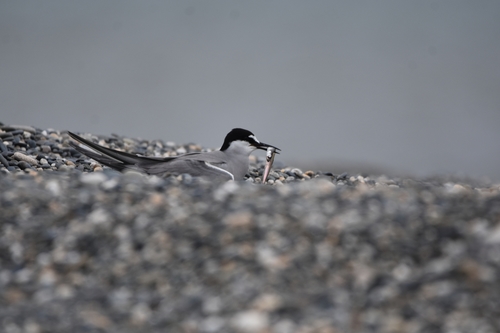
コシジロアジサシ (Onychoprion aleuticus) コシジロアジサシ
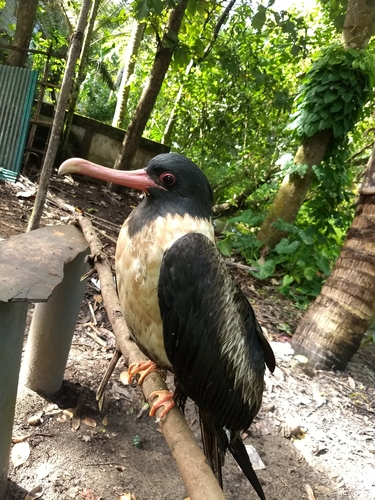
コグンカンドリ (Fregata ariel) コグンカンドリ

メディア

読み込み中…

要点

コシジロアジサシとコグンカンドリを区別する最も信頼できるフィールドマークは全体の構造です:コシジロアジサシは短く尖ったくちばしと適度に分かれた尾を持つコンパクトな中型のアジサシであり、コグンカンドリははるかに大きく、長い翼を持つ海鳥で、深く分かれた尾と長く細いくちばしを持っています。飛行中、コシジロアジサシ(特に成鳥)は、二次羽に暗いバーがある淡いアンダーウィングを示し、コグンカンドリ(すべての年齢)は長く狭い翼とアンダーウィングの「脇の下」部分に特徴的な白いスパーを持っています(特に幼鳥と雌)。成鳥のコシジロアジサシは白い額と黒い帽子を持ち、コグンカンドリのオスはすべて黒で赤い喉の袋を持ち、雌と幼鳥は腹部と襟に広範囲に白を持っています。これらの2種は並んで混同されることは非常に考えにくいですが、遠くのまたは未熟な鳥が飛行中に一般的な形状や翼のパターンだけが見えた場合には混乱を引き起こす可能性があります。

識別のコツ

  1. Size and shape: コグンカンドリはコシジロアジサシに比べて巨大です—ほぼ2倍の長さで、翼幅は2倍以上、劇的に長く深く分かれた尾を持つ鳥を探してください。アジサシはコンパクトで、短いくちばしとあまり誇張されていない尾を持っています。
  2. Bill shape: コシジロアジサシは短く尖った黒いくちばしを持ち、コグンカンドリは長く細いフック状のくちばし(雌/幼鳥は淡色、オスは暗色)を持っています。これは、鳥が止まっているか低く飛んでいる場合でも、遠くからでも見えます。
  3. Tail fork: コシジロアジサシは適度に分かれた尾を持ち、しばしば閉じた状態で保持されます。コグンカンドリの尾は非常に長く深く分かれており、特に飛行中にV字型やハサミ型で後ろに引きずられることがよくあります。
  4. Underwing pattern (age-specific): 成鳥のコシジロアジサシは二次羽に暗いバーがある淡いアンダーウィングを示し、幼鳥は通常このバーを欠きます。コグンカンドリ(すべての年齢)はアンダーウィングの「脇の下」部分に白い「スパー」またはパッチを示し(特に雌と幼鳥)、決して暗いバーはありません。暗い二次羽のバーが見えた場合はコシジロアジサシ(成鳥)であり、白いスパーが見えた場合はコグンカンドリです。
  5. Forehead and cap: コシジロアジサシ(すべての年齢)は白い額と黒い帽子を持ち、コグンカンドリはこのパターンを示しません。カンムリカイツブリのオスはすべて黒い頭を持ち、雌は白い襟と胸を持ち、幼鳥は広範囲に白を持っていますが、決して白い額と黒い帽子は持ちません。
  6. Upperwing pattern: コシジロアジサシは暗い先端を持つ均一な灰色の上羽を持ち、コグンカンドリのオスは上羽に淡いバーを持っていますが、全体的に翼ははるかに長く狭いです。
  7. Leg color: コシジロアジサシは黒い脚を持ち、コグンカンドリの脚は短く、簡単には見えませんが、区別のためのフィールドマークではありません。
  8. Flight style: コシジロアジサシは水面近くを低く飛び、小魚を捕るために水面にダイビングしますが、滅多に急降下したり泳いだりしません。機敏ですが、カンムリカイツブリほど空中に特化しているわけではありません。コグンカンドリは空の達人であり、水面に着陸することはほとんどなく、浮遊感のある楽な飛行と長い滑空を持っています。しばしば高く舞い上がり、他の海鳥を襲って食べ物を盗むことで有名ですが、表面から飛ぶ魚やイカを捕まえることもあります。コシジロアジサシは沿岸のコロニーや近海で見られることが多いですが、コグンカンドリは開けた熱帯または亜熱帯の海の上空を高く舞っていることがよくあります。
  9. Perched posture: コシジロアジサシは地面や低いポストに止まり、コンパクトで直立した姿勢をしています。コグンカンドリは木や崖/島にしか止まらず、休んでいるときは長い翼を持つ不格好な姿に見えます。
  10. Red throat sac: 成熟したオスのコグンカンドリだけが赤い喉の袋を示し、表示しているときだけです。これを見た場合は、カンムリカイツブリの診断になります。
  11. White collar and underparts: 雌と幼鳥のコグンカンドリは白い襟と胸を持っていますが、幼鳥のコシジロアジサシも白い襟と腹部を持っています。しかし、全体の構造とアンダーウィングのパターンは依然としてそれらを区別します。
  12. Habitat and range: コシジロアジサシは亜北極のアラスカ/シベリアで見られ、沿岸やコロニーに生息しています。コグンカンドリは厳密に熱帯/亜熱帯で、ペラジックです。亜北極にいる場合、ほぼ確実にカンムリカイツブリではありません。
  13. Kleptoparasitism: 飛行中に他の海鳥を襲って食べ物を盗む鳥を観察した場合、それはアジサシではなくカンムリカイツブリの可能性が高いです。
  14. Sex differences: コシジロアジサシの性別は似ていますが、コグンカンドリの雌は大きく、白い襟と胸、赤い目のリングを持ち、オスはすべて黒で赤い喉の袋を持っています。
  15. Juvenile confusion: 両種の幼鳥は頭/首の部分に白を示しますが、コシジロアジサシの幼鳥だけが白い額と黒い帽子、コンパクトなアジサシの形を持っています。カンムリカイツブリの幼鳥は細長く、白いアンダーウィングのスパーを持ち、黒い帽子はありません。

大きさ

コグンカンドリはコシジロアジサシよりもはるかに大きく、ずんぐりしています。コシジロアジサシは約112gで、32〜39cmの長さで、75〜80cmの翼幅を持っています。コグンカンドリは806g(オス/雌の範囲625〜955g)、66〜81cmの長さで、155〜193cmの翼幅を持ち、アジサシのほぼ2倍です。カンムリカイツブリの翼ははるかに長く狭く、尾はより劇的に分かれています。遠くからでも、カンムリカイツブリのサイズと比率は、どのアジサシとも著しく異なります。

羽色

幼鳥と成鳥のコシジロアジサシはどちらも白い額と黒い帽子を持っていますが、幼鳥は白い襟と広範囲に白い額を持ち、白い腹部と白い縁取りのある灰色の尾を持っています。繁殖羽の成鳥は、診断的な白い額、黒い帽子、中灰色の背中、暗い灰色の腹部、白い尾と尾羽を持ち、アンダーウィングは淡い色で二次羽に暗いバーがあります(成鳥)が、幼鳥は通常この暗いバーを欠きます。非繁殖の成鳥はあまり知られていませんが、繁殖鳥に似ていると考えられ、白い斑点のある冠と灰色の尾を持っています。コグンカンドリのオスはほとんどすべて黒で、アンダーウィングにスパーとして広がる白い側面の斑点と上羽に淡いバーを持っています。彼らの赤い喉の袋は表示のときにのみ見えます。雌は黒い頭と首、白い襟と胸、アンダーウィングに白いスパーを持ち、狭い赤い目のリングも存在します。幼鳥と未熟な個体はアンダーウィングの「脇の下」部分(スパー)に白を示し、これは重要なマークです。カンムリカイツブリは決して白い額やコシジロアジサシのようなコンパクトなパターンを示さず、アンダーウィングのパターンは白いスパーが支配しており、暗い二次羽のバーではありません。

行動

コシジロアジサシは水面近くを低く飛び、小魚を捕るために水面にダイビングしますが、滅多に急降下したり泳いだりしません。機敏ですが、カンムリカイツブリほど空中に特化しているわけではありません。コグンカンドリは空の達人であり、水面に着陸することはほとんどなく、浮遊感のある楽な飛行と長い滑空を持っています。しばしば高く舞い上がり、他の海鳥を襲って食べ物を盗むことで有名ですが、表面から飛ぶ魚やイカを捕まえることもあります。コシジロアジサシは沿岸のコロニーや近海で見られることが多いですが、コグンカンドリは開けた熱帯または亜熱帯の海の上空を高く舞っていることがよくあります。

生息環境

コシジロアジサシは亜北極のアラスカと東シベリアで繁殖し、通常沿岸のコロニーで見られ、浅い近海の水域、潮流、時には川や淡水の池で採餌します。これは北部の涼しい地域の鳥です。コグンカンドリは厳密に熱帯および亜熱帯で、インド洋、太平洋、アトランティック(ブラジル)海の暖かい海と島々の上空で見られます。遠隔の島で繁殖するためにしか陸に来ることはありません。これらの2種は典型的な繁殖地や採餌地で重なり合うことはありません。

より良い説明を送る

比較と同じ項目を使ってください。文章はすぐに公開されます。

The most reliable field mark to separate Aleutian Tern from Lesser Frigatebird is overall structure: Aleutian Tern is a compact, medium-sized tern with a short, pointed bill and moderately forked tail, while Lesser Frigatebird is a much larger, long-winged seabird with a deeply forked tail and long, slender bill. In flight, Aleutian Tern (especially adults) shows a pale underwing with a dark bar on the secondaries, while Lesser Frigatebird (all ages) has long, narrow wings and a distinctive white spur in the underwing 'armpit' area (especially in juveniles and females). Adult Aleutian Tern has a white forehead and black cap; Lesser Frigatebird males are all black with a red throat sac, while females and juveniles have extensive white on the underparts and collar. These two are extremely unlikely to be confused side-by-side, but distant or immature birds in flight can cause confusion if only general shape and wing pattern are glimpsed.

  1. Size and shape: Lesser Frigatebird is enormous compared to Aleutian Tern—look for a bird nearly twice as long, with a wingspan more than double, and a dramatically long, deeply forked tail. Terns are compact, with short bills and less exaggerated tails.
  2. Bill shape: Aleutian Tern has a short, pointed, black bill; Lesser Frigatebird has a long, slender, hooked bill (pale in females/juveniles, dark in males). This is visible even at a distance if the bird is perched or flying low.
  3. Tail fork: Aleutian Tern has a moderately forked tail, often held closed. Lesser Frigatebird's tail is extremely long and deeply forked, often trailing behind in a V or scissor shape, especially noticeable in flight.
  4. Underwing pattern (age-specific): Adult Aleutian Tern shows a pale underwing with a dark bar on the secondaries; juveniles usually lack this bar. Lesser Frigatebird (all ages) shows a white 'spur' or patch in the underwing 'armpit' area (especially in females and juveniles), never a dark bar. If you see a dark secondary bar, it's Aleutian Tern (adult); if you see a white spur, it's Lesser Frigatebird.
  5. Forehead and cap: Aleutian Tern (all ages) has a white forehead and black cap; Lesser Frigatebird never shows this pattern. Frigatebird males are all black-headed, females have a white collar and breast, and juveniles have extensive white but never a white forehead with black cap.
  6. Upperwing pattern: Aleutian Tern has uniform grey upperwings with dark-tipped primaries; Lesser Frigatebird males have a pale bar on the upperwing, but the wing is much longer and narrower overall.
  7. Leg color: Aleutian Tern has black legs; Lesser Frigatebird's legs are short and not easily seen, but are not a field mark for separation.
  8. Flight style: Aleutian Tern flies with rapid, shallow wingbeats, often close to the water. Lesser Frigatebird soars and glides effortlessly, often high above the water, with slow, elastic wingbeats and long glides.
  9. Perched posture: Aleutian Tern perches on the ground or low posts, looking compact and upright. Lesser Frigatebird rarely perches except in trees or on cliffs/islands, and looks gangly and long-winged when at rest.
  10. Red throat sac: Only adult male Lesser Frigatebird shows a red gular sac, and only when displaying. If you see this, it's diagnostic for frigatebird.
  11. White collar and underparts: Female and juvenile Lesser Frigatebird have a white collar and breast, but so do juvenile Aleutian Terns (with a white collar and underparts). However, the overall structure and underwing pattern will still separate them.
  12. Habitat and range: Aleutian Tern is found in subarctic Alaska/Siberia, nearshore or in colonies; Lesser Frigatebird is strictly tropical/subtropical and pelagic. If you are in the subarctic, it's almost certainly not a frigatebird.
  13. Kleptoparasitism: If you observe a bird harassing other seabirds in flight to steal food, it's likely a frigatebird, not a tern.
  14. Sex differences: Aleutian Tern sexes are similar; Lesser Frigatebird females are larger, with a white collar and breast, and a red eye-ring, while males are all black with a red throat sac.
  15. Juvenile confusion: Both species' juveniles show white in the head/neck area, but only Aleutian Tern juveniles have a white forehead with black cap and a compact tern shape; frigatebird juveniles are lanky, with a white underwing spur and no black cap.

Lesser Frigatebird is vastly larger and bulkier than Aleutian Tern. Aleutian Tern weighs about 112 g and is 32–39 cm long with a 75–80 cm wingspan. Lesser Frigatebird is 806 g (male/female range 625–955 g), 66–81 cm long, and has a wingspan of 155–193 cm—nearly double the tern's. The frigatebird's wings are much longer and narrower, and its tail is more dramatically forked. Even at a distance, the size and proportions of the frigatebird are strikingly different from any tern.

Juvenile and adult Aleutian Terns both show a white forehead and black cap, but juveniles have a white collar and extensive white on the forehead, with white underparts and a gray tail edged white. Adults in breeding plumage have a diagnostic white forehead, black cap, mid-grey mantle, darkish grey underparts, and a white rump and tail; the underwing is whitish with a dark bar on the secondaries (adults), but juveniles usually lack this dark bar. Non-breeding adults are poorly known but thought to resemble breeding birds, with a white-speckled crown and gray tail. Lesser Frigatebird males are mostly all black with a white flank patch extending as a spur onto the underwing, and a pale bar on the upperwing; their red throat sac is only visible in display. Females have a black head and neck, white collar and breast, and a white spur on the underwing; a narrow red eye-ring is also present. Juveniles and immatures show white in the underwing 'armpit' area (spur), which is a key mark. Frigatebirds never show the white forehead or compact tern-like pattern of Aleutian Tern, and their underwing pattern is dominated by the white spur, not a dark secondary bar.

Aleutian Tern forages by flying low over water and surface-dipping for small fish, rarely plunge-diving or swimming. It is agile but not as aerially specialized as a frigatebird. Lesser Frigatebird is a master of the air, rarely landing on water, with a buoyant, effortless flight and long glides. It often soars high, and is famous for kleptoparasitism—harassing other seabirds to steal food—though it also catches flying fish and squid from the surface. Aleutian Tern is more likely to be seen in coastal colonies or nearshore waters, while Lesser Frigatebird is often seen soaring high over open tropical or subtropical seas.

Aleutian Tern breeds in subarctic Alaska and eastern Siberia, usually in coastal colonies, and forages in shallow nearshore waters, tidal rips, and sometimes rivers or freshwater ponds. It is a bird of northern, cooler regions. Lesser Frigatebird is strictly tropical and subtropical, found over warm oceans and islands in the Indian, Pacific, and Atlantic (Brazil) Oceans. It rarely comes to land except to breed on remote islands. The two species do not overlap in typical breeding or foraging habitats.

変更を破棄しますか?

保存していない編集があります。今離れると失われます。

コシジロアジサシ · コグンカンドリ · 苦手な鳥