

Motmot

エインリーウミツバメ 対 オーストンウミツバメ

Hydrobates cheimomnestes 対 Hydrobates tristrami

エインリーウミツバメとオーストンウミツバメのクイズ

エインリーウミツバメ (Hydrobates cheimomnestes) エインリーウミツバメ
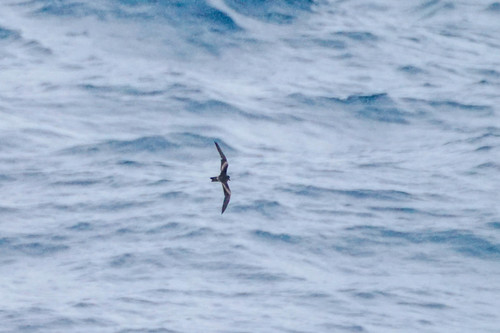
オーストンウミツバメ (Hydrobates tristrami) オーストンウミツバメ

メディア

読み込み中…

要点

エインリーウミツバメとオーストンウミツバメを区別する最も信頼できるフィールドマークは、尾と上翼のパターンです:エインリーウミツバメは明確な白い尾の斑点(U字型で、しばしば中央に暗い部分があります)を示しますが、オーストンウミツバメは全体的に暗く、わずかに淡い尾と上翼に淡い灰色のバーがあります。オーストンウミツバメはまた、はるかに大きく、ずんぐりした体形で、長く角ばった翼と重い体格を持っています。両種は暗いウミツバメですが、サイズ、尾の形、尾のコントラストが飛行中の鍵となります。構造と飛行スタイルも役立ちます:エインリーウミツバメは中型でより繊細ですが、オーストンウミツバメは最大のウミツバメで、力強くすすけた外観を持っています。

識別のコツ

  1. 白い尾の斑点(エインリーウミツバメのみ): すべての年齢と季節において、エインリーウミツバメは大胆なU字型の白い尾の斑点を示し、しばしば中央に暗い部分があります。これは飛行中に最も信頼できるマークです。オーストンウミツバメは明るい白い尾を示すことはなく、わずかに淡い部分のみです。
  2. 上翼のパターン: オーストンウミツバメは上翼に淡い灰色のバーがあり、良い光の下で見ることができますが、エインリーウミツバメの上翼は均一に暗いです。これは、尾が見えないときに遠くの鳥を区別するのに役立ちます。
  3. 全体のサイズ: オーストンウミツバメはエインリーウミツバメよりもはるかに大きくずんぐりしています(24.5–27 cm、約84 g)が、エインリーウミツバメは18 cm(はるかに軽い)です。混合群れや経験がある場合、オーストンウミツバメは存在する最大のウミツバメとして際立ちます。
  4. 翼の形: オーストンウミツバメは長く角ばった翼を持ち、より力強く安定した飛行を提供します。エインリーウミツバメの翼は長いですが、鈍い先端を持ち、飛行はよりひらひらして繊細です。
  5. 尾の形: エインリーウミツバメの尾は適度に長く分かれ、飛行中にしばしば明らかです。オーストンウミツバメの尾はあまり深く分かれておらず、より四角いか浅く切り込みが入っているように見えます。
  6. 羽毛のトーン: 両者は暗いすすけた茶色から黒っぽいですが、エインリーウミツバメは摩耗すると茶色く見えることがあります。オーストンウミツバメは均一にすすけており、わずかなコントラストは淡い尾と翼のバーだけです。
  7. くちばしの構造: オーストンウミツバメは、頭足類の食事に適したより太いくちばしを持っています。これは遠くからは微妙ですが、近くの写真やスコープで見ることができます。
  8. 足の突出: エインリーウミツバメの足は飛行中に尾を越えて伸びません。オーストンウミツバメにはそのような注記はありませんが、これは主要なフィールドマークではありません。
  9. 飛行スタイル: オーストンウミツバメは強く安定した翼の拍動で飛び、滑空します。エインリーウミツバメはより浮遊感があり、ひらひらしており、直接的な飛行は少ないです。
  10. 生息地と範囲: エインリーウミツバメはメキシコの西部沖とガラパゴス南部に見られ、オーストンウミツバメは北太平洋、特にハワイと日本の周辺にいます。範囲外の記録は注意深く調査する必要があります。
  11. 繁殖の文脈: エインリーウミツバメは冬にグアダルーペ島でのみ繁殖し、オーストンウミツバメは北西太平洋の島々で繁殖します。コロニーでは、両者とも夜行性です。
  12. 強い年齢特有のマークはなし: 両種は、成鳥と異なる幼鳥または初冬の上翼パターンが記載されていないため、尾と翼のバーはすべての年齢で信頼できます。
  13. 強い性差はなし: 両種のオスとメスは似ています。
  14. 摩耗した羽毛に注意: 両者は摩耗すると茶色く見えることがありますが、尾と翼のパターンは診断的です。
  15. 有用な声の違いは記載されていない: フィールドでの区別は視覚的であり、呼び声は識別の実用的な助けにはなりません。

大きさ

オーストンウミツバメはエインリーウミツバメよりも劇的に大きいです:オーストンウミツバメは長さ24.5–27 cm、質量は平均84 gで、最大のウミツバメです。エインリーウミツバメはグループ内で中型で、約18 cmの長さ(質量データはありませんが、明らかにはるかに軽いです)。フィールドでは、オーストンウミツバメは重くて頑丈に見え、翼幅が長く、くちばしが太いです。エインリーウミツバメは明らかに小さく、より繊細で、相対的に短い翼と尾を持っています。

羽色

すべての年齢において、エインリーウミツバメは全体的にすすけた茶色から黒っぽいですが、常に目立つ白い尾の斑点を示し、U字型で中央に暗い部分があり、適度に長く分かれた尾を持っています。白い尾はすべての年齢と季節で飛行中に診断的です。オーストンウミツバメは均一に暗いすすけた茶色から黒っぽく、わずかに淡い尾(決して大胆な白い斑点ではなく)と上翼に淡い灰色のバーがあります。尾はあまり深く分かれておらず、より四角いか浅く切り込みが入っているように見えます。オーストンウミツバメはエインリーウミツバメの強い尾のコントラストを欠いており、上翼にはエインリーウミツバメに欠けている淡いバーがあります。両種は羽毛が摩耗すると茶色く見えることがありますが、尾と翼のパターンは信頼できます。どちらの種にも年齢特有の幼鳥または未熟な上翼のマークは記載されていませんが、尾と翼のバーは年齢を問わず一貫しています。

行動

両種は外洋性で、ほとんどの生活を海で過ごし、繁殖のためにのみ陸に来ます。エインリーウミツバメはグアダルーペ島で繁殖し、コロニーでは夜行性で、コシジロウミツバメに似ています。オーストンウミツバメもコロニーで夜行性であり、北西ハワイ諸島や日本南部の遠隔の島々で繁殖します。飛行中、オーストンウミツバメはその大きさにふさわしいより力強く安定した印象を与え、エインリーウミツバメはより軽く、ひらひらしています。採餌行動は広く似ています(小さな海洋生物の表面採餌)が、オーストンウミツバメは頭足類に適応したより太いくちばしが特徴です。

生息環境

エインリーウミツバメはメキシコのグアダルーペ島で冬に繁殖し、ガラパゴス南部まで範囲を広げ、東太平洋を好みます。オーストンウミツバメは北西ハワイ諸島や日本南部の島々で繁殖し、熱帯海の北太平洋全域に広く分布しています。繁殖範囲に重複はなく、海ではオーストンウミツバメはさらに西と北に見られます。両者は繁殖シーズン以外は厳密に外洋性です。

より良い説明を送る

比較と同じ項目を使ってください。文章はすぐに公開されます。

The most reliable field mark to separate Ainley's Storm-Petrel from Tristram's Storm-Petrel is the rump and upperwing pattern: Ainley's shows a distinct white rump patch (U-shaped, often with a central dark area), while Tristram's is overall dark with only a slightly pale rump and a pale grey bar on the upper wing. Tristram's is also much larger and bulkier, with long, angular wings and a heavier build. Both species are dark storm-petrels, but their size, tail shape, and rump contrast are key in flight. Structure and flight style further help: Ainley's is medium-sized and more delicate, while Tristram's is the largest storm-petrel, with a powerful, sooty look.

  1. White rump patch (Ainley's only): In all ages and seasons, Ainley's Storm-Petrel shows a bold, U-shaped white rump patch, often with a central dark area. This is the single most reliable mark in flight. Tristram's never shows a bright white rump—only a slightly paler area.
  2. Upperwing pattern: Tristram's Storm-Petrel has a pale grey bar on the upperwing, visible in good light, while Ainley's upperwing is uniformly dark. This helps separate distant birds when the rump is not visible.
  3. Overall size: Tristram's is much larger and bulkier (24.5–27 cm, ~84 g) than Ainley's (18 cm, much lighter). In mixed flocks or with experience, Tristram's stands out as the largest storm-petrel present.
  4. Wing shape: Tristram's has long, angular wings, giving a more powerful and steady flight. Ainley's wings are long but have blunt points, and its flight is more fluttery and delicate.
  5. Tail shape: Ainley's tail is moderately long and forked, often obvious in flight. Tristram's tail is less deeply forked, appearing more squared-off or shallowly notched.
  6. Plumage tone: Both are dark sooty-brown to blackish, but Ainley's can look browner when worn. Tristram's is uniformly sooty, with little contrast except for the subtle pale rump and wing bar.
  7. Bill structure: Tristram's has a stouter bill, suited to its diet of cephalopods. This is subtle at a distance but may be seen in close photos or with a scope.
  8. Feet projection: Ainley's feet do not extend beyond the tail in flight. No such note for Tristram's, but this is not a primary field mark.
  9. Flight style: Tristram's flies with strong, steady wingbeats and glides, befitting its size. Ainley's is more buoyant and fluttery, with less direct flight.
  10. Habitat and range: Ainley's is found off western Mexico and south to the Galápagos; Tristram's is in the north Pacific, especially around Hawaii and Japan. Out-of-range records should be scrutinized.
  11. Breeding context: Ainley's breeds only on Guadalupe Island in winter; Tristram's breeds on islands in the northwest Pacific. At colonies, both are nocturnal.
  12. No strong age-specific marks: Both species lack described juvenile or first-winter upperwing patterns that differ from adults; the rump and wing bar are reliable at all ages.
  13. No strong sexual dimorphism: Males and females are similar in both species.
  14. Beware worn plumage: Both can look browner when worn, but rump and wing pattern remain diagnostic.
  15. No useful vocal differences described: Field separation is visual; calls are not a practical aid in identification.

Tristram's Storm-Petrel is dramatically larger than Ainley's: Tristram's measures 24.5–27 cm in length and averages 84 g in mass, making it the largest storm-petrel. Ainley's is medium-sized for the group, around 18 cm long (no mass data, but clearly much lighter). In the field, Tristram's looks heavier and more robust, with a longer wingspan and a stouter bill. Ainley's is noticeably smaller and more delicate, with proportionally shorter wings and tail.

For all ages, Ainley's Storm-Petrel is sooty-brown to blackish overall but always shows a prominent white rump patch, U-shaped with a central dark area, and a moderately long, forked tail. The white rump is diagnostic in flight at all ages and seasons. Tristram's Storm-Petrel is uniformly dark sooty-brown to blackish, with only a slightly pale rump (never a bold white patch) and a pale grey bar on the upperwing. Its tail is less deeply forked and appears more squared-off or shallowly notched. Tristram's lacks the strong rump contrast of Ainley's, and its upperwing shows a pale bar, which Ainley's lacks. Both species may look browner when plumage is worn, but the rump and wing pattern remain reliable. No age-specific juvenile or immature upperwing marks are described for either, but the rump and wing bar are consistent across ages.

Both species are pelagic and spend most of their lives at sea, coming to land only to breed. Ainley's Storm-Petrel breeds on Guadalupe Island and is nocturnal at colonies, similar to Leach's Storm-Petrel. Tristram's Storm-Petrel is also nocturnal at colonies and breeds on remote islands in the Northwest Hawaiian Islands and south of Japan. In flight, Tristram's appears more powerful and steady, befitting its larger size, while Ainley's is lighter and more fluttery. Feeding behavior is broadly similar (surface-feeding on small marine prey), but Tristram's is noted for a stouter bill, adapted for cephalopods.

Ainley's Storm-Petrel breeds in winter on Guadalupe Island off Mexico and ranges south to the Galápagos, favoring the eastern Pacific. Tristram's Storm-Petrel breeds in the Northwest Hawaiian Islands and islands south of Japan, ranging widely across the north Pacific in tropical seas. There is no overlap in breeding range, and at sea, Tristram's is found further west and north. Both are strictly pelagic outside the breeding season.

変更を破棄しますか?

保存していない編集があります。今離れると失われます。

エインリーウミツバメ · オーストンウミツバメ · 苦手な鳥