

Ainley's Storm-Petrel vs Tristram's Storm-Petrel
Hydrobates cheimomnestes contro Hydrobates tristrami
Fai un quiz con Ainley's Storm-Petrel e Tristram's Storm-Petrel
 Ainley's Storm-Petrel
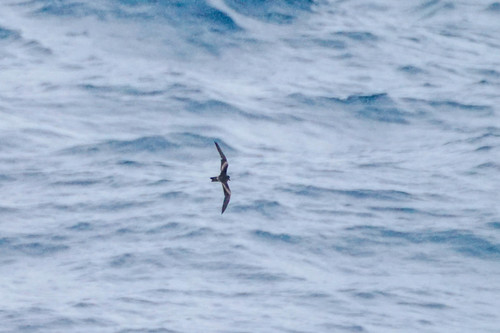 Tristram's Storm-Petrel
In breve
Il segno distintivo più affidabile per separare l'Ainley's Storm-Petrel dal Tristram's Storm-Petrel è il modello del sopraccoda e dell'ala superiore: l'Ainley's mostra una chiara macchia bianca sul sopraccoda (a forma di U, spesso con un'area scura centrale), mentre il Tristram's è complessivamente scuro con solo un sopraccoda leggermente chiaro e una barra grigia chiara sull'ala superiore. Il Tristram's è anche molto più grande e massiccio, con ali lunghe e angolari e una struttura più pesante. Entrambe le specie sono uccelli delle tempeste scuri, ma le loro dimensioni, forma della coda e contrasto del sopraccoda sono fondamentali in volo. La struttura e lo stile di volo aiutano ulteriormente: l'Ainley's è di dimensioni medie e più delicato, mentre il Tristram's è il più grande uccello delle tempeste, con un aspetto potente e fuligginoso.
Consigli di identificazione
- White rump patch (Ainley's only): In tutte le età e stagioni, l'Ainley's Storm-Petrel mostra una chiara macchia bianca a forma di U sul sopraccoda, spesso con un'area scura centrale. Questo è il segno più affidabile in volo. Il Tristram's non mostra mai un sopraccoda bianco brillante, solo un'area leggermente più chiara.
- Upperwing pattern: Il Tristram's Storm-Petrel ha una barra grigia chiara sull'ala superiore, visibile in buona luce, mentre l'ala superiore dell'Ainley's è uniformemente scura. Questo aiuta a separare gli uccelli distanti quando il sopraccoda non è visibile.
- Overall size: Il Tristram's è molto più grande e massiccio (24.5–27 cm, ~84 g) rispetto all'Ainley's (18 cm, molto più leggero). In stormi misti o con esperienza, il Tristram's si distingue come il più grande uccello delle tempeste presente.
- Wing shape: Il Tristram's ha ali lunghe e angolari, che conferiscono un volo più potente e stabile. Le ali dell'Ainley's sono lunghe ma hanno punte smussate, e il suo volo è più fluttuante e delicato.
- Tail shape: La coda dell'Ainley's è moderatamente lunga e biforcuta, spesso evidente in volo. La coda del Tristram's è meno profondamente biforcuta, apparendo più squadrata o poco incisa.
- Plumage tone: Entrambi sono di un marrone fuligginoso scuro a nerastro, ma l'Ainley's può apparire più marrone quando usurato. Il Tristram's è uniformemente fuligginoso, con poco contrasto tranne che per il sottile sopraccoda chiaro e la barra dell'ala.
- Bill structure: Il Tristram's ha un becco più robusto, adatto alla sua dieta di cefalopodi. Questo è sottile a distanza ma può essere visto in foto ravvicinate o con un telescopio.
- Feet projection: I piedi dell'Ainley's non si estendono oltre la coda in volo. Non ci sono note simili per il Tristram's, ma questo non è un segno distintivo primario.
- Flight style: Il Tristram's vola con battiti d'ala forti e costanti e planate, adatte alle sue dimensioni. L'Ainley's è più galleggiante e fluttuante, con un volo meno diretto.
- Habitat and range: L'Ainley's si trova al largo del Messico occidentale e a sud fino alle Galápagos; il Tristram's è nel Pacifico settentrionale, specialmente intorno a Hawaii e Giappone. I record fuori dal range dovrebbero essere scrutinati.
- Breeding context: L'Ainley's si riproduce solo sull'isola di Guadalupe in inverno; il Tristram's si riproduce su isole nel Pacifico nord-ovest. Nelle colonie, entrambi sono notturni.
- No strong age-specific marks: Entrambe le specie mancano di modelli dell'ala superiore giovanili o di primo inverno descritti che differiscano dagli adulti; il sopraccoda e la barra dell'ala sono affidabili in tutte le età.
- No strong sexual dimorphism: Maschi e femmine sono simili in entrambe le specie.
- Beware worn plumage: Entrambi possono apparire più marroni quando usurati, ma il sopraccoda e il modello dell'ala rimangono diagnostici.
- No useful vocal differences described: La separazione sul campo è visiva; i richiami non sono un aiuto pratico nell'identificazione.
Taglia
Il Tristram's Storm-Petrel è drammaticamente più grande dell'Ainley's: il Tristram's misura 24.5–27 cm di lunghezza e pesa in media 84 g, rendendolo il più grande uccello delle tempeste. L'Ainley's è di dimensioni medie per il gruppo, circa 18 cm di lunghezza (nessun dato sul peso, ma chiaramente molto più leggero). Sul campo, il Tristram's appare più pesante e robusto, con un'apertura alare più lunga e un becco più robusto. L'Ainley's è visibilmente più piccolo e più delicato, con ali e coda proporzionalmente più corte.
Piumaggio
Per tutte le età, l'Ainley's Storm-Petrel è di un marrone fuligginoso a nerastro nel complesso, ma mostra sempre una prominente macchia bianca sul sopraccoda, a forma di U con un'area scura centrale, e una coda moderatamente lunga e biforcuta. Il sopraccoda bianco è diagnostico in volo in tutte le età e stagioni. Il Tristram's Storm-Petrel è uniformemente scuro, di un marrone fuligginoso a nerastro, con solo un sopraccoda leggermente chiaro (mai una macchia bianca audace) e una barra grigia chiara sull'ala superiore. La sua coda è meno profondamente biforcuta e appare più squadrata o poco incisa. Il Tristram's manca del forte contrasto del sopraccoda dell'Ainley's, e la sua ala superiore mostra una barra chiara, che l'Ainley's non ha. Entrambe le specie possono apparire più marroni quando il piumaggio è usurato, ma il sopraccoda e il modello dell'ala rimangono affidabili. Non sono descritti segni specifici per età giovanili o immature per nessuna delle due, ma il sopraccoda e la barra dell'ala sono coerenti attraverso le età.
Comportamento
Entrambe le specie sono pelagiche e trascorrono la maggior parte della loro vita in mare, venendo a terra solo per riprodursi. L'Ainley's Storm-Petrel si riproduce sull'isola di Guadalupe ed è notturno nelle colonie, simile all'Uccello delle tempeste codaforcuta. Il Tristram's Storm-Petrel è anch'esso notturno nelle colonie e si riproduce su isole remote nelle Isole hawaiane nord-occidentali e a sud del Giappone. In volo, il Tristram's appare più potente e stabile, adatto alle sue dimensioni maggiori, mentre l'Ainley's è più leggero e fluttuante. Il comportamento alimentare è ampiamente simile (nutrendosi in superficie di piccoli prede marine), ma il Tristram's è noto per un becco più robusto, adattato per i cefalopodi.
Habitat
L'Ainley's Storm-Petrel si riproduce in inverno sull'isola di Guadalupe al largo del Messico e si estende a sud fino alle Galápagos, preferendo il Pacifico orientale. Il Tristram's Storm-Petrel si riproduce nelle Isole hawaiane nord-occidentali e nelle isole a sud del Giappone, estendendosi ampiamente attraverso il Pacifico settentrionale in mari tropicali. Non c'è sovrapposizione nell'area di riproduzione, e in mare, il Tristram's si trova più a ovest e a nord. Entrambi sono strettamente pelagici al di fuori della stagione di riproduzione.
Ainley's Storm-Petrel · Tristram's Storm-Petrel · I miei uccelli difficili