

Motmot

エインリーウミツバメ 対 アメリカクロウミツバメ

Hydrobates cheimomnestes 対 Hydrobates melania

エインリーウミツバメとアメリカクロウミツバメのクイズ

エインリーウミツバメ (Hydrobates cheimomnestes) エインリーウミツバメ
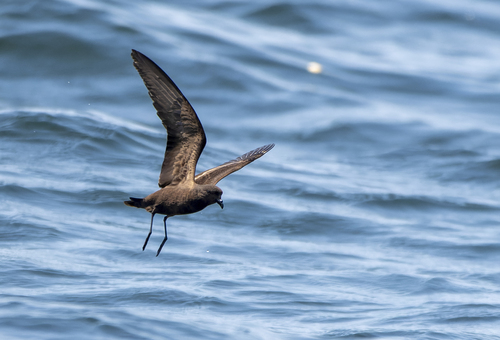
アメリカクロウミツバメ (Hydrobates melania) アメリカクロウミツバメ

メディア

読み込み中…

要点

エインリーウミツバメとアメリカクロウミツバメを区別するための最も信頼できるフィールドマークは、エインリーウミツバメに存在する白い尾羽の斑点であり、アメリカクロウミツバメにはありません。エインリーウミツバメは明らかに小さく、尾羽がより深く分かれているのに対し、アメリカクロウミツバメは大きく、全体が暗く、尾羽に白い部分がありません。飛行中、エインリーウミツバメは中央に暗い部分がある対照的な白いU字型の尾羽の斑点を示しますが、アメリカクロウミツバメは上も下も均一に暗い茶色から黒です。構造的な違い、特にサイズと尾羽の形は、距離がある場合や光が悪い場合に役立ちます。両種は全体的に暗く、遠くから見ると似ているように見えることがありますが、尾羽の色と全体のサイズに注意を払うことで、ほとんどのフィールド識別が解決されます。

識別のコツ

  1. 白い尾羽の斑点(エインリーウミツバメのみ): エインリーウミツバメの中央に暗い部分がある明るい白いU字型の尾羽の斑点を探してください;アメリカクロウミツバメは全体が暗く、尾羽に白い部分はありません。これはすべての年齢と季節において最も信頼できるフィールドマークです。
  2. 全体のサイズ: エインリーウミツバメはアメリカクロウミツバメよりも明らかに小さい(約18 cm)です。グループを見た場合、相対的なサイズを比較してください;アメリカクロウミツバメは大きくてがっしりとした印象を与えます。
  3. 尾羽の形: エインリーウミツバメはより深く分かれた尾羽を持ち、アメリカクロウミツバメの尾羽はあまり分かれていません。これは鳥がバンキングや滑空しているときに最もよく見えます。
  4. 羽毛の色調: エインリーウミツバメは暗いすす色の茶色で、時には黒く見えることもありますが、擦り切れているときはより茶色に見えることがあります。アメリカクロウミツバメはより均一な暗い茶色から黒で、変化はほとんどありません。
  5. 足の突出: エインリーウミツバメの足は飛行中に尾羽を超えて伸びませんが、アメリカクロウミツバメではこの点は特に言及されていません。これは微妙なマークで、よく見ないと判断が難しいです。
  6. 翼の形: エインリーウミツバメは鈍い先端の比較的長い翼を持ち、アメリカクロウミツバメの翼はその大きな体に対して長くて広いです。
  7. 年齢特有の上翼マークなし: 両種ともに特徴的な幼鳥や未成熟の上翼パターン(例えば三角形やパネル)はありませんので、すべての年齢に対して尾羽と構造に焦点を当ててください。
  8. 生息地と範囲の文脈: 冬にグアダルーペ島の近くで観察された場合、エインリーウミツバメの方が可能性が高いです;他の場所、特に北または南に遠くなるほど、アメリカクロウミツバメの方が可能性が高くなります。両種ともに東太平洋の沖合で見られることがあります。
  9. 行動: 両種は外洋性で、繁殖地を除いてはほとんど陸に近づくことはありません。エインリーウミツバメはコロニーで夜行性ですが、これは海でのフィールドIDには役立ちません。
  10. くちばし、脚、足: 両種ともに黒いくちばし、脚、足を持っており、これらの特徴は区別には役立ちません。
  11. 羽毛の摩耗: エインリーウミツバメは羽毛が摩耗しているとき(脱羽前)により茶色に見えることがありますが、白い尾羽は診断に役立ちます。
  12. 止まっている姿: 両種ともにコロニーを除いては止まっている姿はほとんど見られず、フィールドでの区別は通常飛行中に行われます。
  13. 性別と季節: 両種において性差や季節的な羽毛の違いは記載されていないため、すべてのフィールドマークは年間を通じて両性に適用されます。
  14. 落とし穴: 距離がある場合や光が悪い場合、両種は均一に暗く、形が似て見えることがあります。エインリーウミツバメの白い尾羽を常に探してください;それがない場合、特に鳥が明らかに大きい場合はアメリカクロウミツバメを考慮してください。
  15. 疑問がある場合: 尾羽が見えず、サイズを判断するのが難しい場合、識別が不可能なことがあります。より良い視界を待つか、比較のために伴う鳥を探してください。

大きさ

アメリカクロウミツバメは明らかに大きく、長さ約23 cm、翼幅46–51 cm、体重約61.5 g [wikidata]です。エインリーウミツバメは小さく、長さ約18 cm(体重は記載されていませんが、明らかに比率的に軽いです)。このサイズの違いは、両種が一緒に見られるときにしばしば明らかで、アメリカクロウミツバメはがっしりとして翼が長いように見えます。もし一羽だけが存在する場合、エインリーウミツバメはより繊細でコンパクトに見え、翼が短く、体が小さくなります。

羽色

エインリーウミツバメ(すべての年齢)は、中央に不明瞭な暗い部分があるU字型の特徴的な白い尾羽の斑点を示します;これは飛行中に見え、しばしば距離があっても見えます。羽毛の残りは暗いすす色の茶色で、遠くから見ると黒っぽく見えますが、摩耗するとより茶色に見えることがあります。尾羽は中程度の長さで、明確に分かれています。対照的に、アメリカクロウミツバメは上も下も均一に暗い茶色から黒で、年齢や季節に関係なく尾羽に白い部分はありません。尾羽はそれほど深く分かれておらず、全体の羽毛はより一貫して暗く、エインリーウミツバメのコントラストは欠けています。両種ともに黒いくちばし、脚、足を持っていますが、エインリーウミツバメだけが飛行中に尾羽を超えて伸びない足を持っており、微妙ですが時には役立つマークです。両種において年齢特有の上翼パターンの違いは記載されていないため、尾羽の斑点がすべての羽毛における重要な羽毛の区別点です。

行動

両種は外洋性で、ほとんどの生活を開けた海の上で過ごし、繁殖のためにしか陸に近づくことはありません。エインリーウミツバメは繁殖コロニーで夜行性で、隙間や穴に巣を作ります。これらの二種の間での飛行や採餌スタイルにおける特定の行動の違いは記載されていませんが、エインリーウミツバメはその小さなサイズとより分かれた尾羽のために、わずかに浮遊感や繊細さがあるように見えることがあります。両種ともに水面近くを低く飛んでいるのが見られることが多く、表面をついばんでいます。

生息環境

エインリーウミツバメはメキシコのグアダルーペ島のいくつかの小島でのみ繁殖し、南はガラパゴスまで分布し、冬にはバハ・カリフォルニア半島の沖合で最も遭遇する可能性があります。アメリカクロウミツバメも東太平洋の外洋性の種ですが、ここでの繁殖範囲は特に記載されていません。両種は沖合の水域で重なることがありますが、エインリーウミツバメは繁殖期には特に制限されており、局所的です。冬にグアダルーペ島の近くで観察された場合、エインリーウミツバメの方が可能性が高いです;他の場所、特に北または南に遠くなるほど、アメリカクロウミツバメの方が可能性が高くなります。

より良い説明を送る

比較と同じ項目を使ってください。文章はすぐに公開されます。

The most reliable field mark for separating Ainley's Storm-Petrel from Black Storm-Petrel is the presence of a white rump patch in Ainley's, which is absent in Black Storm-Petrel. Ainley's is also distinctly smaller and has a more forked tail, while Black Storm-Petrel is larger, all dark, and lacks any white on the rump. In flight, Ainley's shows a contrasting white U-shaped rump patch with a central dark area, whereas Black Storm-Petrel is uniformly dark brown-black above and below. Structural differences—especially size and tail shape—are helpful at a distance or in poor light. Both species are dark overall and can appear similar from afar, but careful attention to rump color and overall size will resolve most field identifications.

  1. White rump patch (Ainley's only): Look for a bright white U-shaped rump patch with a central dark area on Ainley's Storm-Petrel; Black Storm-Petrel is entirely dark with no white on the rump. This is the single most reliable field mark in all ages and seasons.
  2. Overall size: Ainley's is noticeably smaller (about 18 cm) than Black Storm-Petrel (about 23 cm). If you see a group, compare relative size; Black Storm-Petrel will stand out as larger and bulkier.
  3. Tail shape: Ainley's has a more deeply forked tail, while Black Storm-Petrel's tail is less forked. This is best seen when the bird is banking or gliding.
  4. Plumage tone: Ainley's is dark sooty-brown, sometimes appearing black, but can look browner when worn. Black Storm-Petrel is a more uniform dark brown-black, with little variation.
  5. Feet projection: Ainley's feet do not extend beyond the tail in flight, while this is not noted for Black Storm-Petrel. This is a subtle mark and hard to judge unless seen well.
  6. Wing shape: Ainley's has fairly long wings with blunt points; Black Storm-Petrel's wings are longer and broader in proportion to its larger body.
  7. No age-specific upperwing marks: Neither species has distinctive juvenile or immature upperwing patterns (such as triangles or panels), so focus on rump and structure for all ages.
  8. Habitat and range context: If observed near Guadalupe Island in winter, Ainley's is more likely; elsewhere, especially farther north or south, Black Storm-Petrel is more probable. Both can occur offshore in the eastern Pacific.
  9. Behavior: Both species are pelagic and rarely seen near land except at breeding sites. Ainley's is nocturnal at colonies, but this is not helpful for field ID at sea.
  10. Bill, legs, and feet: Both have black bills, legs, and feet—these features do not help separate them.
  11. Plumage wear: Ainley's may appear browner when plumage is worn (pre-moult), but the white rump remains diagnostic.
  12. Perched views: Both are rarely seen perched except at colonies; field separation is usually made in flight.
  13. Sex and season: No sexual dimorphism or seasonal plumage differences are described for either species; all field marks apply year-round and to both sexes.
  14. Pitfalls: At a distance or in poor light, both can appear uniformly dark and similar in shape. Always look for the white rump on Ainley's; if absent, consider Black Storm-Petrel, especially if the bird is noticeably larger.
  15. When in doubt: If the rump is not visible and size is hard to judge, identification may not be possible. Wait for a better view or look for accompanying birds for comparison.

Black Storm-Petrel is significantly larger, measuring about 23 cm in length with a wingspan of 46–51 cm and a body mass around 61.5 g [wikidata]. Ainley's Storm-Petrel is smaller, about 18 cm in length (no mass given, but clearly lighter by proportion). This size difference is often apparent when both species are seen together, with Black Storm-Petrel appearing bulkier and longer-winged. If only one bird is present, Ainley's will look more delicate and compact, with shorter wings and a smaller body.

Ainley's Storm-Petrel (all ages) shows a distinctive white rump patch, U-shaped with a central poorly defined dark area; this is visible in flight and often even at a distance. The rest of the plumage is dark sooty-brown, appearing blackish from afar, but can look browner when worn. The tail is moderately long and distinctly forked. Black Storm-Petrel, by contrast, is uniformly dark brown-black above and below, with no white on the rump at any age or season. Its tail is less deeply forked and the overall plumage is more consistently dark, lacking the contrast of Ainley's. Both species have black bills, legs, and feet, but only Ainley's has feet that do not extend beyond the tail in flight—a subtle but sometimes useful mark. No age-specific upperwing pattern differences are described for either species, so the rump patch is the key plumage separator in all plumages.

Both species are pelagic and spend most of their lives over open ocean, rarely coming to land except to breed. Ainley's is nocturnal at its breeding colonies and nests in crevices or burrows. There is no specific behavioral difference in flight or feeding style noted between these two species in the sources, but Ainley's may appear slightly more buoyant or delicate due to its smaller size and more forked tail. Both are likely to be seen flying low over the water, picking at the surface.

Ainley's Storm-Petrel breeds only on a few islets off Guadalupe Island, Mexico, and ranges south to the Galápagos, being most likely encountered off the Baja California Peninsula in winter. Black Storm-Petrel is also a pelagic species of the eastern Pacific, but the sources do not specify its breeding range here. Both may overlap in offshore waters, but Ainley's is much more restricted and localized, especially during the breeding season. If observed near Guadalupe Island in winter, Ainley's is more likely; elsewhere, especially farther north or south, Black Storm-Petrel is more probable.

変更を破棄しますか?

保存していない編集があります。今離れると失われます。

エインリーウミツバメ · アメリカクロウミツバメ · 苦手な鳥