

Ainley's Storm-Petrel vs Black Storm-Petrel
Hydrobates cheimomnestes contro Hydrobates melania
Fai un quiz con Ainley's Storm-Petrel e Black Storm-Petrel
 Ainley's Storm-Petrel
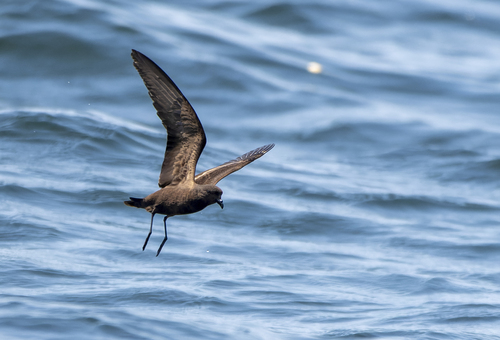 Black Storm-Petrel
In breve
Il segno distintivo più affidabile per separare l'Ainley's Storm-Petrel dal Black Storm-Petrel è la presenza di una macchia bianca sul dorso in Ainley's, che è assente in Black Storm-Petrel. Ainley's è anche nettamente più piccolo e ha una coda più forked, mentre Black Storm-Petrel è più grande, completamente scuro e privo di bianco sul dorso. In volo, Ainley's mostra una macchia bianca a forma di U contrastante con un'area centrale scura, mentre Black Storm-Petrel è uniformemente marrone-nero sopra e sotto. Le differenze strutturali—specialmente dimensioni e forma della coda—sono utili a distanza o in scarsa illuminazione. Entrambe le specie sono scure nel complesso e possono apparire simili da lontano, ma un'attenta attenzione al colore del dorso e alle dimensioni complessive risolverà la maggior parte delle identificazioni sul campo.
Consigli di identificazione
- Macchia bianca sul dorso (solo Ainley's): Cerca una brillante macchia bianca a forma di U con un'area centrale scura su Ainley's Storm-Petrel; Black Storm-Petrel è completamente scuro senza bianco sul dorso. Questo è il segno distintivo più affidabile in tutte le età e stagioni.
- Dimensioni complessive: Ainley's è notevolmente più piccolo (circa 18 cm) rispetto a Black Storm-Petrel (circa 23 cm). Se vedi un gruppo, confronta le dimensioni relative; Black Storm-Petrel si distinguerà come più grande e massiccio.
- Forma della coda: Ainley's ha una coda più profondamente forked, mentre la coda di Black Storm-Petrel è meno forked. Questo è meglio visibile quando l'uccello sta virando o planando.
- Tono del piumaggio: Ainley's è di un marrone scuro fuligginoso, a volte appare nero, ma può sembrare più marrone quando è usurato. Black Storm-Petrel è di un marrone-nero scuro più uniforme, con poca variazione.
- Proiezione dei piedi: I piedi di Ainley's non si estendono oltre la coda in volo, mentre questo non è notato per Black Storm-Petrel. Questo è un segno sottile e difficile da giudicare a meno che non sia visto bene.
- Forma delle ali: Ainley's ha ali abbastanza lunghe con punte smussate; le ali di Black Storm-Petrel sono più lunghe e più larghe in proporzione al suo corpo più grande.
- Nessun segno specifico per età sulle ali superiori: Nessuna delle due specie ha schemi distintivi per le ali superiori giovanili o immature (come triangoli o pannelli), quindi concentrati sul dorso e sulla struttura per tutte le età.
- Habitat e contesto di distribuzione: Se osservato vicino all'Isola Guadalupe in inverno, Ainley's è più probabile; altrove, specialmente più a nord o a sud, Black Storm-Petrel è più probabile. Entrambi possono verificarsi al largo nell'oceano Pacifico orientale.
- Comportamento: Entrambe le specie sono pelagiche e raramente viste vicino alla terra, tranne che nei siti di nidificazione. Ainley's è notturno nelle colonie, ma questo non è utile per l'identificazione sul campo in mare.
- Becco, gambe e piedi: Entrambi hanno becchi, gambe e piedi neri—queste caratteristiche non aiutano a separarli.
- Usura del piumaggio: Ainley's può apparire più marrone quando il piumaggio è usurato (pre-muta), ma il dorso bianco rimane diagnostico.
- Viste in perching: Entrambi sono raramente visti in perching tranne che nelle colonie; la separazione sul campo è solitamente fatta in volo.
- Sesso e stagione: Non sono descritti dimorfismi sessuali o differenze di piumaggio stagionali per nessuna delle due specie; tutti i segni sul campo si applicano tutto l'anno e a entrambi i sessi.
- Trappole: A distanza o in scarsa luce, entrambi possono apparire uniformemente scuri e simili nella forma. Cerca sempre il dorso bianco su Ainley's; se assente, considera Black Storm-Petrel, specialmente se l'uccello è visibilmente più grande.
- Quando hai dubbi: Se il dorso non è visibile e le dimensioni sono difficili da giudicare, l'identificazione potrebbe non essere possibile. Aspetta una vista migliore o cerca uccelli accompagnatori per il confronto.
Taglia
Black Storm-Petrel è significativamente più grande, misurando circa 23 cm di lunghezza con un'apertura alare di 46–51 cm e una massa corporea di circa 61,5 g [wikidata]. Ainley's Storm-Petrel è più piccolo, circa 18 cm di lunghezza (nessuna massa fornita, ma chiaramente più leggero in proporzione). Questa differenza di dimensioni è spesso evidente quando entrambe le specie sono viste insieme, con Black Storm-Petrel che appare più massiccio e con ali più lunghe. Se è presente solo un uccello, Ainley's apparirà più delicato e compatto, con ali più corte e un corpo più piccolo.
Piumaggio
Ainley's Storm-Petrel (tutte le età) mostra una distintiva macchia bianca sul dorso, a forma di U con un'area centrale poco definita; questo è visibile in volo e spesso anche a distanza. Il resto del piumaggio è di un marrone scuro fuligginoso, apparendo nerastro da lontano, ma può sembrare più marrone quando è usurato. La coda è moderatamente lunga e nettamente forked. Black Storm-Petrel, al contrario, è uniformemente marrone-nero scuro sopra e sotto, senza bianco sul dorso a qualsiasi età o stagione. La sua coda è meno profondamente forked e il piumaggio complessivo è più costantemente scuro, privo del contrasto di Ainley's. Entrambe le specie hanno becchi, gambe e piedi neri, ma solo Ainley's ha piedi che non si estendono oltre la coda in volo—un segno sottile ma a volte utile. Non sono descritte differenze nei modelli delle ali superiori specifiche per età per nessuna delle due specie, quindi la macchia sul dorso è il separatore chiave del piumaggio in tutti i piumaggi.
Comportamento
Entrambe le specie sono pelagiche e trascorrono la maggior parte della loro vita sopra l'oceano aperto, raramente venendo a terra tranne che per nidificare. Ainley's è notturno nelle sue colonie di nidificazione e nidifica in crepe o tane. Non ci sono differenze comportamentali specifiche nel volo o nello stile di alimentazione notate tra queste due specie nelle fonti, ma Ainley's può apparire leggermente più galleggiante o delicato a causa delle sue dimensioni più piccole e della coda più forked. Entrambi sono probabili da vedere volare basso sopra l'acqua, beccando in superficie.
Habitat
Ainley's Storm-Petrel nidifica solo su alcune isolette al largo dell'Isola Guadalupe, Messico, e si estende a sud fino alle Galápagos, essendo più probabile incontrarlo al largo della Penisola di Baja California in inverno. Black Storm-Petrel è anche una specie pelagica dell'oceano Pacifico orientale, ma le fonti non specificano il suo raggio di nidificazione qui. Entrambi possono sovrapporsi nelle acque al largo, ma Ainley's è molto più ristretto e localizzato, specialmente durante la stagione di nidificazione. Se osservato vicino all'Isola Guadalupe in inverno, Ainley's è più probabile; altrove, specialmente più a nord o a sud, Black Storm-Petrel è più probabile.
Ainley's Storm-Petrel · Black Storm-Petrel · I miei uccelli difficili