

Motmot

アフリカヒナフクロウ 対 アフリカコミミズク

Strix woodfordii 対 Asio capensis

アフリカヒナフクロウとアフリカコミミズクのクイズ
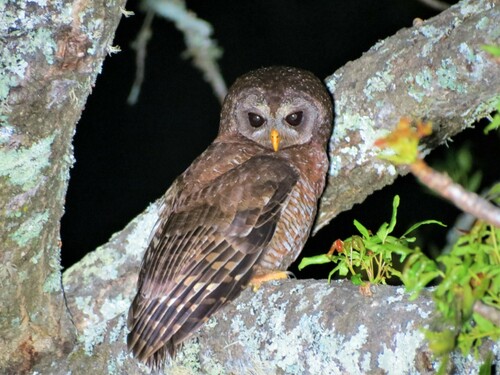
アフリカヒナフクロウ (Strix woodfordii) アフリカヒナフクロウ
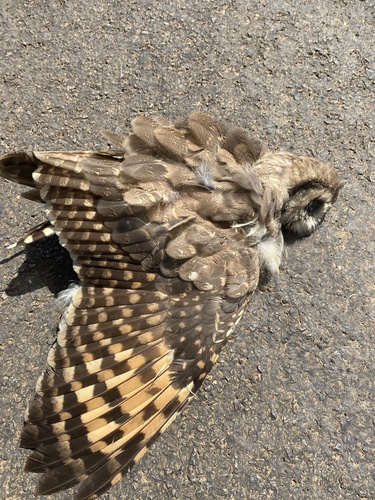
アフリカコミミズク (Asio capensis) アフリカコミミズク

メディア

読み込み中…

要点

The best field mark to separate African Wood-Owl from Marsh Owl is the presence of small, often-invisible ear tufts on Marsh Owl, versus the completely rounded, tuftless head of African Wood-Owl. In flight or perched, look for the Marsh Owl’s pale buff facial disc with a dark rim and possible ear tufts, compared to the African Wood-Owl’s dark, rounded head with white eyebrows and no tufts. Juvenile African Wood-Owls are paler rufous, while Marsh Owls show less age-related color change. Both are medium-sized, dark-eyed owls, but their head shape and facial patterns are consistently diagnostic. Habitat can also help: African Wood-Owl is a forest species, Marsh Owl prefers open grasslands and marshes.

識別のコツ

  1. Ear tufts: Marsh Owl has small, earth-brown ear tufts set near the center of the forehead; these may be hard to see but are never present on African Wood-Owl. If you see tufts, it's Marsh Owl.
  2. Head shape: African Wood-Owl has a perfectly rounded, 'Strix-like' head with no tufts; Marsh Owl’s head is pumpkin-shaped and may look less rounded, especially if tufts are visible.
  3. Facial disc: Marsh Owl shows a pale buff facial disc with a strong dark rim and buff speckles, plus a dark area around the eyes. African Wood-Owl’s face is darker, with large dark eyes outlined by white 'eyebrows' and a yellow beak.
  4. Juvenile plumage: Juvenile African Wood-Owls are paler rufous, lacking strong facial contrast; Marsh Owl juveniles do not show this rufous phase.
  5. Underparts: African Wood-Owl has a white belly with brown barring; Marsh Owl’s underparts are not described as barred, and its overall tone is more uniformly dark brown.
  6. Tail pattern: Marsh Owl’s tail is dark brown with pale buff barring and a whitish tip—look for this in flight or when perched with tail visible. African Wood-Owl’s tail pattern is not described as distinctive.
  7. Legs and toes: Marsh Owl’s tarsi and toes are feathered pale tawny-buff, with dark brown tips to the toes; this is visible at close range. African Wood-Owl’s leg feathering is not noted as diagnostic.
  8. Bill color: African Wood-Owl has a prominent yellow beak; Marsh Owl’s bill color is not described, but the yellow beak stands out on African Wood-Owl.
  9. Sex differences: Male Marsh Owls are generally paler than females, but this is subtle and not a primary field mark.
  10. Size and structure: Marsh Owl is slightly larger and longer-winged, but size overlap is considerable; use with caution unless extremes are seen.
  11. Perched posture: African Wood-Owl tends to perch high in dense cover, often well hidden; Marsh Owl may perch lower or on the ground in open areas.
  12. Habitat: Forest or dense woodland points to African Wood-Owl; open marsh or grassland points to Marsh Owl.
  13. Vocalizations: If you hear a duet of rapid, clear hoots (male) and higher, more leisurely hoots (female), it is African Wood-Owl. Marsh Owl’s calls are not described here.
  14. Flight views: In flight, look for Marsh Owl’s long wings and tail, pale facial disc, and possible ear tufts; African Wood-Owl will appear more compact, with a rounded head and no tufts.
  15. Pitfalls: In poor light, Marsh Owl’s ear tufts may be invisible and its head may look rounded; always check for facial disc pattern and habitat as backup.

大きさ

Both species are medium-sized owls, but Marsh Owl is slightly larger on average, with a length of 31–38 cm and a weight range of 225–485g, compared to African Wood-Owl’s 30.5–35 cm and 240–350g. There is overlap, but very large or very small individuals may hint at Marsh Owl or African Wood-Owl, respectively. Marsh Owl’s wing and tail are proportionally longer, fitting its open-country habits, while African Wood-Owl is more compact for maneuvering in forest.

羽色

Juvenile African Wood-Owls are paler rufous overall, lacking the strong facial contrast of Marsh Owl at any age. Adult African Wood-Owl has a rich brown, rounded head with white spots, bold white eyebrows, and a yellow beak; underparts are white with brown barring. Marsh Owl, by contrast, has a pale buff facial disc with a distinct dark rim, a dark area around the eyes, and small, sometimes hidden ear tufts. Its head is pumpkin-shaped, not truly round, and the tail is dark brown with pale buff barring and a whitish tip. Marsh Owl’s tarsi and toes are feathered pale buff, while African Wood-Owl’s leg feathering is not described as distinctive. Males Marsh Owl may be paler than females, but this is subtle. In all ages, Marsh Owl’s facial disc and possible ear tufts are key, while African Wood-Owl is always tuftless and round-headed.

行動

African Wood-Owl roosts singly or in pairs high in dense forest cover during the day, often well hidden. Marsh Owl is more likely to be seen in open areas, sometimes on the ground or low perches, and is adapted to hunting over grassland and marshes. Both are nocturnal, but African Wood-Owl is more strictly forest-dwelling and less likely to be seen in open country.

生息環境

Habitat is a strong clue: African Wood-Owl is the most common forest owl in Africa, found in wooded areas and dense cover. Marsh Owl, as its name suggests, inhabits open grasslands, marshes, and similar open-country habitats. If the bird is flushed from or hunting over open marsh or grassland, Marsh Owl is far more likely; in dense woodland, African Wood-Owl is expected.

声

African Wood-Owl gives a distinctive duet: the male produces rapid, clear hoots in series (WHU-hu, WHU-hu-hu, hu-hu), with the female answering in higher-pitched, more leisurely hoots. The call is loud, far-carrying, and often heard after dusk. Marsh Owl’s vocalizations are not described in the provided notes, so voice is not a reliable separator unless the full African Wood-Owl duet is heard.

より良い説明を送る

比較と同じ項目を使ってください。文章はすぐに公開されます。

The best field mark to separate African Wood-Owl from Marsh Owl is the presence of small, often-invisible ear tufts on Marsh Owl, versus the completely rounded, tuftless head of African Wood-Owl. In flight or perched, look for the Marsh Owl’s pale buff facial disc with a dark rim and possible ear tufts, compared to the African Wood-Owl’s dark, rounded head with white eyebrows and no tufts. Juvenile African Wood-Owls are paler rufous, while Marsh Owls show less age-related color change. Both are medium-sized, dark-eyed owls, but their head shape and facial patterns are consistently diagnostic. Habitat can also help: African Wood-Owl is a forest species, Marsh Owl prefers open grasslands and marshes.

  1. Ear tufts: Marsh Owl has small, earth-brown ear tufts set near the center of the forehead; these may be hard to see but are never present on African Wood-Owl. If you see tufts, it's Marsh Owl.
  2. Head shape: African Wood-Owl has a perfectly rounded, 'Strix-like' head with no tufts; Marsh Owl’s head is pumpkin-shaped and may look less rounded, especially if tufts are visible.
  3. Facial disc: Marsh Owl shows a pale buff facial disc with a strong dark rim and buff speckles, plus a dark area around the eyes. African Wood-Owl’s face is darker, with large dark eyes outlined by white 'eyebrows' and a yellow beak.
  4. Juvenile plumage: Juvenile African Wood-Owls are paler rufous, lacking strong facial contrast; Marsh Owl juveniles do not show this rufous phase.
  5. Underparts: African Wood-Owl has a white belly with brown barring; Marsh Owl’s underparts are not described as barred, and its overall tone is more uniformly dark brown.
  6. Tail pattern: Marsh Owl’s tail is dark brown with pale buff barring and a whitish tip—look for this in flight or when perched with tail visible. African Wood-Owl’s tail pattern is not described as distinctive.
  7. Legs and toes: Marsh Owl’s tarsi and toes are feathered pale tawny-buff, with dark brown tips to the toes; this is visible at close range. African Wood-Owl’s leg feathering is not noted as diagnostic.
  8. Bill color: African Wood-Owl has a prominent yellow beak; Marsh Owl’s bill color is not described, but the yellow beak stands out on African Wood-Owl.
  9. Sex differences: Male Marsh Owls are generally paler than females, but this is subtle and not a primary field mark.
  10. Size and structure: Marsh Owl is slightly larger and longer-winged, but size overlap is considerable; use with caution unless extremes are seen.
  11. Perched posture: African Wood-Owl tends to perch high in dense cover, often well hidden; Marsh Owl may perch lower or on the ground in open areas.
  12. Habitat: Forest or dense woodland points to African Wood-Owl; open marsh or grassland points to Marsh Owl.
  13. Vocalizations: If you hear a duet of rapid, clear hoots (male) and higher, more leisurely hoots (female), it is African Wood-Owl. Marsh Owl’s calls are not described here.
  14. Flight views: In flight, look for Marsh Owl’s long wings and tail, pale facial disc, and possible ear tufts; African Wood-Owl will appear more compact, with a rounded head and no tufts.
  15. Pitfalls: In poor light, Marsh Owl’s ear tufts may be invisible and its head may look rounded; always check for facial disc pattern and habitat as backup.

Both species are medium-sized owls, but Marsh Owl is slightly larger on average, with a length of 31–38 cm and a weight range of 225–485g, compared to African Wood-Owl’s 30.5–35 cm and 240–350g. There is overlap, but very large or very small individuals may hint at Marsh Owl or African Wood-Owl, respectively. Marsh Owl’s wing and tail are proportionally longer, fitting its open-country habits, while African Wood-Owl is more compact for maneuvering in forest.

Juvenile African Wood-Owls are paler rufous overall, lacking the strong facial contrast of Marsh Owl at any age. Adult African Wood-Owl has a rich brown, rounded head with white spots, bold white eyebrows, and a yellow beak; underparts are white with brown barring. Marsh Owl, by contrast, has a pale buff facial disc with a distinct dark rim, a dark area around the eyes, and small, sometimes hidden ear tufts. Its head is pumpkin-shaped, not truly round, and the tail is dark brown with pale buff barring and a whitish tip. Marsh Owl’s tarsi and toes are feathered pale buff, while African Wood-Owl’s leg feathering is not described as distinctive. Males Marsh Owl may be paler than females, but this is subtle. In all ages, Marsh Owl’s facial disc and possible ear tufts are key, while African Wood-Owl is always tuftless and round-headed.

African Wood-Owl roosts singly or in pairs high in dense forest cover during the day, often well hidden. Marsh Owl is more likely to be seen in open areas, sometimes on the ground or low perches, and is adapted to hunting over grassland and marshes. Both are nocturnal, but African Wood-Owl is more strictly forest-dwelling and less likely to be seen in open country.

Habitat is a strong clue: African Wood-Owl is the most common forest owl in Africa, found in wooded areas and dense cover. Marsh Owl, as its name suggests, inhabits open grasslands, marshes, and similar open-country habitats. If the bird is flushed from or hunting over open marsh or grassland, Marsh Owl is far more likely; in dense woodland, African Wood-Owl is expected.

African Wood-Owl gives a distinctive duet: the male produces rapid, clear hoots in series (WHU-hu, WHU-hu-hu, hu-hu), with the female answering in higher-pitched, more leisurely hoots. The call is loud, far-carrying, and often heard after dusk. Marsh Owl’s vocalizations are not described in the provided notes, so voice is not a reliable separator unless the full African Wood-Owl duet is heard.

変更を破棄しますか?

保存していない編集があります。今離れると失われます。

アフリカヒナフクロウ · アフリカコミミズク · 苦手な鳥