

Motmot

ヒメショウビン 対 タテフコショウビン

Ispidina picta 対 Halcyon chelicuti

ヒメショウビンとタテフコショウビンのクイズ
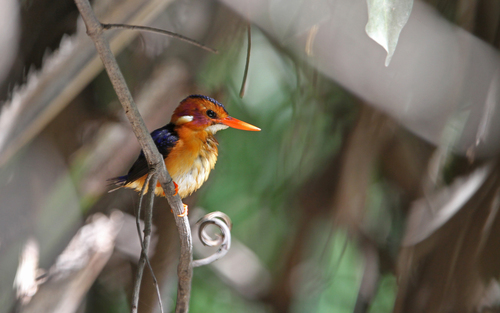
ヒメショウビン (Ispidina picta) ヒメショウビン
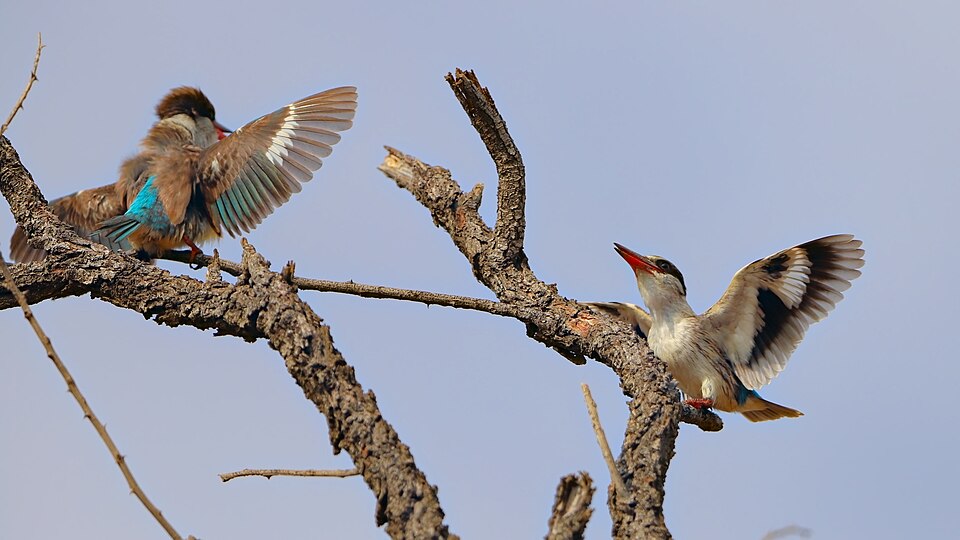
タテフコショウビン (Halcyon chelicuti) タテフコショウビン

メディア

読み込み中…

要点

アフリカヒメショウビンとタテフコショウビンの最も信頼できるフィールドマークは、全体のサイズと構造です:タテフコショウビンははるかに大きく、ずっしりとしており、より重いくちばしと長い尾を持っています。一方、アフリカヒメショウビンは小さく、コンパクトで、鮮やかな色をしています。飛んでいるとき、タテフコショウビンは翼と尾に青色を閃かせ、白い翼の斑点がありますが、アフリカヒメショウビンは対照的な翼の模様なしに均一な青い背中と尾を示します。両種の幼鳥は混乱を招くことがありますが、ヒメショウビンの赤褐色の腹部と青い背中、さらにその小さなサイズが、縞模様のある灰色がかったタテフコショウビンと区別されます。声と生息地も役立ちます:ヒメショウビンは森林で高い「チップチップ」という声を出し、タテフコショウビンは遠くまで響くトリル音を持ち、開けた場所を好みます。

識別のコツ

  1. サイズが最も迅速な区別要因:タテフコショウビンはアフリカヒメショウビンの2倍以上の重さで、はるかに長いです。直接比較やスケール感があるときにこれを使用してください。
  2. くちばしの構造:タテフコショウビンは明らかに重く、長いくちばしを持っています(成鳥は上が黒っぽく、下が赤っぽい);ヒメショウビンのくちばしは細く、成鳥は主にオレンジ色、幼鳥は黒っぽいです。
  3. 尾の長さと姿勢:タテフコショウビンは尾が長く、ずっしりとした、より直立した姿勢を持っています;ヒメショウビンはコンパクトで短い尾を持ち、より水平な姿勢です。
  4. 上面の色:ヒメショウビンは上面が明るい青(背中と尾を含む)ですが、タテフコショウビンは上面が灰褐色で、青は下背、翼、尾に限られています。
  5. 下面の色:ヒメショウビンは腹部が赤褐色です;タテフコショウビンはオフホワイトからバフ色で、特に胸と側面に茶色の縞があります。
  6. 冠の模様:ヒメショウビンは暗い青の冠を持っています;タテフコショウビンの冠はバフ色または茶色の背景に暗褐色の縞があります(北部亜種では灰色がかっています)。
  7. 顔の模様:タテフコショウビンは目を通る黒い線と首の周りの白い襟を持っています;ヒメショウビンはこれらの特徴がなく、代わりに耳羽に紫色の洗いが見られます(幼鳥では少ない)。
  8. 耳羽:ヒメショウビンの成鳥は耳羽に紫色の洗いがあります;タテフコショウビンにはなく、ヒメショウビンの幼鳥は紫色が少ないです。
  9. 飛行中の翼の模様:タテフコショウビンは初列の基部に白い斑点を示し、金属的な青が翼と尾に見られ、特に飛行中に目立ちます;ヒメショウビンの青はより均一で白い斑点がありません。
  10. 幼鳥の混乱:幼鳥のヒメショウビンは黒いくちばしと耳羽に紫色が少ないです;幼鳥のタテフコショウビンはより淡く、翼に青が少なく、胸の羽毛の先端が暗いです。
  11. 鳴き声:ヒメショウビンの鳴き声は高い「チップチップ」で、見落とされがちです;タテフコショウビンの鳴き声は大きく、トリル音で遠くまで響き、夕暮れやディスプレイ中によく聞かれます。
  12. 生息地の文脈:ヒメショウビンはほぼ常に密な森林にいます;タテフコショウビンは開けた森林、サバンナ、または茂みのある空き地を好み、しばしば開けた場所に止まります。
  13. 行動:タテフコショウビンは開けた場所で翼をひらひらさせたり尾を立てたりしてディスプレイすることがあります;ヒメショウビンはより秘密主義で、密なカバーの中を低く飛び回ります。
  14. 性差:両種は性別間で似ていますが、タテフコショウビンの雌は冠がより茶色いことがあります;通常はフィールドで診断的ではありません。
  15. 落とし穴:光が悪い場合や距離がある場合、タテフコショウビンの翼と尾の青が見逃され、より地味に見えることがあります;常にサイズ、くちばし、顔の模様を確認してください。

大きさ

アフリカヒメショウビンは劇的に小さく、体重は約14.6g、全長は12cmです。タテフコショウビンは37.8gで2倍以上重く、全長は16〜18cmです。フィールドでは、タテフコショウビンは明らかにずっしりとしており、より太いくちばしと長い尾を持っています。距離があっても、サイズのギャップは際立っています—ヒメショウビンはほぼフィンチサイズに見え、タテフコショウビンは小さなモズや大きなスズメに近い体格です。

羽色

幼鳥と成鳥の羽毛は明確に異なります。幼鳥のアフリカヒメショウビンは小さく、赤褐色の腹部、青い背中と尾、黒っぽいくちばし(成鳥のようにオレンジ色ではありません)を持ち、耳羽の紫色は減少しています。幼鳥のタテフコショウビンは成鳥よりも淡く、翼に青が少なく、冠が暗く、胸の羽毛の先端が暗い色で、下くちばしは鈍い赤です。成鳥のアフリカヒメショウビンは、赤褐色の腹部と明るい青の上面、暗い青の冠、紫色の洗いがかかった耳羽を持つ印象的な組み合わせを示します;タテフコショウビンの成鳥は、主に灰褐色の上面で、金属的な青は下背、飛行羽、尾に限られ(飛行中に最も明らか)、オフホワイトの腹部に茶色の縞があり、縞模様のある冠を持っています。タテフコショウビンは目を通る黒い線と白い襟を持ち、ヒメショウビンにはこれらの特徴がありません。飛行中、タテフコショウビンは白い翼の斑点と翼と尾の青を示し、ヒメショウビンの青はより均一で白い斑点がありません。

行動

アフリカヒメショウビンは密な森林の低い位置でよく見られ、止まり木の間を素早く飛び回り、一般的により秘密主義です。タテフコショウビンはサバンナや開けた森林の木にオープンに止まり、ディスプレイ中に尾を立てたり翼をひらひらさせたりすることがよくあります。タテフコショウビンのディスプレイには、別の鳥に向かって尾を立て、歌いながら翼をひらひらさせることが含まれます。ヒメショウビンは単独で見られることが多く、カバーの近くにいます。

生息環境

アフリカヒメショウビンは通常、密な森林の生息地に見られ、開けた国に出ることはほとんどありません。タテフコショウビンは開けた森林、サバンナ、茂みのある空き地を好み、しばしば露出した場所に止まります。鳥が厚い日陰の森林にいる場合、ヒメショウビンの可能性が高く、開けた場所やエッジの生息地ではタテフコショウビンが期待されます。

声

アフリカヒメショウビンは高音で昆虫のような「チップチップ」という鳴き声を出し、通常は飛行中です。タテフコショウビンははるかに大きく、遠くまで響く鳴き声を持ち、鋭い「チアーチェリィィィ」または「キュー、ケーリィィィィ」という音で、下降するトリルがあります。タテフコショウビンの鳴き声は夕暮れやディスプレイ中によく聞かれ、ヒメショウビンの微妙な鳴き声よりもはるかに目立ちます。

より良い説明を送る

比較と同じ項目を使ってください。文章はすぐに公開されます。

The most reliable field mark between African Pygmy Kingfisher and Striped Kingfisher is overall size and structure: Striped Kingfisher is much larger and bulkier, with a heavier bill and longer tail, while African Pygmy Kingfisher is tiny, compact, and brightly colored. In flight, Striped Kingfisher flashes blue in the wings and tail with a white wing patch, whereas African Pygmy Kingfisher shows a uniform blue back and tail without the contrasting wing pattern. Juveniles of both species can be confusing, but the Pygmy Kingfisher's rufous underparts and blue back, along with its small size, set it apart from the streaked, greyish Striped Kingfisher. Voice and habitat also help: Pygmy Kingfisher gives a high 'tsip-tsip' in woodland, while Striped Kingfisher has a far-carrying, trilled call and prefers open areas.

  1. Size is the quickest separator: Striped Kingfisher is more than twice as heavy and much longer than African Pygmy Kingfisher; use this whenever you have a direct comparison or a sense of scale.
  2. Bill structure: Striped Kingfisher has a noticeably heavier, longer bill (blackish above, reddish below in adults); Pygmy Kingfisher’s bill is fine and mostly orange in adults, blackish in juveniles.
  3. Tail length and jizz: Striped Kingfisher has a longer tail and a bulkier, more upright posture; Pygmy Kingfisher is compact with a short tail and a more horizontal stance.
  4. Upperpart color: Pygmy Kingfisher is bright blue above (including back and tail), while Striped Kingfisher is grey-brown above with blue limited to lower back, wings, and tail.
  5. Underpart color: Pygmy Kingfisher is rufous below; Striped Kingfisher is off-white to buff with brown streaks, especially on the breast and sides.
  6. Crown pattern: Pygmy Kingfisher has a dark blue crown; Striped Kingfisher’s crown is streaked dark brown on a buffy or brownish background (greyer in northern subspecies).
  7. Facial pattern: Striped Kingfisher has a black line through the eye and a white collar around the neck; Pygmy Kingfisher lacks these features, instead showing a violet wash on the ear coverts (less in juveniles).
  8. Ear coverts: Pygmy Kingfisher adults have a violet wash on the ear coverts; Striped Kingfisher does not, and juveniles of Pygmy Kingfisher show less violet.
  9. Wing pattern in flight: Striped Kingfisher shows a white patch at the base of the primaries and metallic blue in wings and tail, especially visible in flight; Pygmy Kingfisher’s blue is more uniform and lacks the white patch.
  10. Juvenile confusion: Juvenile Pygmy Kingfisher has a black bill and less violet on the ear coverts; juvenile Striped Kingfisher is paler, with less blue in the wings and dusky breast tips.
  11. Vocalization: Pygmy Kingfisher’s call is a high 'tsip-tsip', easily overlooked; Striped Kingfisher’s call is loud, trilled, and far-carrying, often heard at dusk or during display.
  12. Habitat context: Pygmy Kingfisher is almost always in dense woodland; Striped Kingfisher prefers open woodland, savanna, or bushy clearings, often perching in the open.
  13. Behavior: Striped Kingfisher may display by flicking wings and cocking tail in the open; Pygmy Kingfisher is more secretive, flitting low through dense cover.
  14. Sex differences: Both species are similar between sexes, but Striped Kingfisher females may have a browner crown; not usually diagnostic in the field.
  15. Pitfall: In poor light or at a distance, Striped Kingfisher’s blue in the wings and tail may be missed, making it appear plainer; always check for size, bill, and facial pattern.

African Pygmy Kingfisher is dramatically smaller, weighing about 14.6 g and measuring 12 cm in length. Striped Kingfisher is over twice as heavy at 37.8 g and much longer at 16–18 cm. In the field, Striped Kingfisher looks noticeably bulkier, with a stouter bill and longer tail. Even at a distance, the size gap is striking—Pygmy Kingfisher appears almost finch-sized, while Striped Kingfisher is closer to a small shrike or large sparrow in bulk.

Juvenile and adult plumages differ distinctly. Juvenile African Pygmy Kingfisher is tiny, with rufous underparts, blue back and tail, and a blackish bill (not orange as in adults); violet on the ear coverts is reduced. Juvenile Striped Kingfisher is paler than the adult, with less blue in the wings, a darker crown, dusky tips to the breast feathers, and a dull red lower mandible. Adult African Pygmy Kingfisher shows a striking combination of rufous below and bright blue above, with a dark blue crown and violet-washed ear coverts; Striped Kingfisher adults are mostly grey-brown above with metallic blue limited to the lower back, flight feathers, and tail (most obvious in flight), off-white underparts with brown streaks, and a streaked crown. Striped Kingfisher also has a black line through the eye and a white collar, features lacking in Pygmy Kingfisher. In flight, Striped Kingfisher shows a white wing patch and blue in the wings and tail, while Pygmy Kingfisher’s blue is more uniform and lacks the white patch.

African Pygmy Kingfisher is often seen low in dense woodland, flitting quickly between perches, and is generally more secretive. Striped Kingfisher perches openly in trees in savanna or open woodland, often cocking its tail and flicking its wings during displays. Striped Kingfisher’s display includes facing another bird, tail cocked, and flicking wings while singing. Pygmy Kingfisher is more likely to be seen singly and close to cover.

African Pygmy Kingfisher is typically found in dense woodland habitats, rarely venturing into open country. Striped Kingfisher prefers open woodland, savanna, and bushy clearings, often perching in exposed locations. If the bird is in thick, shaded woodland, Pygmy Kingfisher is more likely; in open or edge habitats, Striped Kingfisher is expected.

African Pygmy Kingfisher gives a high-pitched, insect-like 'tsip-tsip' call, usually in flight. Striped Kingfisher has a much louder, far-carrying call: a piercing 'cheer-cherrrrrr' or 'KEW, kerrrrrrrrr', with a descending trill. The Striped Kingfisher’s call is often heard at dusk and during display, and is much more conspicuous than the Pygmy Kingfisher’s subtle call.

変更を破棄しますか?

保存していない編集があります。今離れると失われます。

ヒメショウビン · タテフコショウビン · 苦手な鳥