

Motmot

African Pygmy Kingfisher vs Striped Kingfisher

Ispidina picta contro Halcyon chelicuti

Fai un quiz con African Pygmy Kingfisher e Striped Kingfisher
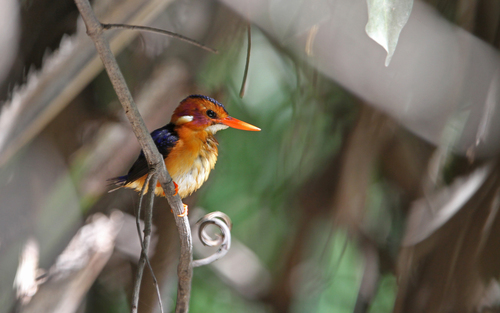
African Pygmy Kingfisher (Ispidina picta) African Pygmy Kingfisher
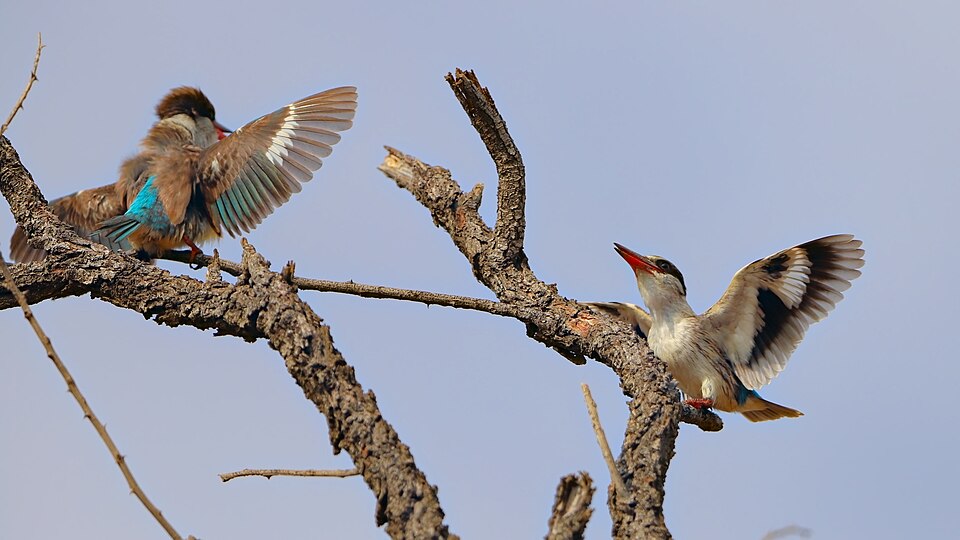
Striped Kingfisher (Halcyon chelicuti) Striped Kingfisher

Media

Caricamento…

In breve

The most reliable field mark between African Pygmy Kingfisher and Striped Kingfisher is overall size and structure: Striped Kingfisher is much larger and bulkier, with a heavier bill and longer tail, while African Pygmy Kingfisher is tiny, compact, and brightly colored. In flight, Striped Kingfisher flashes blue in the wings and tail with a white wing patch, whereas African Pygmy Kingfisher shows a uniform blue back and tail without the contrasting wing pattern. Juveniles of both species can be confusing, but the Pygmy Kingfisher's rufous underparts and blue back, along with its small size, set it apart from the streaked, greyish Striped Kingfisher. Voice and habitat also help: Pygmy Kingfisher gives a high 'tsip-tsip' in woodland, while Striped Kingfisher has a far-carrying, trilled call and prefers open areas.

Consigli di identificazione

  1. Size is the quickest separator: Striped Kingfisher is more than twice as heavy and much longer than African Pygmy Kingfisher; use this whenever you have a direct comparison or a sense of scale.
  2. Bill structure: Striped Kingfisher has a noticeably heavier, longer bill (blackish above, reddish below in adults); Pygmy Kingfisher’s bill is fine and mostly orange in adults, blackish in juveniles.
  3. Tail length and jizz: Striped Kingfisher has a longer tail and a bulkier, more upright posture; Pygmy Kingfisher is compact with a short tail and a more horizontal stance.
  4. Upperpart color: Pygmy Kingfisher is bright blue above (including back and tail), while Striped Kingfisher is grey-brown above with blue limited to lower back, wings, and tail.
  5. Underpart color: Pygmy Kingfisher is rufous below; Striped Kingfisher is off-white to buff with brown streaks, especially on the breast and sides.
  6. Crown pattern: Pygmy Kingfisher has a dark blue crown; Striped Kingfisher’s crown is streaked dark brown on a buffy or brownish background (greyer in northern subspecies).
  7. Facial pattern: Striped Kingfisher has a black line through the eye and a white collar around the neck; Pygmy Kingfisher lacks these features, instead showing a violet wash on the ear coverts (less in juveniles).
  8. Ear coverts: Pygmy Kingfisher adults have a violet wash on the ear coverts; Striped Kingfisher does not, and juveniles of Pygmy Kingfisher show less violet.
  9. Wing pattern in flight: Striped Kingfisher shows a white patch at the base of the primaries and metallic blue in wings and tail, especially visible in flight; Pygmy Kingfisher’s blue is more uniform and lacks the white patch.
  10. Juvenile confusion: Juvenile Pygmy Kingfisher has a black bill and less violet on the ear coverts; juvenile Striped Kingfisher is paler, with less blue in the wings and dusky breast tips.
  11. Vocalization: Pygmy Kingfisher’s call is a high 'tsip-tsip', easily overlooked; Striped Kingfisher’s call is loud, trilled, and far-carrying, often heard at dusk or during display.
  12. Habitat context: Pygmy Kingfisher is almost always in dense woodland; Striped Kingfisher prefers open woodland, savanna, or bushy clearings, often perching in the open.
  13. Behavior: Striped Kingfisher may display by flicking wings and cocking tail in the open; Pygmy Kingfisher is more secretive, flitting low through dense cover.
  14. Sex differences: Both species are similar between sexes, but Striped Kingfisher females may have a browner crown; not usually diagnostic in the field.
  15. Pitfall: In poor light or at a distance, Striped Kingfisher’s blue in the wings and tail may be missed, making it appear plainer; always check for size, bill, and facial pattern.

Taglia

African Pygmy Kingfisher is dramatically smaller, weighing about 14.6 g and measuring 12 cm in length. Striped Kingfisher is over twice as heavy at 37.8 g and much longer at 16–18 cm. In the field, Striped Kingfisher looks noticeably bulkier, with a stouter bill and longer tail. Even at a distance, the size gap is striking—Pygmy Kingfisher appears almost finch-sized, while Striped Kingfisher is closer to a small shrike or large sparrow in bulk.

Piumaggio

Juvenile and adult plumages differ distinctly. Juvenile African Pygmy Kingfisher is tiny, with rufous underparts, blue back and tail, and a blackish bill (not orange as in adults); violet on the ear coverts is reduced. Juvenile Striped Kingfisher is paler than the adult, with less blue in the wings, a darker crown, dusky tips to the breast feathers, and a dull red lower mandible. Adult African Pygmy Kingfisher shows a striking combination of rufous below and bright blue above, with a dark blue crown and violet-washed ear coverts; Striped Kingfisher adults are mostly grey-brown above with metallic blue limited to the lower back, flight feathers, and tail (most obvious in flight), off-white underparts with brown streaks, and a streaked crown. Striped Kingfisher also has a black line through the eye and a white collar, features lacking in Pygmy Kingfisher. In flight, Striped Kingfisher shows a white wing patch and blue in the wings and tail, while Pygmy Kingfisher’s blue is more uniform and lacks the white patch.

Comportamento

African Pygmy Kingfisher is often seen low in dense woodland, flitting quickly between perches, and is generally more secretive. Striped Kingfisher perches openly in trees in savanna or open woodland, often cocking its tail and flicking its wings during displays. Striped Kingfisher’s display includes facing another bird, tail cocked, and flicking wings while singing. Pygmy Kingfisher is more likely to be seen singly and close to cover.

Habitat

African Pygmy Kingfisher is typically found in dense woodland habitats, rarely venturing into open country. Striped Kingfisher prefers open woodland, savanna, and bushy clearings, often perching in exposed locations. If the bird is in thick, shaded woodland, Pygmy Kingfisher is more likely; in open or edge habitats, Striped Kingfisher is expected.

Voce

African Pygmy Kingfisher gives a high-pitched, insect-like 'tsip-tsip' call, usually in flight. Striped Kingfisher has a much louder, far-carrying call: a piercing 'cheer-cherrrrrr' or 'KEW, kerrrrrrrrr', with a descending trill. The Striped Kingfisher’s call is often heard at dusk and during display, and is much more conspicuous than the Pygmy Kingfisher’s subtle call.

Invia una descrizione migliore

Usa le stesse sezioni del confronto. Il testo viene pubblicato subito.

The most reliable field mark between African Pygmy Kingfisher and Striped Kingfisher is overall size and structure: Striped Kingfisher is much larger and bulkier, with a heavier bill and longer tail, while African Pygmy Kingfisher is tiny, compact, and brightly colored. In flight, Striped Kingfisher flashes blue in the wings and tail with a white wing patch, whereas African Pygmy Kingfisher shows a uniform blue back and tail without the contrasting wing pattern. Juveniles of both species can be confusing, but the Pygmy Kingfisher's rufous underparts and blue back, along with its small size, set it apart from the streaked, greyish Striped Kingfisher. Voice and habitat also help: Pygmy Kingfisher gives a high 'tsip-tsip' in woodland, while Striped Kingfisher has a far-carrying, trilled call and prefers open areas.

  1. Size is the quickest separator: Striped Kingfisher is more than twice as heavy and much longer than African Pygmy Kingfisher; use this whenever you have a direct comparison or a sense of scale.
  2. Bill structure: Striped Kingfisher has a noticeably heavier, longer bill (blackish above, reddish below in adults); Pygmy Kingfisher’s bill is fine and mostly orange in adults, blackish in juveniles.
  3. Tail length and jizz: Striped Kingfisher has a longer tail and a bulkier, more upright posture; Pygmy Kingfisher is compact with a short tail and a more horizontal stance.
  4. Upperpart color: Pygmy Kingfisher is bright blue above (including back and tail), while Striped Kingfisher is grey-brown above with blue limited to lower back, wings, and tail.
  5. Underpart color: Pygmy Kingfisher is rufous below; Striped Kingfisher is off-white to buff with brown streaks, especially on the breast and sides.
  6. Crown pattern: Pygmy Kingfisher has a dark blue crown; Striped Kingfisher’s crown is streaked dark brown on a buffy or brownish background (greyer in northern subspecies).
  7. Facial pattern: Striped Kingfisher has a black line through the eye and a white collar around the neck; Pygmy Kingfisher lacks these features, instead showing a violet wash on the ear coverts (less in juveniles).
  8. Ear coverts: Pygmy Kingfisher adults have a violet wash on the ear coverts; Striped Kingfisher does not, and juveniles of Pygmy Kingfisher show less violet.
  9. Wing pattern in flight: Striped Kingfisher shows a white patch at the base of the primaries and metallic blue in wings and tail, especially visible in flight; Pygmy Kingfisher’s blue is more uniform and lacks the white patch.
  10. Juvenile confusion: Juvenile Pygmy Kingfisher has a black bill and less violet on the ear coverts; juvenile Striped Kingfisher is paler, with less blue in the wings and dusky breast tips.
  11. Vocalization: Pygmy Kingfisher’s call is a high 'tsip-tsip', easily overlooked; Striped Kingfisher’s call is loud, trilled, and far-carrying, often heard at dusk or during display.
  12. Habitat context: Pygmy Kingfisher is almost always in dense woodland; Striped Kingfisher prefers open woodland, savanna, or bushy clearings, often perching in the open.
  13. Behavior: Striped Kingfisher may display by flicking wings and cocking tail in the open; Pygmy Kingfisher is more secretive, flitting low through dense cover.
  14. Sex differences: Both species are similar between sexes, but Striped Kingfisher females may have a browner crown; not usually diagnostic in the field.
  15. Pitfall: In poor light or at a distance, Striped Kingfisher’s blue in the wings and tail may be missed, making it appear plainer; always check for size, bill, and facial pattern.

African Pygmy Kingfisher is dramatically smaller, weighing about 14.6 g and measuring 12 cm in length. Striped Kingfisher is over twice as heavy at 37.8 g and much longer at 16–18 cm. In the field, Striped Kingfisher looks noticeably bulkier, with a stouter bill and longer tail. Even at a distance, the size gap is striking—Pygmy Kingfisher appears almost finch-sized, while Striped Kingfisher is closer to a small shrike or large sparrow in bulk.

Juvenile and adult plumages differ distinctly. Juvenile African Pygmy Kingfisher is tiny, with rufous underparts, blue back and tail, and a blackish bill (not orange as in adults); violet on the ear coverts is reduced. Juvenile Striped Kingfisher is paler than the adult, with less blue in the wings, a darker crown, dusky tips to the breast feathers, and a dull red lower mandible. Adult African Pygmy Kingfisher shows a striking combination of rufous below and bright blue above, with a dark blue crown and violet-washed ear coverts; Striped Kingfisher adults are mostly grey-brown above with metallic blue limited to the lower back, flight feathers, and tail (most obvious in flight), off-white underparts with brown streaks, and a streaked crown. Striped Kingfisher also has a black line through the eye and a white collar, features lacking in Pygmy Kingfisher. In flight, Striped Kingfisher shows a white wing patch and blue in the wings and tail, while Pygmy Kingfisher’s blue is more uniform and lacks the white patch.

African Pygmy Kingfisher is often seen low in dense woodland, flitting quickly between perches, and is generally more secretive. Striped Kingfisher perches openly in trees in savanna or open woodland, often cocking its tail and flicking its wings during displays. Striped Kingfisher’s display includes facing another bird, tail cocked, and flicking wings while singing. Pygmy Kingfisher is more likely to be seen singly and close to cover.

African Pygmy Kingfisher is typically found in dense woodland habitats, rarely venturing into open country. Striped Kingfisher prefers open woodland, savanna, and bushy clearings, often perching in exposed locations. If the bird is in thick, shaded woodland, Pygmy Kingfisher is more likely; in open or edge habitats, Striped Kingfisher is expected.

African Pygmy Kingfisher gives a high-pitched, insect-like 'tsip-tsip' call, usually in flight. Striped Kingfisher has a much louder, far-carrying call: a piercing 'cheer-cherrrrrr' or 'KEW, kerrrrrrrrr', with a descending trill. The Striped Kingfisher’s call is often heard at dusk and during display, and is much more conspicuous than the Pygmy Kingfisher’s subtle call.

Scartare le modifiche?

Hai modifiche non salvate. Se esci ora, andranno perse.

African Pygmy Kingfisher · Striped Kingfisher · I miei uccelli difficili