

Motmot

ミナミメンフクロウ 対 アフリカコノハズク

Tyto capensis 対 Otus senegalensis

ミナミメンフクロウとアフリカコノハズクのクイズ
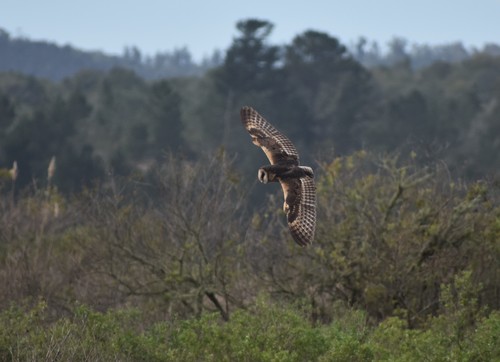
ミナミメンフクロウ (Tyto capensis) ミナミメンフクロウ
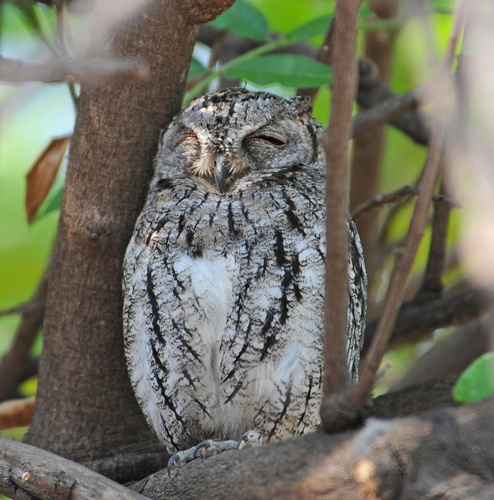
アフリカコノハズク (Otus senegalensis) アフリカコノハズク

メディア

読み込み中…

要点

アフリカコノハズクとミナミメンフクロウを区別する最も信頼できる方法は、サイズと構造です:ミナミメンフクロウははるかに大きく、長い脚、長い翼、長い尾のシルエットを持っていますが、アフリカコノハズクは小さく、コンパクトで、尾が短いです。ミナミメンフクロウは、目立つハート型の白い顔の円盤と暗い目を持ち、アフリカコノハズクは、黄色い目としばしば見える耳の房を持つ小さくて丸い顔を示します。飛行中、ミナミメンフクロウの翼と尾は広くて丸みを帯びていますが、アフリカコノハズクの翼と尾は短くて狭いです。羽毛も手がかりになります:ミナミメンフクロウは上面がすす黒で、散在する白い斑点がありますが、アフリカコノハズクは灰色または赤褐色の巧妙に縞模様があり、まだら模様です。声と生息地も役立ちますが、サイズと顔の模様が最も迅速なフィールドの手がかりです。

識別のコツ

  1. Size is the fastest clue: ミナミメンフクロウはアフリカコノハズクの2倍以上の長さで、はるかに重いです。遠くからでも、ミナミメンフクロウは細長く、長い翼を持っているように見えますが、アフリカコノハズクは小さくてコンパクトです。サイズだけで、ほとんどのフィールドビューで混乱を排除できます。
  2. Facial disc shape and color: ミナミメンフクロウは大きなハート型の白っぽいクリーム色の顔の円盤を持ち、狭い黄褐色の縁と暗い斑点があります。アフリカコノハズクは小さくて丸い灰色の顔の円盤を持ち、狭い黒い縁があります。ミナミメンフクロウの大胆な白い顔は、特に薄暗い場所で目立ちます。
  3. Eye color: ミナミメンフクロウは暗い茶色がかった黒い目を持ち、アフリカコノハズクは目立つ黄色い目を持っています。これは、トーチライトや近くの視界でよく見えます。
  4. Ear tufts: アフリカコノハズクは小さな耳の房を持ち、通常は平らに保たれていますが、警戒しているときや動揺しているときには上げることがあります。ミナミメンフクロウは耳の房が全くありません。房が見えたら、それはミナミメンフクロウではありません。
  5. Upperparts pattern: ミナミメンフクロウは上面が均一にすす黒っぽい茶色で、小さな白い斑点と灰色の斑点があります。アフリカコノハズクは灰色または赤褐色の巧妙に縞模様があり、樹皮や葉に溶け込んでいます。ミナミメンフクロウの上面ははるかに暗く、模様が少ないです。
  6. Underparts: ミナミメンフクロウの下部は白っぽい色から黄褐色で、暗い斑点がありますが、アフリカコノハズクの下部は縞模様とまだら模様があり、巧妙な上面に合っています。
  7. Wing and tail shape: ミナミメンフクロウは長くて広い翼と比較的長くて丸い尾を持っています。アフリカコノハズクの翼と尾は短くて丸みを帯びており、飛行中や止まっているときにコンパクトな外観を与えます。
  8. Legs and stance: ミナミメンフクロウは長くて淡い羽毛のある脚を持ち、しばしば直立して立ち、時にはほとんど脚立のように見えます。アフリカコノハズクははるかに短い脚を持ち、ずんぐりしたコンパクトな姿勢です。
  9. Flight style: ミナミメンフクロウは遅くて浮遊感のある翼の動きで飛び、草の上を低く滑空します。アフリカコノハズクの飛行は迅速で直接的で、カバーに近く、木の間を短いバーストで飛びます。
  10. Habitat context: ミナミメンフクロウは開けた草原や湿地の端に生息し、木にはめったにいません。アフリカコノハズクは森林、サバンナ、時には庭に見られますが、開けた草原にはめったにいません。環境は強力な手がかりになる可能性があります。
  11. Voice: ミナミメンフクロウはバンフクロウのように叫びます(しかし、あまり厳しくはありません);アフリカコノハズクは柔らかく繰り返される「プルプ」または「フー」を出します。もし叫び声を聞いたら、それはアフリカコノハズクではありません。
  12. Bill color: ミナミメンフクロウは白っぽいから淡いピンクのくちばしを持ち、アフリカコノハズクのくちばしの色はメモに特に目立ちませんが、これは小さなポイントです。
  13. Sexual dimorphism: ミナミメンフクロウの雌は雄よりも大きいですが、両方の性別はアフリカコノハズクよりもはるかに大きいです。
  14. Juvenile/immature confusion: どちらの種にも特定の幼鳥や未熟な翼のパターンマークは記載されていないため、すべての年齢に対して構造と顔のパターンに依存してください。
  15. Common pitfalls: 夕暮れ時や薄暗い場所では、アフリカコノハズクの巧妙な羽毛が見えにくくなることがありますが、ミナミメンフクロウの白い顔はしばしば光を捉えます。参考なしで単独で見た場合、サイズを誤って判断しないように注意してください。

大きさ

ミナミメンフクロウは劇的に大きく、長さ38〜42 cm、翼の長さ283〜345 mm、体重355〜520 gです。対照的に、アフリカコノハズクはわずか15〜17 cmの長さで、翼幅は約45 cm、はるかに軽い体格です。遠くからでも、ミナミメンフクロウは細長く、長い翼を持っているように見えますが、アフリカコノハズクは小さくてコンパクトで、ミナミメンフクロウのほぼ半分の長さです。このサイズの違いは、直接比較や同じサイズの止まり木に止まっているときに明らかです。

羽色

どちらの種にも年齢特有の翼や飛行パターンのマークは記載されていないため、全体の羽毛と顔の特徴に焦点を当てます。成鳥と未熟なミナミメンフクロウは、上面がすす黒っぽい茶色で、散在する小さな白い斑点と灰色の斑点があり、狭い黄褐色の縁が濃く斑点のある特徴的なハート型の白っぽいクリーム色の顔の円盤を持っています。彼らの目は茶色がかった黒です。下部は白っぽい色から黄褐色で、暗い斑点があります。翼は淡い茶色がかった灰色で、暗いバーがあります。尾は短く、中央の羽毛は茶色で、外側の羽毛は淡い色に変わり、約4本の暗いバーを示しています。対照的に、アフリカコノハズクは灰色がかった茶色で巧妙にマークされており、時には淡い赤褐色や暖かい茶色で、カモフラージュのために縞模様やまだら模様があります。彼の顔の円盤は灰色で狭い黒い縁があり、目は黄色です。耳の房は存在し、通常は下げられていますが、鳥が警戒しているときには上げることがあります。アフリカコノハズクの羽毛はカモフラージュのためにはるかにパターン化されており、ミナミメンフクロウの大胆な白い顔と暗い上面が欠けています。

行動

ミナミメンフクロウは、草原の上を低く飛び、遅くて浮遊感のある翼の動きと長い滑空を行い、低いポストや地面に止まっているのを見ることがあります。彼の長い脚と直立した姿勢は、止まっているときに特徴的です。アフリカコノハズクは、より厳密に夜行性で秘密主義的であり、通常は昼間に木の幹の近くで休んでおり、カモフラージュに依存しています。動揺すると、彼は体を伸ばし、耳の房を上げて壊れた枝を模倣することがあります。飛行中、アフリカコノハズクは迅速で直接的で、短くて丸い翼と短い尾を持っています。

生息環境

ミナミメンフクロウは、草が高くて密なランク草原、湿地の端、開けた国に強く関連しており、森林地域を避けます。一方、アフリカコノハズクは森林の種であり、サバンナ、開けた森林、時には庭や森林公園に見られますが、開けた草原にはめったにいません。開けた草原でフクロウを見ることは、ミナミメンフクロウを強く示唆しますが、木や森林にいる場合はアフリカコノハズクの可能性が高いです。

声

ミナミメンフクロウは、バンフクロウに似た叫び声を出しますが、あまり厳しくなく、高音のシビラントトレモロ(雄の歌と考えられています)を出します。アフリカコノハズクは非常に異なる声を持ち、柔らかく繰り返される「プルプ」または「フー」という音を間隔を置いて出します。もしクラシックなバンフクロウのような叫び声を聞いたら、それはミナミメンフクロウです;もし柔らかいトゥーティングの呼び声を聞いたら、それはアフリカコノハズクです。

より良い説明を送る

比較と同じ項目を使ってください。文章はすぐに公開されます。

The most reliable way to separate African Grass-Owl from African Scops Owl is by size and structure: Grass-Owl is much larger, with a long-legged, long-winged, and long-tailed silhouette, while Scops Owl is tiny, compact, and short-tailed. Grass-Owl has a striking heart-shaped white facial disc and dark eyes, whereas Scops Owl shows a smaller, rounder face with yellow eyes and often-visible ear tufts. In flight, Grass-Owl's wings and tail are broad and rounded, while Scops Owl's are short and narrow. Plumage is also a giveaway: Grass-Owl is sooty-black above with scattered white spots, while Scops Owl is cryptically streaked and mottled grey or rufous. Voice and habitat can help, but size and face pattern are the fastest field clues.

  1. Size is the fastest clue: Grass-Owl is more than twice the length of Scops Owl and much heavier. Even at a distance, Grass-Owl looks lanky and long-winged, while Scops Owl is tiny and compact. Size alone can rule out confusion in most field views.
  2. Facial disc shape and color: Grass-Owl has a large, heart-shaped, whitish-cream facial disc with a narrow yellowish-buff rim and dark spotting. Scops Owl has a smaller, rounder grey facial disc with a narrow black edge. The bold white face of Grass-Owl stands out, especially in low light.
  3. Eye color: Grass-Owl has dark brownish-black eyes; Scops Owl has striking yellow eyes. This is often visible in torchlight or close views.
  4. Ear tufts: Scops Owl has small ear tufts, usually kept flat but can be raised when alert or disturbed. Grass-Owl lacks ear tufts entirely. If you see tufts, it's not Grass-Owl.
  5. Upperparts pattern: Grass-Owl is uniformly sooty blackish-brown above with small white spots and grey flecks. Scops Owl is cryptically streaked and mottled in grey or rufous, blending into bark or leaves. The Grass-Owl's upperparts are much darker and less patterned.
  6. Underparts: Grass-Owl's underparts are whitish to buff with dark spots, while Scops Owl's are streaked and mottled, matching the cryptic upperparts.
  7. Wing and tail shape: Grass-Owl has long, broad wings and a relatively long, rounded tail. Scops Owl's wings and tail are short and rounded, giving a compact appearance in flight and when perched.
  8. Legs and stance: Grass-Owl has long, pale, feathered legs and often stands upright, sometimes appearing almost stilted. Scops Owl has much shorter legs and a squat, compact posture.
  9. Flight style: Grass-Owl flies with slow, buoyant wingbeats and glides low over grass. Scops Owl's flight is rapid, direct, and close to cover, with short bursts between trees.
  10. Habitat context: Grass-Owl is found in open grassland and marsh edges, rarely in trees. Scops Owl is found in woodland, savanna, and sometimes gardens, rarely in open grassland. The setting can be a strong clue.
  11. Voice: Grass-Owl screeches like a barn owl (but less harsh); Scops Owl gives a soft, repeated 'prrrp' or 'whu'. If you hear a screech, it's not Scops Owl.
  12. Bill color: Grass-Owl has a whitish to pale pink bill; Scops Owl's bill color is not distinctive in the notes, but this is a minor point.
  13. Sexual dimorphism: Grass-Owl females are larger than males, but both sexes are much larger than any Scops Owl.
  14. Juvenile/immature confusion: No specific juvenile or immature wing pattern marks are described for either species, so rely on structure and face pattern for all ages.
  15. Common pitfalls: At dusk or in poor light, Scops Owl's cryptic plumage may make it hard to see, while Grass-Owl's white face often catches the light. Beware of misjudging size if the bird is seen alone without a reference.

African Grass-Owl is dramatically larger, measuring 38–42 cm in length with a wing length of 283–345 mm and weighing 355–520 g. In contrast, African Scops Owl is only 15–17 cm long, with a wingspan of about 45 cm and a much lighter build. Even at a distance, Grass-Owl appears lanky and long-winged, while Scops Owl is tiny, compact, and almost half the length of the Grass-Owl. This size difference is obvious in any direct comparison or when seen perched on similar-sized perches.

No age-specific wing or flight pattern marks are described for either species, so focus is on overall plumage and facial features. Adult and immature African Grass-Owls are sooty blackish-brown above, with scattered small white spots and greyish flecks, and have a distinctive heart-shaped whitish-cream facial disc with a narrow yellowish-buff rim densely spotted dark. Their eyes are brownish-black. The underparts are whitish to buff with dark spots. The wings are pale brownish-grey with dark bars, and the tail is short with brown central feathers fading to paler outer feathers, showing about four dark bars. In contrast, African Scops Owl is cryptically marked in greyish-brown, sometimes pale rufous or warmer brown, with streaks and mottling for camouflage. Its facial disc is grey with a narrow black edge, and the eyes are yellow. Ear tufts are present and usually kept lowered, but can be raised when the bird is alert. Scops Owl's plumage is much more patterned for camouflage, lacking the bold white face and dark upperparts of Grass-Owl.

Grass-Owl often hunts by quartering low over grasslands, flying with slow, buoyant wingbeats and long glides, and may be seen perched on low posts or even on the ground. Its long legs and upright stance are distinctive when perched. Scops Owl is more strictly nocturnal and secretive, usually roosting close to tree trunks during the day, relying on its camouflage. When disturbed, it may elongate its body and raise its ear tufts to mimic a broken branch. In flight, Scops Owl is rapid and direct, with short, rounded wings and a short tail.

African Grass-Owl is strongly associated with rank grasslands, marsh edges, and open country, often where grass is tall and dense. It avoids wooded areas. African Scops Owl, on the other hand, is a woodland species, found in savanna, open woodland, and sometimes gardens or wooded parks, but rarely in open grassland. Seeing an owl in open grassland strongly favors Grass-Owl, while one in a tree or woodland is more likely Scops Owl.

Grass-Owl gives a screeching call similar to Barn Owl, but less harsh, and a high-pitched sibilant tremolo (thought to be the male's song). Scops Owl has a very different voice, producing a soft, repeated 'prrrp' or 'whu' note at intervals, typical of scops owls. If you hear a classic barn-owl-like screech, it's Grass-Owl; if you hear a soft, tooting call, it's Scops Owl.

変更を破棄しますか?

保存していない編集があります。今離れると失われます。

ミナミメンフクロウ · アフリカコノハズク · 苦手な鳥