

African Grass-Owl vs African Scops-Owl
Tyto capensis contro Otus senegalensis
Fai un quiz con African Grass-Owl e African Scops-Owl
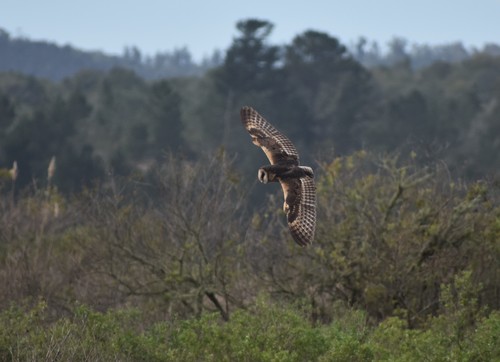 African Grass-Owl
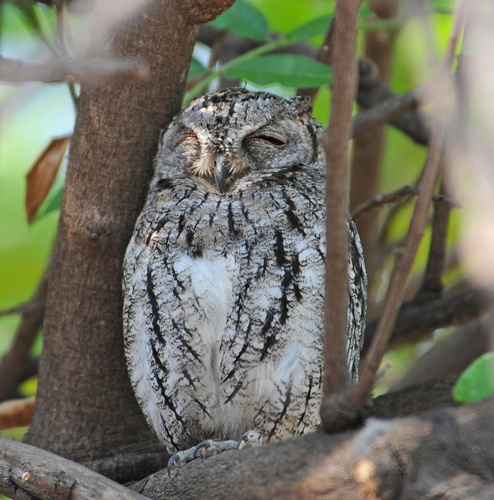 African Scops-Owl
In breve
Il modo più affidabile per separare l'African Grass-Owl dall'African Scops-Owl è per dimensione e struttura: l'African Grass-Owl è molto più grande, con una silhouette di gambe lunghe, ali lunghe e coda lunga, mentre l'African Scops-Owl è piccola, compatta e con coda corta. L'African Grass-Owl ha un sorprendente disco facciale bianco a forma di cuore e occhi scuri, mentre l'African Scops-Owl mostra un volto più piccolo e rotondo con occhi gialli e ciuffi auricolari spesso visibili. In volo, le ali e la coda dell'African Grass-Owl sono larghe e arrotondate, mentre quelle dell'African Scops-Owl sono corte e strette. Il piumaggio è anche un indizio: l'African Grass-Owl è nero pece sopra con macchie bianche sparse, mentre l'African Scops-Owl è striato e maculato in modo criptico di grigio o ruggine. La voce e l'habitat possono aiutare, ma la dimensione e il motivo del volto sono i più rapidi indizi sul campo.
Consigli di identificazione
- La dimensione è il più rapido indizio: l'African Grass-Owl è più di due volte la lunghezza dell'African Scops-Owl e molto più pesante. Anche a distanza, l'African Grass-Owl appare slanciato e con ali lunghe, mentre l'African Scops-Owl è piccola e compatta. La dimensione da sola può escludere confusione nella maggior parte delle osservazioni sul campo.
- Forma e colore del disco facciale: l'African Grass-Owl ha un grande disco facciale a forma di cuore, bianco-crema, con un bordo giallo-buff stretto e macchie scure. L'African Scops-Owl ha un disco facciale grigio più piccolo e rotondo con un bordo nero stretto. Il volto bianco audace dell'African Grass-Owl spicca, specialmente in condizioni di scarsa illuminazione.
- Colore degli occhi: l'African Grass-Owl ha occhi di un marrone scuro-nero; l'African Scops-Owl ha occhi gialli sorprendenti. Questo è spesso visibile in luce di torcia o in osservazioni ravvicinate.
- Ciuffi auricolari: l'African Scops-Owl ha piccoli ciuffi auricolari, di solito mantenuti piatti ma possono essere sollevati quando è allerta o disturbata. L'African Grass-Owl non ha affatto ciuffi auricolari. Se vedi ciuffi, non è un'African Grass-Owl.
- Motivo delle parti superiori: l'African Grass-Owl è uniformemente nero pece-bruno sopra con piccole macchie bianche e macchie grigie. L'African Scops-Owl è striato e maculato in modo criptico di grigio o ruggine, mimetizzandosi con la corteccia o le foglie. Le parti superiori dell'African Grass-Owl sono molto più scure e meno decorate.
- Parti inferiori: le parti inferiori dell'African Grass-Owl sono bianche a buff con macchie scure, mentre quelle dell'African Scops-Owl sono striate e maculate, corrispondenti alle parti superiori criptiche.
- Forma delle ali e della coda: l'African Grass-Owl ha ali lunghe e larghe e una coda relativamente lunga e arrotondata. Le ali e la coda dell'African Scops-Owl sono corte e arrotondate, dando un aspetto compatto in volo e quando è appollaiata.
- Gambe e postura: l'African Grass-Owl ha gambe lunghe, chiare e piumate e spesso sta in posizione eretta, a volte apparendo quasi su stilt. L'African Scops-Owl ha gambe molto più corte e una postura bassa e compatta.
- Stile di volo: l'African Grass-Owl vola con battiti d'ali lenti e galleggianti e scivola basso sopra l'erba. Il volo dell'African Scops-Owl è rapido, diretto e vicino alla copertura, con brevi scatti tra gli alberi.
- Contesto dell'habitat: l'African Grass-Owl si trova in praterie aperte e bordi di paludi, raramente sugli alberi. L'African Scops-Owl si trova in boschi, savane e talvolta giardini, raramente in praterie aperte. L'ambiente può essere un forte indizio.
- Voce: l'African Grass-Owl strida come un gufo delle fattorie (ma meno aspramente); l'African Scops-Owl emette un 'prrrp' o 'whu' morbido e ripetuto. Se senti uno strido, non è un'African Scops-Owl.
- Colore del becco: l'African Grass-Owl ha un becco bianco a rosa pallido; il colore del becco dell'African Scops-Owl non è distintivo nelle note, ma questo è un punto minore.
- Dimorfismo sessuale: le femmine di African Grass-Owl sono più grandi dei maschi, ma entrambi i sessi sono molto più grandi di qualsiasi African Scops-Owl.
- Confusione giovanile/immatura: non sono descritti segni specifici di piumaggio giovanile o immaturo per nessuna delle due specie, quindi fai affidamento sulla struttura e sul motivo del volto per tutte le età.
- Trappole comuni: al crepuscolo o in condizioni di scarsa illuminazione, il piumaggio criptico dell'African Scops-Owl può renderlo difficile da vedere, mentre il volto bianco dell'African Grass-Owl spesso cattura la luce. Fai attenzione a sovrastimare la dimensione se l'uccello è visto da solo senza un riferimento.
Taglia
L'African Grass-Owl è drammaticamente più grande, misurando 38–42 cm di lunghezza con una lunghezza dell'ala di 283–345 mm e pesando 355–520 g. Al contrario, l'African Scops-Owl è lungo solo 15–17 cm, con un'apertura alare di circa 45 cm e una costruzione molto più leggera. Anche a distanza, l'African Grass-Owl appare slanciato e con ali lunghe, mentre l'African Scops-Owl è piccola, compatta e quasi la metà della lunghezza dell'African Grass-Owl. Questa differenza di dimensione è ovvia in qualsiasi confronto diretto o quando vista appollaiata su posatoi di dimensioni simili.
Piumaggio
Non sono descritti segni specifici di piumaggio o di volo per età per nessuna delle due specie, quindi ci si concentra sul piumaggio complessivo e sulle caratteristiche facciali. Gli adulti e gli immaturi di African Grass-Owl sono di un nero pece-bruno sopra, con piccole macchie bianche sparse e macchie grigie, e hanno un distintivo disco facciale bianco-crema a forma di cuore con un bordo giallo-buff stretto densamente macchiato di scuro. I loro occhi sono di un marrone scuro-nero. Le parti inferiori sono bianche a buff con macchie scure. Le ali sono di un grigio-bruno chiaro con barre scure, e la coda è corta con piume centrali brune che sfumano in piume esterne più chiare, mostrando circa quattro barre scure. Al contrario, l'African Scops-Owl è contrassegnato in modo criptico di grigio-bruno, a volte ruggine chiaro o marrone più caldo, con striature e maculature per mimetizzarsi. Il suo disco facciale è grigio con un bordo nero stretto, e gli occhi sono gialli. I ciuffi auricolari sono presenti e di solito mantenuti abbassati, ma possono essere sollevati quando l'uccello è allerta. Il piumaggio dell'African Scops-Owl è molto più decorato per la mimetizzazione, mancando del volto bianco audace e delle parti superiori scure dell'African Grass-Owl.
Comportamento
L'African Grass-Owl spesso caccia passando basso sopra le praterie, volando con battiti d'ali lenti e galleggianti e lunghe planate, e può essere vista appollaiata su pali bassi o anche a terra. Le sue lunghe gambe e la postura eretta sono distintive quando è appollaiata. L'African Scops-Owl è più strettamente notturna e segreta, di solito riposando vicino ai tronchi degli alberi durante il giorno, facendo affidamento sulla sua mimetizzazione. Quando disturbata, può allungare il corpo e sollevare i ciuffi auricolari per mimare un ramo spezzato. In volo, l'African Scops-Owl è rapida e diretta, con ali corte e arrotondate e una coda corta.
Habitat
L'African Grass-Owl è fortemente associata a praterie alte, bordi di paludi e campagna aperta, spesso dove l'erba è alta e densa. Evita le aree boschive. L'African Scops-Owl, d'altra parte, è una specie di bosco, trovata in savane, boschi aperti e talvolta giardini o parchi boschivi, ma raramente in praterie aperte. Vedere un gufo in prateria aperta favorisce fortemente l'African Grass-Owl, mentre uno in un albero o in un bosco è più probabile che sia un'African Scops-Owl.
Voce
L'African Grass-Owl emette un richiamo stridente simile a quello del Barn Owl, ma meno aspro, e un tremolo sibilante ad alta frequenza (pensato per essere il canto del maschio). L'African Scops-Owl ha una voce molto diversa, producendo una nota morbida e ripetuta 'prrrp' o 'whu' a intervalli, tipica dei gufi scops. Se senti uno strido classico simile a quello di un gufo delle fattorie, è l'African Grass-Owl; se senti un richiamo morbido e fischiante, è l'African Scops-Owl.
African Grass-Owl · African Scops-Owl · I miei uccelli difficili