

Worm-eating Warbler vs Golden-winged Warbler
Helmitheros vermivorum contro Vermivora chrysoptera
Fai un quiz con Worm-eating Warbler e Golden-winged Warbler
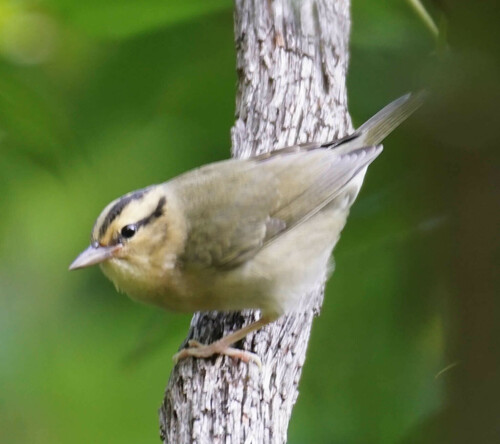 Worm-eating Warbler
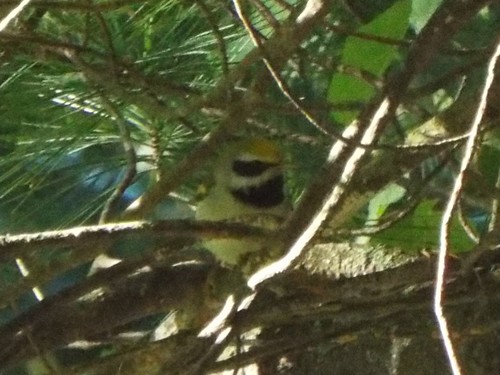 Golden-winged Warbler
In breve
The most reliable way to separate Worm-eating Warbler from Golden-winged Warbler is by head and wing pattern: Worm-eating Warbler shows bold black and buff stripes on the crown and is otherwise plain olive-brown above, while Golden-winged Warbler has a striking yellow crown, black mask and throat (male), and a bright yellow wing patch. Juvenile Worm-eating Warblers may show cinnamon wingbars, but Golden-winged Warbler of all ages has a yellow wing panel and white in the tail. Structure is similar, but Worm-eating is slightly heavier and has pink legs. Habitat and range overlap in the Appalachians, but Golden-winged prefers more open, brushy areas. Voice and behavior can help, but plumage—especially head and wing pattern—remains the most practical field mark.
Consigli di identificazione
- Head pattern (all ages): Worm-eating Warbler shows bold black and buff stripes on the crown, running from bill to nape, with a plain face. Golden-winged Warbler has a yellow crown and a black (male) or gray (female) mask and throat, with a white or pale border—never crown stripes.
- Wing pattern (juvenile/immature): Juvenile Worm-eating Warblers may show cinnamon wingbars, but never a yellow wing patch. Golden-winged Warbler of all ages has a bright yellow wing patch, not bars.
- Tail pattern (all ages): Golden-winged Warbler has extensive white in the tail, especially visible from below in flight or when fanned. Worm-eating Warbler's tail is plain brown with no white.
- Upperparts color: Worm-eating is olive-brown above and buffy below, with little contrast. Golden-winged is gray above, white below, with a yellow crown and wing patch.
- Underparts: Worm-eating is uniformly pale below; Golden-winged is white or grayish, with a sharp contrast to the darker back.
- Bill and legs: Worm-eating Warbler has a slim, pointed bill and pink legs, which can be a subtle but useful mark if seen well. Golden-winged's bill is also slender, but legs are not noted as pink.
- Sex differences: Worm-eating is sexually monomorphic in plumage; Golden-winged males have a black mask and throat, females have a gray mask and pale throat.
- Juvenile head pattern: Juvenile Worm-eating Warbler's head stripes are duskier and less crisp than adults, but still present. Golden-winged juveniles lack crown stripes and have a yellow crown and gray mask.
- Flight views: Look for white tail patches and yellow wing panel in Golden-winged; Worm-eating is plain in flight except for possible cinnamon wingbars in juveniles.
- Behavior: Worm-eating Warbler creeps along branches and probes in dead leaves, often low or in dense understory. Golden-winged is more active and acrobatic, foraging in open brush or higher in the canopy.
- Habitat: Worm-eating prefers mature forests with dense shrub layer; Golden-winged is found in open, brushy areas, young forests, or wetland edges.
- Song: Worm-eating's song is a short, high trill; Golden-winged's is a longer, buzzy trill. Use with caution, as both can give sharp chip calls.
- Range/context: In the Appalachians, both may occur together, but Golden-winged is rare and local, often in open or regenerating habitats; Worm-eating is more widespread in mature woods.
- Size: Worm-eating is slightly heavier and longer, but this is rarely apparent in the field.
- Pitfalls: Do not rely on overall 'drabness'—juvenile Golden-winged can appear dull, but always look for yellow crown and wing patch. Cinnamon wingbars point to juvenile Worm-eating, not Golden-winged.
Taglia
Worm-eating Warbler is slightly larger and heavier, averaging 11.8–17.4 g, compared to Golden-winged Warbler's 8–10 g [wikidata]. Both are small warblers, but Worm-eating looks a bit more robust. Length is similar: Worm-eating averages about 13 cm, Golden-winged about 11.6 cm. In the field, this size difference is subtle and rarely diagnostic unless both species are side by side.
Piumaggio
- Juvenile/immature birds: Juvenile Worm-eating Warblers have duskier, less crisp head stripes and may show cinnamon wingbars, a feature absent in Golden-winged Warbler. Golden-winged juveniles resemble adult females, with a yellow crown and wing patch, grayish upperparts, and white underparts, but lack the strong black mask and throat of adult males.
- Adults: Worm-eating Warbler is overall plain olive-brown above and buffy below, with bold black and buff stripes on the crown (not on the face). Golden-winged Warbler adults have a bright yellow crown, a yellow wing patch, and a bold black mask and throat (male) or gray mask and throat (female), with contrasting gray upperparts and white underparts. Both sexes of Golden-winged show extensive white in the tail, especially visible from below, which Worm-eating Warbler lacks. Worm-eating's bill is slim and pointed, legs pink; Golden-winged's bill is also slender but legs are not noted as pink.
- In flight: Golden-winged Warbler's white tail patches and yellow wing panel are visible; Worm-eating Warbler is plainer, with no strong wing or tail pattern in flight except for possible cinnamon wingbars in juveniles.
Comportamento
Both species forage in dense vegetation, but Worm-eating Warbler is more often seen creeping along branches or probing in dead leaves, often close to the ground or in the understory. Golden-winged Warbler is more active and acrobatic, foraging in open scrub, brush, or forest edge, and may be seen higher in the canopy. Both can be secretive, but Worm-eating is especially skulking and rarely ventures into open spaces.
Habitat
Worm-eating Warbler breeds in mature hardwood forests, especially on steep slopes or in dense shrubby understory, and winters in both scrub and moist forests in the tropics. Golden-winged Warbler breeds in open, brushy habitats, forest edges, and wetlands, often near young forests or shrubby clearings. In the Appalachians, both can occur in proximity, but Golden-winged is more likely in open, regenerating areas, while Worm-eating prefers denser, older woodland with thick understory.
Voce
Worm-eating Warbler gives a short, high-pitched trill as its song, and a sharp chip or 'tseet' call. Golden-winged Warbler's song is a variable, buzzy trill ('bzzzzzzz buzz buzz buzz'), and its call is a buzzy chip or 'zip.' Golden-winged's song is longer and more complex, with a distinctive buzzy quality, while Worm-eating's is shorter, higher, and less variable. Calls can be similar and are not always diagnostic.
Worm-eating Warbler · Golden-winged Warbler · I miei uccelli difficili