

White-tipped Dove vs White-winged Dove
Leptotila verreauxi contro Zenaida asiatica
Fai un quiz con White-tipped Dove e White-winged Dove
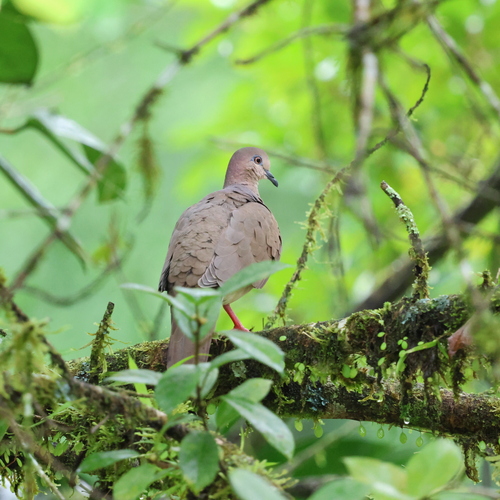 White-tipped Dove
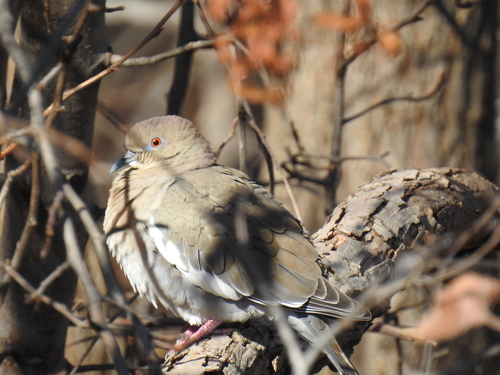 White-winged Dove
In breve
Il segno di campo più affidabile per separare la White-tipped Dove dalla White-winged Dove è la presenza di un bordo bianco audace sulla ala ripiegata e di un brillante crescente bianco in volo sulla White-winged Dove, che è completamente assente nella White-tipped Dove. Entrambe le specie sono simili in dimensioni e colorazione grigio-marrone complessiva, ma la White-tipped Dove mostra una larga punta bianca sulla coda (meglio visibile da sotto o in volo), mentre la White-winged Dove ha una coda corta e arrotondata e manca di questa caratteristica. Il colore degli occhi e l'anello oculare possono aiutare: la White-winged Dove ha sempre un anello oculare blu e occhi rossi (marroni nei giovani), mentre l'anello oculare della White-tipped Dove è rosso o blu a seconda della regione e dell'età, e la sua iride è gialla. I giovani White-winged Doves sono più opachi e mancano di iridescenza, ma mostrano comunque la macchia bianca sulla ala. In posizioni perpendicolari o a terra, concentrati sul modello della ala e della coda per la separazione più rapida.
Consigli di identificazione
- White wing patch (all ages): Solo la White-winged Dove ha un bordo bianco audace sulla ala ripiegata e un brillante crescente bianco in volo. Se vedi bianco sulla ala a riposo o in volo, è una White-winged Dove, indipendentemente dall'età o dalla stagione.
- Tail pattern (all ages): La White-tipped Dove ha una larga punta bianca sulla coda, meglio visibile da sotto o in volo. La White-winged Dove ha una coda corta e arrotondata senza punta bianca. In volo, cerca il contrasto alla fine della coda.
- Eye and eye-ring color (adults): Gli adulti della White-winged Dove hanno un anello oculare blu e occhi rossi brillanti (carmine). Gli adulti della White-tipped Dove hanno un anello oculare rosso o blu (a seconda della regione) e un'iride gialla. I giovani White-winged Doves hanno occhi marroni, ma l'anello oculare blu è ancora presente.
- Underwing color (adults): La White-tipped Dove mostra copritrici rufous sotto le ali, visibili in volo o se l'uccello allunga la ala. Questa non è una caratteristica della White-winged Dove.
- Facial markings (adults): La White-winged Dove mostra un lungo segno scuro sul volto inferiore e, nei maschi, una corona/collo viola leggermente più iridescente e un punto auricolare più distintivo (anche se questi sono sottili e poco affidabili sul campo). La White-tipped Dove manca di questi segni.
- Overall coloration: Entrambe le specie sono grigio-marroni sopra e chiare sotto, ma la White-tipped Dove è più chiara sulla fronte e sulla gola, con una sfumatura rosata o beige sul petto. La White-winged Dove è più uniformemente grigia sotto.
- Juvenile confusion: I giovani White-winged Doves sono più opachi e grigi, con occhi marroni, ma mostrano ancora la macchia bianca sulla ala. I giovani White-tipped Doves assomigliano agli adulti ma non mostrano mai bianco sulla ala.
- Tail shape: La White-tipped Dove ha una coda più larga e squadrata con una punta bianca; la White-winged Dove ha una coda corta e arrotondata.
- Flight style: Entrambe le specie hanno un volo veloce e diretto, ma la White-winged Dove può essere vista in gruppi più grandi e in spazi aerei più aperti, mentre la White-tipped Dove è più solitaria e rimane vicina alla copertura.
- Habitat context: In boschi umidi e densi, è più probabile vedere la White-tipped Dove; in aree aperte, urbane o aride, è favorita la White-winged Dove.
- Perched posture: La White-tipped Dove appare spesso più accovacciata e rimane bassa o in copertura; la White-winged Dove si posiziona più eretta ed è spesso vista su fili o rami esposti.
- Voice: Se senti un richiamo profondo e cavo a due note (ooo-wooooo), è probabile che sia una White-tipped Dove. Il richiamo della White-winged Dove non è dettagliato qui.
- Leg color: Entrambe hanno gambe rosse o rosate, ma quelle della White-winged Dove sono più luminose.
- Bill color: Entrambe hanno becchi scuri; non è un segno utile per la separazione.
- Sex differences: Entrambe le specie sono sessualmente monomorfiche sul campo; non fare affidamento sul sesso per l'identificazione.
Taglia
Both doves are large for their family, with nearly identical lengths (about 28–29 cm) and weights (White-tipped Dove: ~155 g; White-winged Dove: ~153 g) [wikipedia][wikidata]. In the field, neither species is noticeably larger or bulkier than the other. Sexes are not reliably separable by size in either species, and daily weight changes make mass an unreliable field mark. Structural differences such as tail shape (White-tipped: broad, White-winged: short and rounded) are more useful than size.
Piumaggio
-
Juvenile/immature birds: Juvenile White-winged Doves are duller and grayer than adults, lack iridescence, and have brown eyes, but they still show the diagnostic white wing patch at rest and in flight. Juvenile White-tipped Doves resemble adults in overall pattern but may be less crisp; they never show a white wing patch, but do have a broad white tail tip visible from below or in flight.
-
Adults: White-winged Dove adults are brownish-gray above, gray below, with a bold white edge on the folded wing and a brilliant white crescent in flight. They have a blue eye-ring and red (crimson) eyes, plus a dark mark on the lower face. White-tipped Dove adults are gray-brown above, whitish below with pinkish or buff on the chest, and have a broad white tail tip but no white on the wing. Their eye-ring is usually red (sometimes blue in Amazon/northern South America), and their iris is yellow. Underwing coverts are rufous in White-tipped Dove, not noted in White-winged Dove.
-
Tail: White-tipped Dove has a broad white tip to the tail, best seen from below or in flight. White-winged Dove has a short, rounded tail lacking a white tip.
Comportamento
Le White-tipped Doves sono generalmente solitarie o in coppie, diffidenti e rimangono vicine alla copertura, foraggiando principalmente a terra. Il loro volo è veloce e diretto con battiti regolari delle ali e qualche rumore. Le White-winged Doves sono spesso viste in gruppi più grandi, specialmente al di fuori della stagione riproduttiva, e possono posarsi in modo appariscente. Anche il loro volo è diretto e forte, ma è più probabile che siano viste in aree aperte o volando tra siti di alimentazione e riposo. Entrambe le specie costruiscono nidi di rami sugli alberi, ma le White-winged Doves possono nidificare in una varietà più ampia di alberi e raramente su strutture artificiali.
Habitat
La White-tipped Dove preferisce habitat boschivi, spesso umidi o semi-aperti, ed è più probabile trovarla in copertura densa. La White-winged Dove è più versatile, che va dal sud-ovest degli Stati Uniti attraverso il Messico, l'America Centrale e i Caraibi, ed è spesso trovata in boschi aperti, aree urbane e vicino a fonti d'acqua. Nelle aree di sovrapposizione, la White-tipped Dove tende a rimanere in zone più umide o boschive, mentre la White-winged Dove è più tollerante verso habitat aperti e urbanizzati.
Voce
La White-tipped Dove emette un richiamo profondo e cavo a due note: un hoot introduttivo seguito da una nota cavo più lunga e udibile (ooo-wooooo). Il richiamo della White-winged Dove non è descritto nelle note fornite, quindi la vocalizzazione non è un segno primario per la separazione in questo contesto.
White-tipped Dove · White-winged Dove · I miei uccelli difficili