

White-tailed Ptarmigan vs Pernice bianca
Lagopus leucura contro Lagopus muta
Fai un quiz con White-tailed Ptarmigan e Pernice bianca
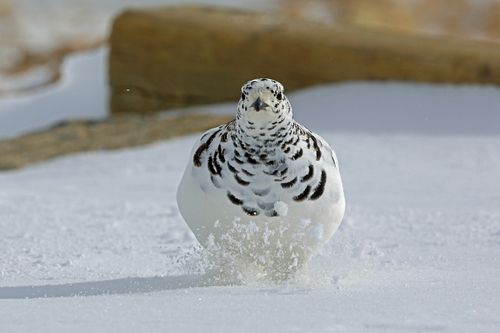 White-tailed Ptarmigan
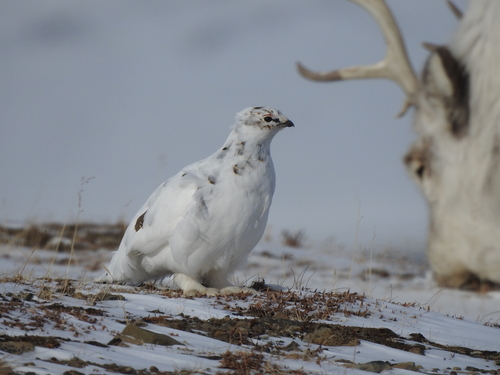 Pernice bianca
In breve
Il segno distintivo più affidabile tra il White-tailed Ptarmigan e la Pernice bianca è il colore della coda in tutte le livree: il White-tailed Ptarmigan mostra sempre una coda completamente bianca, mentre la Pernice bianca ha piume di coda nere visibili tranne che nella neve profonda o in angoli strani. In volo o posato, questa differenza di coda è diagnostica per tutte le età e stagioni. Strutturalmente, il White-tailed è nettamente più piccolo e più compatto, con un becco più corto e ali più rotonde. Entrambe le specie cambiano livrea stagionalmente, ma il White-tailed è più chiaro e più finemente disegnato in estate, mentre la Pernice bianca è più robusta e marrone sopra. L'habitat può aiutare: il White-tailed si trova a quote più elevate, spesso sopra il limite degli alberi, mentre la Pernice bianca è più diffusa e può verificarsi a quote leggermente più basse.
Consigli di identificazione
- Colore della coda (tutte le età/stagioni): Il White-tailed Ptarmigan ha sempre una coda bianca pura; la Pernice bianca ha piume di coda nere visibili in volo o quando è aperta, anche in livrea invernale completa.
- Colore delle ali (tutte le età/stagioni): Entrambe le specie hanno ali bianche in tutte le livree, quindi questo non è diagnostico.
- Dimensioni e struttura: Il White-tailed Ptarmigan è molto più piccolo e più compatto, con un becco più corto e tozzo e ali più rotonde. La Pernice bianca è più robusta, con una coda più lunga e un becco più pesante.
- Forma del becco: Il becco del White-tailed è più piccolo e più delicato; quello della Pernice bianca è più lungo e più robusto.
- Parte superiore estiva: Il White-tailed è finemente barrato e di un grigio-marrone chiaro sopra, con un 'motivo d'erba' di bande marroni chiare e un ventre bianco; la Pernice bianca è più marrone e più maculata, priva della fine barratura.
- Motivo facciale maschile (estate/inverno): Il maschio della Pernice bianca mostra una striscia nera attorno all'occhio (lori) in livrea di nidificazione e invernale; i maschi del White-tailed ne sono privi ma hanno creste oculari rossastre.
- Creste oculari: Entrambi i maschi hanno creste oculari rossastre, ma questo non è un forte separatore.
- Livrea invernale: Entrambi sono bianchi, ma solo la Pernice bianca mantiene il nero nella coda e (nei maschi) una linea nera attorno all'occhio.
- Piedi: Entrambi hanno piedi piumati, ma questo non è facilmente visibile sul campo e non è diagnostico.
- Habitat: Il White-tailed è strettamente alpino, sopra il limite degli alberi; la Pernice bianca può essere trovata a quote più basse e in tundra più vegetata.
- Comportamento: Il White-tailed è più probabile che venga visto accovacciato o camminare lentamente, raramente volando; la Pernice bianca è più attiva, spesso vista volare o esibirsi.
- Vocalizzazioni: Il White-tailed è quasi silenzioso; i maschi della Pernice bianca sono rumorosi in primavera, emettendo richiami croccanti, rattling o raschianti.
- Aspetto in volo: Il White-tailed appare più compatto e arrotondato in volo; la Pernice bianca appare più robusta e con una coda più lunga.
- Muta stagionale: Entrambe le specie mutano gradualmente, ma le transizioni del White-tailed sono più chiare e più criptiche, mentre la Pernice bianca diventa più marrone e più maculata in estate.
- Trappole: In inverno, entrambe possono apparire completamente bianche da lontano, ma la coda nera della Pernice bianca è solitamente visibile in volo o quando la coda è aperta. In estate, prestare attenzione alla sovrapposizione nella livrea marrone maculata; fare affidamento sul colore della coda e sull'habitat per la migliore separazione.
Taglia
White-tailed Ptarmigan is the smallest grouse in North America, averaging about 325 g, while Pernice bianca is nearly twice as heavy at 610 g on average [wikidata]. White-tailed is 31–34 cm long, Pernice bianca 34–36 cm. In the field, White-tailed appears notably daintier, with a more compact, round-bodied look and shorter tail. Pernice bianca is bulkier, with a longer, more prominent tail and a heavier build.
Piumaggio
-
Juvenile/immature/first-winter (flight and perched): Both species undergo gradual molts, but the key is the tail: White-tailed Ptarmigan always has a pure white tail and white wings, regardless of age or season. Pernice bianca, even in full winter white, retains black outer tail feathers and a black eye line in males. No unique upperwing pattern is described for either species at these ages, but the tail is always reliable.
-
Adult breeding (summer): White-tailed Ptarmigan is finely barred and pale grayish-brown above, with a white belly, white wings, and white tail. Pernice bianca is browner and darker above, with a more mottled gray-brown back, but also with white wings and underparts. Male Pernice bianca shows a black eye stripe, absent in White-tailed.
-
Fall: White-tailed transitions to a reddish-brown with white feathers coming through; Pernice bianca becomes grayish-brown but keeps black in the tail.
-
Winter: Both species are mostly white, but White-tailed Ptarmigan is entirely white including tail and wings, while Pernice bianca is white with black outer tail feathers and, in males, a black eye line.
Comportamento
Il White-tailed Ptarmigan è estremamente sedentario, spesso evitando il volo e preferendo riposare nelle accumuli di neve per conservare energia. Tende a rimanere sopra il limite degli alberi tutto l'anno. La Pernice bianca è anche in gran parte sedentaria, ma può intraprendere movimenti locali più significativi, specialmente nel far nord, ed è più probabile che venga vista volare tra i gruppi di copertura o esibirsi su terreni aperti. I maschi della Pernice bianca sono più vocali e attivi nelle esibizioni territoriali e di corteggiamento, comprese le corse aeree e le posture a terra.
Habitat
Il White-tailed Ptarmigan è strettamente alpino, trovato sopra il limite degli alberi nelle montagne più alte del nord-ovest dell'America, preferendo tundra rocciosa e pendii esposti al vento. La Pernice bianca preferisce anche habitat aperti e desolati, ma è più flessibile, verificandosi a quote leggermente più basse, in tundra, affioramenti rocciosi e talvolta in aree più vegetate. In aree sovrapposte, il White-tailed è solitamente in siti più alti e più esposti.
Voce
Il White-tailed Ptarmigan è generalmente silenzioso, occasionalmente emettendo hoot bassi o clucking morbidi. I maschi della Pernice bianca sono molto più vocali, specialmente durante la stagione di nidificazione, producendo ronzii gutturali, rattling e un richiamo distintivo raschiante durante i voli di esibizione. Se senti un richiamo forte, croccante o rattling, è più probabile che sia la Pernice bianca.
White-tailed Ptarmigan · Pernice bianca · I miei uccelli difficili