

White-tailed Kite vs Swallow-tailed Kite
Elanus leucurus contro Elanoides forficatus
Fai un quiz con White-tailed Kite e Swallow-tailed Kite
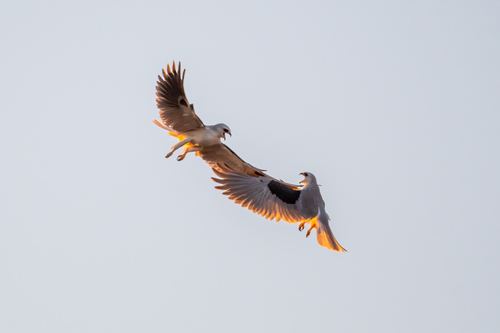 White-tailed Kite
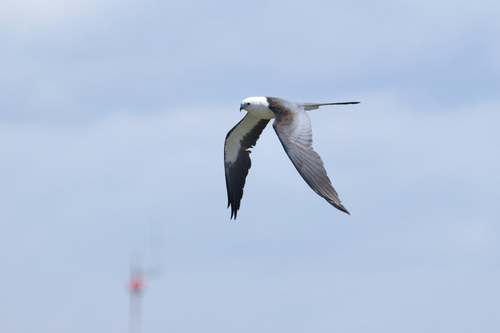 Swallow-tailed Kite
In breve
Il segno distintivo più affidabile per separare il White-tailed Kite dal Swallow-tailed Kite è la coda: il Swallow-tailed Kite ha una coda nera, profondamente biforcuta e drammaticamente lunga, mentre il White-tailed Kite ha una coda bianca, corta e arrotondata. In volo, il Swallow-tailed Kite appare più grande, con ali lunghe e strette e un contrasto nero e bianco sorprendente, mentre il White-tailed Kite è più piccolo, con una forma più compatta, simile a quella di un gabbiano, e un contrasto meno drammatico. I giovani Swallow-tailed Kites hanno una coda meno biforcuta e una colorazione più opaca, ma mostrano ancora la lunga coda e uno stile di volo distintivo. Entrambe le specie sono agili in volo, ma la loro struttura e silhouette di volo sono indiscutibilmente diverse.
Consigli di identificazione
- La forma della coda è il segno più affidabile: il Swallow-tailed Kite ha una lunga coda nera, profondamente biforcuta (anche nei giovani, sebbene meno pronunciata); il White-tailed Kite ha una coda bianca, corta e arrotondata. Questo è visibile in tutte le condizioni di campo e in tutte le età.
- Silhouette in volo: il Swallow-tailed Kite è più grande, con ali lunghe e strette e una lunga coda biforcuta, che gli conferisce un elegante volo distintivo. Il White-tailed Kite è più compatto, con ali più corte e larghe e una coda arrotondata, e spesso si libra.
- Contrasto del piumaggio: il Swallow-tailed Kite è nettamente nero e bianco, con ali superiori nere, coda e piume da volo, e testa e parti inferiori bianche. Il White-tailed Kite è per lo più grigio chiaro e bianco, con nero sulla spalla (non sulla coda o sulle piume da volo), e manca del drammatico contrasto nero e bianco.
- Schema delle piume inferiori: il Swallow-tailed Kite mostra una netta divisione di nero e bianco sulle piume inferiori; le piume inferiori del White-tailed Kite sono per lo più chiare con una macchia nera al polso.
- Segni giovanili: il giovane Swallow-tailed Kite è più opaco e la coda è meno biforcuta, ma è comunque più lunga e appuntita di qualsiasi White-tailed Kite. Il giovane White-tailed Kite non ha una coda biforcuta o ampie macchie nere sulle ali o sulla coda.
- Postura in perching: il Swallow-tailed Kite è raramente visto in perching, ma quando lo è, la lunga coda biforcuta è evidente. Il White-tailed Kite si posiziona più spesso e mostra una coda corta e arrotondata.
- Comportamento: il White-tailed Kite si libra frequentemente ('kites') in posizione mentre caccia; il Swallow-tailed Kite quasi mai si libra ed è solitamente visto planare o volare in alto.
- Preferenza dell'habitat: il White-tailed Kite predilige campi aperti, praterie e aree agricole; il Swallow-tailed Kite preferisce le zone umide boschive ed è raramente visto lontano da alberi alti o acqua.
- Dimensione relativa: il Swallow-tailed Kite è quasi due volte più pesante e ha ali molto più lunghe rispetto al White-tailed Kite; in compagnia mista, la differenza di dimensioni è sorprendente.
- Testa e faccia: Entrambi hanno teste bianche, ma la testa del Swallow-tailed Kite appare più piccola rispetto alle sue lunghe ali e coda, mentre la testa del White-tailed Kite è proporzionalmente più grande e arrotondata.
- Comportamento alimentare: il White-tailed Kite spesso mangia prede in volo o su un posatoio; il Swallow-tailed Kite è quasi sempre visto cacciare in volo, raramente posandosi per mangiare.
- Vocalizzazioni: Nessuna delle due specie è molto vocale; il Swallow-tailed Kite può emettere un cinguettio acuto, ma questo non è un segno affidabile sul campo.
- Contesto stagionale: Negli Stati Uniti, il Swallow-tailed Kite è un riproduttore estivo nel sud-est e migra in inverno; il White-tailed Kite è residente tutto l'anno nel suo areale.
- Gamma geografica: Se ti trovi nell'America settentrionale occidentale, ci si aspetta di vedere il White-tailed Kite; nel sud-est, specialmente vicino a zone umide, è più probabile vedere il Swallow-tailed Kite.
- Trappole: Non fare affidamento solo sulla testa o sulle parti inferiori bianche: concentrati sulla forma della coda, sullo stile di volo e sul contrasto delle ali per un'identificazione sicura.
Taglia
Il Swallow-tailed Kite è sostanzialmente più grande e più pesante, con una massa corporea media di 577 g rispetto ai 312 g del White-tailed Kite [wikidata]. Il Swallow-tailed Kite ha anche un'apertura alare molto più lunga (1.12–1.36 m) e una lunghezza totale (50–68 cm), mentre il White-tailed Kite è più compatto. Sul campo, la dimensione del Swallow-tailed Kite è accentuata dalle sue lunghe ali e coda, facendolo apparire ancora più grande e più elegante in volo. Il White-tailed Kite è visibilmente più piccolo e più compatto, con una coda più corta e ali meno allungate.
Piumaggio
I giovani Swallow-tailed Kites sono più opachi degli adulti e hanno una coda meno biforcuta, ma mostrano ancora la lunga coda nera e le ali contrastanti in bianco e nero. Gli adulti sono sorprendentemente neri sopra e bianchi sotto, con piume da volo nere e una lunga coda biforcuta. Il White-tailed Kite, in tutte le età, ha un volto bianco, parti inferiori e coda bianche, con parti superiori grigie e macchie nere sulla spalla (non sulla coda o sulle piume da volo). La sua coda è sempre corta e arrotondata, mai biforcuta. In volo, le piume inferiori del Swallow-tailed Kite sono parzialmente nere e parzialmente bianche, con una netta divisione, mentre le ali del White-tailed Kite sono per lo più chiare con nero al polso. Lo schema delle ali superiori del giovane White-tailed Kite non è descritto come distintivo, quindi la coda e il contrasto generale sono più affidabili. Entrambe le specie hanno teste bianche, ma solo il Swallow-tailed Kite ha una coda nera e ampie macchie nere sulle ali.
Comportamento
Il White-tailed Kite è famoso per il suo comportamento di 'kiting'—che si libra in posizione mentre caccia su campi aperti [wikipedia]. Spesso si nutre in volo, trasferendo la preda dalle artigli al becco in volo, ma si posiziona anche per mangiare prede più grandi. Il Swallow-tailed Kite è un volatore eccezionalmente aggraziato, raramente visto in perching, e trascorre la maggior parte del suo tempo a planare e librarsi sopra foreste e zone umide, usando la sua lunga coda per manovre agili. I Swallow-tailed Kites sono per lo più silenziosi e raramente si librano. I White-tailed Kites sono più propensi a essere visti fermi o in volo stazionario, mentre i Swallow-tailed Kites sono quasi sempre in un volo fluido e galleggiante.
Habitat
Il White-tailed Kite si trova tipicamente in cespugli aperti di pianura, praterie e aree agricole nell'America settentrionale occidentale e nell'America del Sud [wikipedia]. Il Swallow-tailed Kite è associato a grandi tratti di foreste umide, specialmente nel sud-est degli Stati Uniti, in Centro e Sud America. Nida in alberi alti, spesso vicino all'acqua, e raramente è visto in campagna aperta lontano dai margini delle foreste. Se vedi un kite sopra una prateria aperta, è più probabile che sia un White-tailed; sopra una foresta paludosa, ci si aspetta un Swallow-tailed.
Voce
Il Swallow-tailed Kite è per lo più silenzioso, occasionalmente emettendo un cinguettio acuto [wikipedia]. Nessuna vocalizzazione distintiva è descritta per il White-tailed Kite nelle note, e nessuna delle due specie è nota per chiamate frequenti o diagnostiche sul campo.
White-tailed Kite · Swallow-tailed Kite · I miei uccelli difficili