
White-spotted Flufftail vs African Thrush
Sarothrura pulchra contro Turdus pelios
Fai un quiz con White-spotted Flufftail e African Thrush
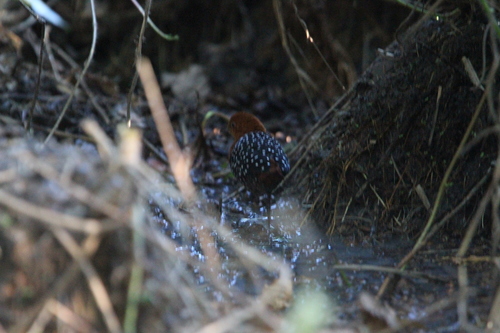 White-spotted Flufftail
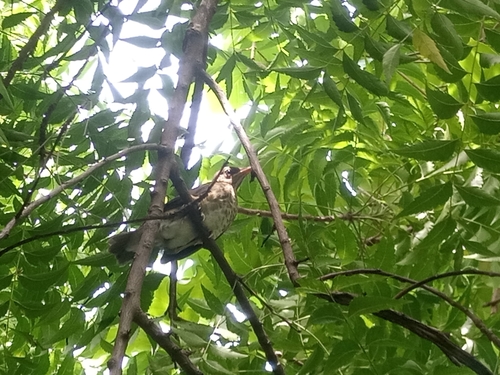 African Thrush
In breve
Il segno distintivo più affidabile per separare il White-spotted Flufftail dall'African Thrush è la struttura generale e il piumaggio: il flufftail è un piccolo rail compatto e dalla coda corta con macchie bianche audaci su un corpo nerastro (maschio con rosso intenso su testa e petto), mentre l'African Thrush è un uccello canoro più grande, snello e dalla coda lunga con parti superiori di un grigio oliva uniforme e un pattern di parti inferiori pallide striate. I flufftail sono abitanti segreti del suolo delle dense foreste pluviali, raramente avventurandosi all'aperto, mentre gli African Thrush sono più propensi a essere visti cercare cibo nel fogliame o sugli alberi da frutto nei boschi e nei giardini. In volo o posati, la coda più lunga del thrush, il becco giallo-arancio e l'assenza di macchie audaci sono chiari contrasti. I pattern specifici delle ali o di volo dei giovani non sono descritti per nessuna delle due specie, quindi concentrati su struttura e piumaggio.
Consigli di identificazione
- La struttura è fondamentale: Il flufftail è un rail compatto e dalla coda corta, mentre l'African Thrush è un uccello canoro più lungo, snello e dalla coda lunga. Anche in scarsa illuminazione, la coda più lunga del thrush e la postura eretta si distinguono.
- Pattern del piumaggio: Il maschio flufftail mostra macchie bianche audaci su un corpo nero con rosso intenso su testa, collo, petto e copritrici della coda. Nessun thrush nella regione ha questa combinazione. La femmina flufftail è più scura complessivamente ma manca ancora delle parti inferiori striate del thrush.
- Colore del becco: L'African Thrush ha un becco giallo-arancio distintivo, visibile anche da lontano. Il becco del flufftail non è descritto come colorato e si fonde con il suo viso scuro.
- Pattern delle parti inferiori: L'African Thrush ha parti inferiori pallide con striature marroni sulla gola, petto grigio-marrone, fianchi buff-arancio e una pancia/ventre bianco. Il flufftail è molto più scuro sotto, con macchie bianche audaci (maschio/femmina) e senza striature o fianchi arancioni.
- Nessuna macchia bianca audace sul thrush: Se vedi chiare macchie bianche su un corpo nero o marrone scuro, è un flufftail, non un thrush.
- Forma e lunghezza della coda: La coda del flufftail è molto corta e non ovviamente pelosa; la coda del thrush è lunga e spesso aperta o leggermente sollevata quando cerca cibo.
- Contesto dell'habitat: Nella vegetazione densa della foresta pluviale, specialmente vicino all'acqua, aspettati il flufftail. Nei giardini, nei boschi o sugli alberi da frutto, aspettati il thrush.
- Comportamento: Il flufftail è estremamente segreto e raramente visto all'aperto; il thrush può essere visto cercare cibo nel fogliame aperto o sugli alberi da frutto, a volte all'aperto.
- Stile di alimentazione: Il flufftail cerca invertebrati; il thrush solleva il fogliame e può essere visto rompere le lumache sulle pietre.
- Visioni in volo: Entrambe le specie sono riluttanti a volare, ma il thrush volerà sugli alberi o attraverso spazi aperti, mentre il flufftail di solito corre per ripararsi e vola solo brevi distanze vicino al suolo.
- Impressione di dimensione: Il thrush è notevolmente più grande e più pesante del flufftail.
- Differenze sessuali: Il maschio flufftail è più vivacemente colorato (rosso e nero con macchie bianche); la femmina è più scura ma ancora con un pattern. I sessi del thrush sono simili.
- Confusione giovanile: Nessun piumaggio giovanile dettagliato per nessuna delle due, ma i giovani thrush mostreranno comunque la stessa struttura e mancanza di macchie audaci.
- Accoppiamento e socialità: Il flufftail è solitamente visto singolarmente o in coppie, strettamente territoriale; il thrush può essere visto in gruppi sciolti sugli alberi da frutto.
- Vocalizzazioni: Non descritte qui, quindi fai affidamento sui segni visivi.
Taglia
Il White-spotted Flufftail è distintamente più piccolo e compatto, misurando 16–17 cm di lunghezza e pesando circa 45 g. L'African Thrush è più grande e più allungato, a 21–23 cm e 46–78 g. Sul campo, il thrush apparirà notevolmente più grande, con un corpo e una coda più lunghi, e una postura più eretta rispetto al flufftail tozzo e dalla coda corta.
Piumaggio
Nessun pattern specifico per l'ala superiore o di volo è descritto per nessuna delle due specie, quindi fai affidamento sul piumaggio generale. Il maschio adulto di White-spotted Flufftail è straordinario, con una testa, un collo, un petto e copritrici della coda di un rosso intenso, e un corpo nero pesantemente macchiato di bianco. Le femmine sono simili ma con un corpo più scuro (nero a marrone scuro) e meno rosso vivace. Entrambi i sessi hanno pattern audaci e contrastanti. L'African Thrush, al contrario, è molto più semplice: le parti superiori sono di un grigio oliva scuro, le parti inferiori sono pallide con striature marroni sulla gola, petto grigio-marrone, fianchi buff-arancio e pancia e ventre bianchi. Il thrush manca di qualsiasi macchia bianca audace o colorazione rossa. Il colore del becco è anche un indizio: il thrush ha un becco giallo-arancio, mentre il becco del flufftail non è descritto come colorato. I piumaggi giovanili non sono dettagliati, ma le differenze strutturali e di pattern sono forti in tutte le età.
Comportamento
Il White-spotted Flufftail è altamente segreto, diurno e preferisce una copertura densa, raramente avventurandosi all'aperto tranne quando attraversa spazi aperti. Cerca invertebrati a terra, è territoriale e forma forti legami di coppia. L'African Thrush è anche timido ma più propenso a essere visto all'aperto, specialmente sugli alberi da frutto o quando cerca cibo nel fogliame. La sua alimentazione è crepuscolare e può essere visto rompere le lumache sulle pietre. Quando non disturbati, i thrush possono essere piuttosto audaci in spazi aperti, a differenza del flufftail.
Habitat
Il White-spotted Flufftail è uno specialista della vegetazione densa delle foreste pluviali tropicali africane, quasi sempre vicino a una copertura fitta. L'African Thrush è comune in aree ben alberate, inclusi i margini dei boschi, giardini e crescita secondaria, ed è meno legato agli interni delle foreste dense. Vedere un uccello nella vegetazione profonda e umida della foresta favorisce fortemente il flufftail; nei giardini o nei boschi aperti, il thrush è molto più probabile.
White-spotted Flufftail · African Thrush · I miei uccelli difficili