

Wedge-billed Woodcreeper vs Cocoa Woodcreeper
Glyphorynchus spirurus contro Xiphorhynchus susurrans
Fai un quiz con Wedge-billed Woodcreeper e Cocoa Woodcreeper
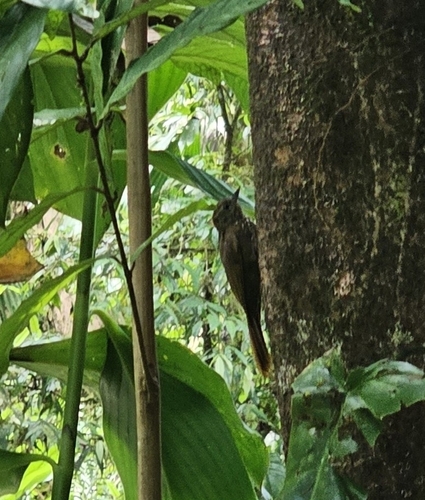 Wedge-billed Woodcreeper
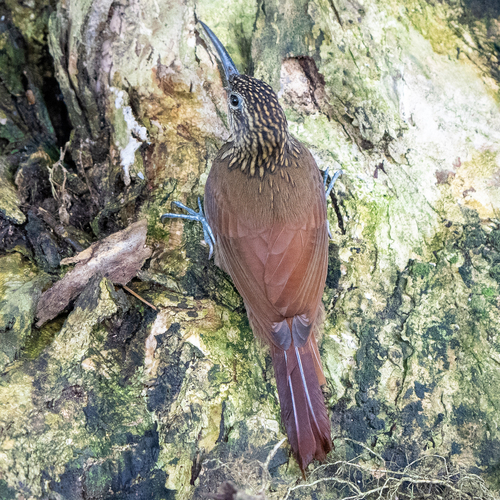 Cocoa Woodcreeper
In breve
Il segno distintivo più affidabile è la dimensione e la forma del becco: il Wedge-billed Woodcreeper è molto più piccolo e ha un becco corto, tozzo e distintamente a forma di cuneo, mentre il Cocoa Woodcreeper è quasi il doppio più lungo, con un becco lungo, pesante e leggermente ricurvo. In volo o posato, il Wedge-billed mostra spesso una banda pallida color crema sulla parte inferiore dell'ala (in tutte le età), mentre la parte inferiore dell'ala del Cocoa è color cannella ma manca di una banda pallida contrastante. Entrambi sono woodcreepers marroni con parti inferiori striate o macchiate, ma il Wedge-billed è compatto e spesso cerca cibo in basso o a livelli intermedi, mentre il Cocoa è più grande, più robusto e più probabile da vedere più in alto o su tronchi più spessi. Il giovane Cocoa Woodcreeper è complessivamente più scuro e ha un becco più corto e più scuro, ma anche in quel caso, è molto più grande di qualsiasi Wedge-billed.
Consigli di identificazione
- La dimensione è il controllo più veloce: Se l'uccello sembra piccolo e compatto, è un Wedge-billed; se è di dimensioni medie-grandi e robusto, è un Cocoa. Questo funziona per tutte le età e i sessi.
- La forma del becco è diagnostica: Il Wedge-billed ha un becco corto, tozzo e a forma di cuneo che è rivolto verso l'alto e ricorda un Xenops. Il Cocoa ha un becco lungo, pesante e leggermente ricurvo. La forma del becco è visibile anche in scarsa illuminazione o in viste parziali.
- Schema della parte inferiore dell'ala in volo: Il Wedge-billed di tutte le età mostra una banda pallida color crema a bianco crema sulla parte inferiore dell'ala, visibile come una striscia in volo. La parte inferiore dell'ala del Cocoa è color cannella ma manca di una banda pallida; le sue primarie hanno punte scure ma nessun pannello pallido. Usa questo soprattutto per gli uccelli spaventati dai posatoi.
- Lunghezza e forma della coda: Il Wedge-billed ha una coda corta rispetto alla dimensione del corpo; la coda del Cocoa è più lunga e più robusta, corrispondente alla sua dimensione complessiva.
- Schema del viso: Il Wedge-billed ha un sottile sopracciglio color crema e un anello oculare, una fronte grigia e lore chiare. Il viso del Cocoa è scuro con striature color crema e un sopracciglio biancastro, ma il viso è più grande e meno delicato.
- Cresta e nuca: La cresta del Wedge-billed è marrone ricco a ruggine, a volte con una fronte grigia. La cresta e la nuca del Cocoa sono marrone scuro a nerastro con macchie color crema lunghe, più striate sulla nuca.
- Parte superiore: Il Wedge-billed è marrone ricco a ruggine sopra, con coda color cannella-rossiccia e copritrici della coda superiori. Il Cocoa è marrone oliva a marrone sopra, con striature color crema dai bordi scuri sulla schiena che svaniscono più in basso.
- Petto e parti inferiori: Il Wedge-billed ha grandi macchie fulve rotonde sul petto superiore e striature strette in basso; le parti inferiori sono marrone oliva a marrone ruggine. Le parti inferiori del Cocoa sono marrone rossiccio, con macchie o striature color crema (il modello varia in base alla sottospecie), e diventano più rosse sulle copritrici della coda. Le macchie/strisce del petto del Cocoa sono solitamente più audaci e più estese.
- Gola: La gola del Wedge-billed è bianca color crema a crema, a volte con macchie scure. Quella del Cocoa è bianca a pallido color crema con squame nere sottili; alcune sottospecie hanno un modello più profondo color crema o squamoso.
- Confusione giovanile: Il giovane Cocoa è più scuro nel complesso, con un becco più corto e più scuro e striature delle parti inferiori più larghe, ma è ancora molto più grande del Wedge-billed. Il giovane Wedge-billed è simile all'adulto.
- Colore delle gambe: Le gambe e i piedi del Wedge-billed sono grigio rosato a verde scuro o nero bruno. Quelli del Cocoa sono grigio blu scuro, grigio verdastro o grigio giallastro. Questo è sottile ma può aiutare in viste ravvicinate.
- Comportamento di foraggiamento: Il Wedge-billed è veloce, agile, e spesso si trova in basso o a livelli intermedi, muovendosi lungo tronchi e rami sottili. Il Cocoa è più lento, più robusto, e spesso si trova più in alto o su tronchi più spessi.
- Contesto dell'habitat: In una foresta interna densa e matura, è più probabile trovare il Wedge-billed. In contesti di margine, crescita secondaria, mangrovie, o boschi aperti, è più probabile trovare il Cocoa. Entrambi possono sovrapporsi, ma il contesto può inclinare la bilancia.
- Vocalizzazioni: Non dettagliate nelle fonti, quindi non fare affidamento su canto/chiamata per la separazione in questo contesto.
- Variazione delle sottospecie: Entrambe le specie hanno modelli variabili delle parti inferiori (macchie contro striature), ma la dimensione e la forma del becco rimangono diagnostiche in tutto il loro areale.
Taglia
Il Wedge-billed Woodcreeper è il woodcreeper più piccolo, misurando 13–16 cm e pesando 10.5–21 g. Il Cocoa Woodcreeper è molto più grande, a 21–25.5 cm e 43–58 g—circa il doppio della dimensione e della massa. Anche a distanza, il Cocoa appare più robusto e lungo, con una coda e un becco proporzionalmente più lunghi. La dimensione da sola può escludere confusione nella maggior parte delle viste binoculare.
Piumaggio
- Giovani/uccelli immaturi: Il giovane Cocoa Woodcreeper è più scuro nel complesso, con un becco più corto e più scuro, macchie della cresta meno audaci e striature delle parti inferiori più larghe, ma rimane molto più grande di qualsiasi Wedge-billed. I giovani Wedge-billed sono simili agli adulti, con la stessa forma compatta e il becco a cuneo.
- Schema dell'ala in volo: Il Wedge-billed di tutte le età mostra una banda pallida color crema a bianco crema sulla parte inferiore dell'ala, visibile in volo. Il Cocoa ha copritrici della parte inferiore dell'ala color cannella ma manca di una banda pallida; le sue piume di volo e la coda sono color ruggine-castagna con punte scure.
- Adulti: Il Wedge-billed è marrone ricco a ruggine sopra, coda color cannella-rossiccia, e ha grandi macchie fulve rotonde sul petto superiore e striature strette in basso. Il Cocoa è marrone oliva a marrone sopra, con striature color crema dai bordi scuri sulla schiena, e parti inferiori che sono marrone rossiccio con macchie o striature color crema (il modello varia in base alla sottospecie, ma è sempre più audace del Wedge-billed). La gola del Wedge-billed è bianca color crema a crema, a volte macchiata; quella del Cocoa è bianca a pallido color crema con squame nere sottili. Entrambi hanno code ruggine, ma quella del Cocoa è più lunga e più robusta.
- Viso: Il Wedge-billed ha un sottile sopracciglio color crema e un anello oculare, lore chiare e una fronte grigia; il Cocoa ha un viso scuro con striature color crema e un sopracciglio biancastro.
Comportamento
Il Wedge-billed è spesso visto cercare cibo in basso o a livelli intermedi, muovendosi rapidamente e agilmente lungo tronchi e rami sottili, a volte comportandosi quasi come un Xenops. È più attivo e agile, riflettendo la sua piccola dimensione. Il Cocoa Woodcreeper è più robusto, si muove più deliberatamente ed è spesso visto su tronchi più spessi o più in alto nella foresta, a volte seguendo sciami di formiche soldato. Il suo foraggiamento è più lento e più metodico.
Habitat
Il Wedge-billed si trova in una vasta gamma di foreste umide dal Messico al Sud America, spesso in foreste primarie e secondarie mature, ed è più probabile trovarlo nell'interno della foresta. Il Cocoa Woodcreeper si trova dall'America Centrale al nord del Sud America e Trinidad, preferendo foreste sempreverdi umide ma si trova anche in foreste galleria, margini boschivi, mangrovie e persino in cespugli aridi su Isla Margarita. Il Cocoa è più probabile in contesti di margine, crescita secondaria e boschi aperti, mentre il Wedge-billed preferisce foreste più dense e più vecchie.
Wedge-billed Woodcreeper · Cocoa Woodcreeper · I miei uccelli difficili