

Violet Sabrewing vs Crowned Woodnymph
Campylopterus hemileucurus contro Thalurania colombica
Fai un quiz con Violet Sabrewing e Crowned Woodnymph
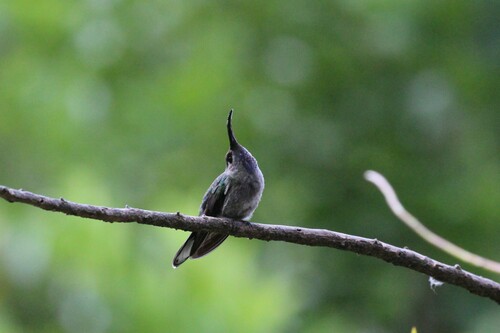 Violet Sabrewing
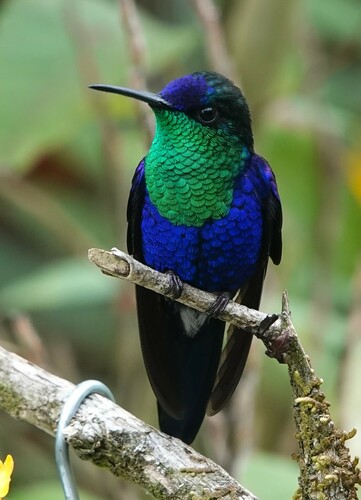 Crowned Woodnymph
In breve
Il modo più affidabile per separare il Violet Sabrewing dal Crowned Woodnymph è per dimensione e struttura: il sabrewing è drammaticamente più grande e massiccio, con una corporatura più pesante e un becco più lungo, mentre il woodnymph è molto più piccolo e più delicato. Se visto in volo o posato, nota la coda larga e con punte bianche del sabrewing rispetto alla coda profondamente biforcuta e blu-nera del woodnymph (con punte bianche solo su woodnymph femmine/immaturi). Il piumaggio degli adulti maschi può sovrapporsi in sfumature viola e verdi, ma il blu-viola metallico e verde del sabrewing è molto più esteso e scuro, mentre il maschio woodnymph mostra una gola e un petto verdi scintillanti con una corona e un ventre viola. Gli uccelli femmina e immaturi sono meglio separati per dimensione, modello della coda e colore delle parti inferiori. Le differenze strutturali e la forma della coda sono spesso più affidabili rispetto a sfumature di colore sottili, specialmente in scarsa illuminazione.
Consigli di identificazione
- La dimensione è il separatore più veloce: Se l'uccello sembra grande e massiccio per un colibrì, è quasi certamente un Violet Sabrewing. Il woodnymph è molto più piccolo e più snello.
- Struttura del becco: Il sabrewing ha un becco nero spesso, lungo e dritto; il becco del woodnymph è più corto, più sottile e più delicato.
- Forma della coda in volo o posato: La coda del sabrewing è larga, solo leggermente biforcuta, e tutte le piume tranne quelle centrali hanno punte bianche ampie. La coda del woodnymph è profondamente biforcuta e blu-nera; solo le femmine e gli immaturi mostrano punte bianche, e solo sulle tre coppie esterne.
- Colore degli adulti maschi: Il maschio sabrewing è blu-viola metallico sulla maggior parte del corpo, con il dorso inferiore verde e copritrici della coda superiori verdi. Il maschio woodnymph è più variato: corona viola, dorso superiore e ventre, ma gola e petto verdi scintillanti, e una nuca verde bronzo.
- Colore delle femmine adulte: La femmina sabrewing ha parti superiori metalliche verdi fino a verde bronzo, una gola blu-viola, parti inferiori grigie con macchie verdi lungo i lati, e una coda con punte bianche. La femmina woodnymph è verde brillante sopra, grigia chiara sotto, e ha una coda blu-nera con punte bianche solo sulle tre coppie esterne di piume.
- Uccelli immaturi/giovanili: Gli immaturi woodnymph sono di un verde opaco sopra e completamente grigi chiari sotto, con piume esterne della coda con punte bianche. Gli immaturi sabrewing non sono descritti in dettaglio, ma dovrebbero sempre mostrare un certo colore metallico e una larga punta bianca sulla coda.
- Colore delle parti inferiori (tutte le età): Le parti inferiori del sabrewing sono più blu-viola (maschio) o grigie con macchie verdi (femmina); le parti inferiori del woodnymph sono verdi scintillanti nei maschi, grigie chiare nelle femmine/immaturi.
- Colore della corona: I maschi woodnymph hanno una corona viola distintiva; la corona del sabrewing è scura con una lucentezza blu-verde.
- Colore della coda: Le piume centrali della coda del sabrewing sono verde-bluastro fino a blu-nerastro; la coda del woodnymph è blu-nera in tutto.
- Comportamento ai mangiatori: Il sabrewing è dominante e aggressivo, spesso inseguendo altri colibrì. Il woodnymph è meno assertivo.
- Habitat e altitudine: Se visto sopra i 1.500 m in foreste montane, è più probabile che sia un sabrewing; il woodnymph è più comune in foreste di pianura e di piede, ma gli areali si sovrappongono.
- Vocalizzazioni: Se senti cinguettii o cinguettii acuti e forti, sospetta il sabrewing. La voce del woodnymph è meno distintiva.
- Variazione delle sottospecie: Alcune sottospecie di woodnymph hanno corone verdi o schiene completamente verdi; controlla sempre la forma e la dimensione della coda se il colore è ambiguo.
- A distanza: Usa prima la dimensione e la forma della coda; il colore può essere fuorviante in scarsa luce o ad angoli strani.
- Quando hai dubbi: Se l'uccello sembra insolitamente grande per un colibrì e mostra una coda larga con punte bianche, è quasi certamente un Violet Sabrewing.
Taglia
Il Violet Sabrewing è il colibrì più grande in Messico e America Centrale, misurando 13–15 cm e pesando 9–12 g. Al contrario, il Crowned Woodnymph è molto più piccolo: i maschi misurano 9.5–11.5 cm (4–5.5 g), le femmine ancora più piccole a 8.5–9.2 cm (3.5–4.2 g). Il sabrewing appare massiccio e robusto accanto al delicato e snello woodnymph. Anche a distanza, la differenza in volume, lunghezza e dimensione del becco è sorprendente e diagnostica.
Piumaggio
-
Uccelli immaturi/giovanili: Gli immaturi del Crowned Woodnymph (entrambi i sessi) hanno parti superiori di un verde opaco e parti inferiori completamente grigie chiare, con le femmine che mostrano piume esterne della coda con punte bianche. Gli immaturi del Violet Sabrewing non sono descritti in dettaglio, ma entrambi i sessi mostrano sempre una certa colorazione metallica e una larga punta bianca sulla coda.
-
Maschi adulti: I maschi sabrewing sono blu-viola metallico sulla maggior parte del corpo, con un dorso inferiore verde e una coda con punte bianche. I maschi woodnymph hanno una corona viola, dorso superiore e ventre, ma una gola/petto verde scintillante, nuca verde bronzo e una coda blu-nera profondamente biforcuta senza punte bianche.
-
Femmine adulte: Le femmine sabrewing hanno parti superiori metalliche verdi fino a verde bronzo, una gola blu-viola, parti inferiori grigie con macchie verdi lungo i lati, e una coda con punte bianche. Le femmine woodnymph sono verdi brillanti sopra, grigie chiare sotto, e hanno una coda blu-nera con punte bianche solo sulle tre coppie esterne di piume.
-
Coda in volo: La coda del sabrewing è larga e solo leggermente biforcuta, con tutte le piume tranne quelle centrali nere e ampiamente punte bianche. La coda del woodnymph è profondamente biforcuta e blu-nera; solo le femmine/immaturi mostrano punte bianche, e solo sulle piume esterne.
Comportamento
Il Violet Sabrewing è dominante e aggressivo ai mangiatori e nei fiori, spesso inseguendo altri colibrì, compresi i woodnymph. Si nutre principalmente nel sottobosco ed è più probabile che venga visto difendere un territorio. Il Crowned Woodnymph è meno dominante e più probabile che venga visto visitare fiori in un circuito o nutrirsi silenziosamente. La dimensione maggiore del sabrewing e il comportamento assertivo nei siti di alimentazione possono essere un indizio, specialmente se entrambe le specie sono presenti.
Habitat
Entrambe le specie si trovano in foreste umide e margini dal sud del Messico attraverso l'America Centrale, ma il Violet Sabrewing si trova tipicamente a altitudini più elevate (500–2.500 m, spesso sopra i 1.500 m), specialmente in foreste montane, crescita secondaria matura, piantagioni di banane e giardini. Il Crowned Woodnymph ha un'ampia gamma altitudinale, dalle pianure ai piedi delle montagne, ed è trovato da Belize e Guatemala a sud fino al nord del Perù. Nelle aree di sovrapposizione, l'altitudine e il tipo di habitat possono aiutare, ma non sono sempre diagnostici.
Voce
Il canto del Violet Sabrewing è una serie di cinguettii acuti e alti, a volte descritti come ventriloqui o esplosivi. Le sue chiamate sono note di cinguettio acute e dure, spesso emesse in volo. Le vocalizzazioni del Crowned Woodnymph non sono descritte in dettaglio qui, quindi la voce non è un separatore affidabile a meno che non si senta il cinguettio distintivo e forte del sabrewing.
Violet Sabrewing · Crowned Woodnymph · I miei uccelli difficili