

Colibrí Morado vs Zafiro Coronado
Campylopterus hemileucurus frente a Thalurania colombica
Juega un quiz con Colibrí Morado y Zafiro Coronado
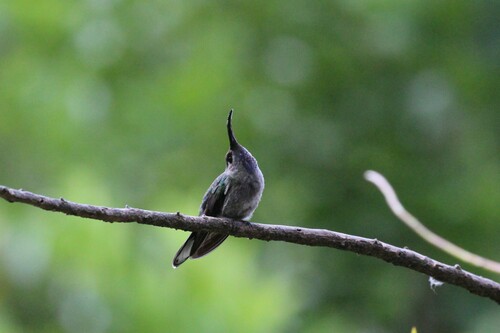 Colibrí Morado
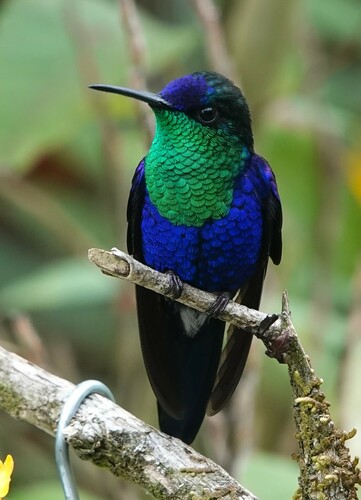 Zafiro Coronado
En breve
La forma más confiable de separar al Colibrí Morado del Zafiro Coronado es por tamaño y estructura: el colibrí es dramáticamente más grande y robusto, con una construcción más pesada y un pico más largo, mientras que el zafiro es mucho más pequeño y delicado. Si se ve en vuelo o posado, note la cola ancha y con puntas blancas del colibrí frente a la cola profundamente bifurcada y azul-negra del zafiro (con puntas blancas solo en hembras/juveniles de zafiro). El plumaje de los machos adultos puede superponerse en tonos violetas y verdes, pero el color metálico violeta-azul y verde del colibrí es mucho más extenso y oscuro, mientras que el macho de zafiro muestra una garganta y pecho verdes brillantes con una corona y vientre violetas. Las aves hembras y juveniles se separan mejor por tamaño, patrón de cola y color de las partes inferiores. Las diferencias estructurales y la forma de la cola son a menudo más confiables que los sutiles matices de color, especialmente en luz pobre.
Consejos de identificación
- El tamaño es el separador más rápido: Si el ave parece grande y robusta para un colibrí, casi con seguridad es un Colibrí Morado. El zafiro es mucho más pequeño y esbelto.
- Estructura del pico: El colibrí tiene un pico negro, grueso, largo y recto; el pico del zafiro es más corto, más delgado y más delicado.
- Forma de la cola en vuelo o posado: La cola del colibrí es ancha, solo ligeramente bifurcada, y todas menos las plumas centrales tienen puntas blancas amplias. La cola del zafiro es profundamente bifurcada y azul-negra; solo las hembras y los juveniles muestran puntas blancas, y solo en los tres pares exteriores.
- Color del macho adulto: El macho del colibrí es metálico violeta-azul en la mayor parte del cuerpo, con verde en la parte baja de la espalda y coberturas de la cola superiores. El macho del zafiro es más patrón: corona violeta, parte superior de la espalda y vientre, pero garganta y pecho verdes brillantes, y una nuca verde bronceada.
- Color de la hembra adulta: La hembra del colibrí tiene partes superiores metálicas verdes a verde bronceado, una garganta violeta-azul, partes inferiores grises con manchas verdes a lo largo de los lados, y una cola con puntas blancas. La hembra del zafiro es de un verde brillante por encima, gris pálido por debajo, y tiene una cola azul-negra con puntas blancas solo en los tres pares exteriores de plumas.
- Aves inmaduras/juveniles: Las inmaduras del zafiro son de un verde apagado por encima y completamente grises pálidos por debajo, con plumas exteriores de la cola con puntas blancas. Las inmaduras del colibrí no se describen en detalle, pero siempre deben mostrar algún color metálico y una amplia punta blanca en la cola.
- Color de las partes inferiores (todas las edades): Las partes inferiores del colibrí son más violeta-azul (macho) o grises con manchas verdes (hembra); las partes inferiores del zafiro son verdes brillantes en machos, grises pálidos en hembras/juveniles.
- Color de la corona: Los machos del zafiro tienen una corona violeta distintiva; la corona del colibrí es oscura con un brillo verde azulado.
- Color de la cola: Las plumas centrales de la cola del colibrí son verde azulado a negro azulado; la cola del zafiro es azul-negra en su totalidad.
- Comportamiento en comederos: El colibrí es dominante y agresivo, a menudo persiguiendo a otros colibríes. El zafiro es menos asertivo.
- Hábitat y elevación: Si se ve por encima de 1,500 m en bosque montano, es más probable que sea un colibrí; el zafiro es más común en bosques de tierras bajas y laderas, pero los rangos se superponen.
- Vocalizaciones: Si escucha un chirrido o trino fuerte, agudo y de tono alto, sospeche del colibrí. La voz del zafiro es menos distintiva.
- Variación de subespecies: Algunas subespecies de zafiro tienen coronas verdes o espaldas completamente verdes; siempre verifique la forma y el tamaño de la cola si el color es ambiguo.
- A distancia: Use primero el tamaño y la forma de la cola; el color puede ser engañoso en luz pobre o en ángulos extraños.
- Cuando tenga dudas: Si el ave parece inusualmente grande para un colibrí y muestra una cola ancha con puntas blancas, casi con seguridad es un Colibrí Morado.
Tamaño
El Colibrí Morado es el colibrí más grande en México y América Central, midiendo 13–15 cm y pesando 9–12 g. En contraste, el Zafiro Coronado es mucho más pequeño: los machos miden 9.5–11.5 cm (4–5.5 g), las hembras aún más pequeñas a 8.5–9.2 cm (3.5–4.2 g). El colibrí parece masivo y robusto junto al delicado y esbelto zafiro. Incluso a distancia, la diferencia en volumen, longitud y tamaño del pico es notable y diagnóstica.
Plumaje
-
Aves inmaduras/juveniles: Las inmaduras del Zafiro Coronado (ambos sexos) tienen partes superiores de un verde apagado y partes inferiores completamente grises pálidas, con hembras mostrando plumas exteriores de la cola con puntas blancas. Las inmaduras del Colibrí Morado no se describen en detalle, pero ambos sexos siempre muestran alguna coloración metálica y una amplia punta blanca a través de la cola.
-
Machos adultos: Los machos del colibrí son metálicos violeta-azul en la mayor parte del cuerpo, con una parte baja de la espalda verde y cola con puntas blancas. Los machos del zafiro tienen una corona violeta, parte superior de la espalda y vientre, pero una garganta/pecho verdes brillantes, nuca verde bronceada, y una cola azul-negra, profundamente bifurcada sin puntas blancas.
-
Hembras adultas: Las hembras del colibrí tienen partes superiores metálicas verdes a verde bronceado, una garganta violeta-azul, partes inferiores grises con manchas verdes a lo largo de los lados, y una cola con puntas blancas. Las hembras del zafiro son de un verde brillante por encima, gris pálido por debajo, y tienen una cola azul-negra con puntas blancas solo en los tres pares exteriores de plumas.
-
Cola en vuelo: La cola del colibrí es ancha y solo ligeramente bifurcada, con todas menos las plumas centrales de un color negro y ampliamente con puntas blancas. La cola del zafiro es profundamente bifurcada y azul-negra; solo las hembras/juveniles muestran puntas blancas, y solo en plumas exteriores.
Comportamiento
El Colibrí Morado es dominante y agresivo en comederos y parches de flores, a menudo persiguiendo a otros colibríes, incluidos los zafiros. Se alimenta principalmente en el sotobosque y es más probable que se le vea defendiendo un territorio. El Zafiro Coronado es menos dominante y más probable que se le vea recorriendo flores (visitando flores en un circuito) o alimentándose en silencio. El tamaño más grande del colibrí y su comportamiento asertivo en los sitios de alimentación pueden ser una pista, especialmente si ambas especies están presentes.
Hábitat
Ambas especies ocurren en bosques húmedos y bordes desde el sur de México hasta América Central, pero el Colibrí Morado se encuentra típicamente a elevaciones más altas (500–2,500 m, a menudo por encima de 1,500 m), especialmente en bosques montanos, crecimiento secundario maduro, plantaciones de plátano y jardines. El Zafiro Coronado tiene un rango elevacional más amplio, desde tierras bajas hasta laderas, y se encuentra desde Belice y Guatemala hacia el sur hasta el norte de Perú. En áreas de superposición, la elevación y el tipo de hábitat pueden ayudar, pero no siempre son diagnósticos.
Voz
El canto del Colibrí Morado es una serie de chirridos y trinos agudos y cortantes, a veces descritos como ventriloquiales o explosivos. Sus llamadas son notas de chirrido agudas y duras, a menudo emitidas en vuelo. Las vocalizaciones del Zafiro Coronado no se describen en detalle aquí, por lo que la voz no es un separador confiable a menos que se escuche el distintivo y fuerte chirrido del colibrí.