

Veery vs Tordo di Swainson
Catharus fuscescens contro Catharus ustulatus
Fai un quiz con Veery e Tordo di Swainson
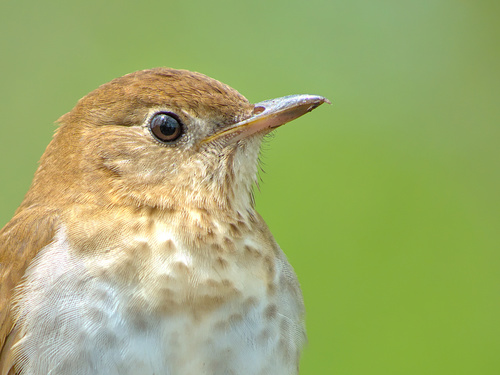 Veery
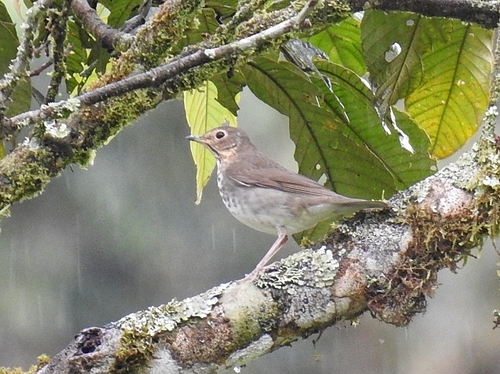 Tordo di Swainson
In breve
Il segno di campo più affidabile tra Veery e Tordo di Swainson è il modello e l'intensità delle macchie sul petto: il Veery mostra macchie marrone chiaro, sfocate e deboli su un petto di un caldo color sabbia, mentre il Tordo di Swainson ha macchie più scure e più distinte su un petto più chiaro e meno sabbioso. I Veery sono complessivamente più caldi e più tonalità cannella (soprattutto a est), con un anello oculare poco definito, mentre il Tordo di Swainson è più marrone oliva (est) o con dorso rossiccio (ovest) e ha un anello oculare pallido più prominente. Entrambe le specie condividono la striscia sottoala del Catharus e le gambe rosa, quindi concentrati sul viso e sul modello del petto per la separazione. La struttura e le dimensioni sono molto simili, quindi i segni di campo sono sottili e meglio visibili in buona luce o con un confronto diretto affiancato.
Consigli di identificazione
- Macchie sul petto: Il Veery ha macchie marrone chiaro, sfocate e deboli su un petto di un caldo color sabbia; il Tordo di Swainson ha macchie più scure e più distinte su un petto più chiaro e meno sabbioso. Questo è il segno di campo più consistente per tutte le età e stagioni.
- Colorazione generale: Il Veery è più caldo e più cannella o marrone chiaro sopra (soprattutto a est), mentre il Tordo di Swainson è più marrone oliva (est) o con dorso rossiccio (ovest). A ovest, il Tordo di Swainson può essere piuttosto rossastro sopra, ma il Veery non è mai così oliva come il Tordo di Swainson orientale.
- Anello oculare: L'anello oculare del Veery è poco definito e debole; il Tordo di Swainson ha un anello oculare audace, pallido e completo, che spesso conferisce un aspetto occhialuto. Questo è affidabile in buona luce.
- Modello del viso: Il Tordo di Swainson mostra spesso un viso pallido e contrastante con un forte anello oculare e lore pallidi, mentre il viso del Veery è più semplice e meno contrastante.
- Striscia sottoala: Entrambe le specie mostrano la striscia sottoala del Catharus (bianco-scuro-bianco) in volo, quindi questo non è utile per la separazione.
- Colore delle gambe: Entrambi hanno gambe rosa; questo non li separa.
- Forma e colore del becco: Entrambi hanno forme e lunghezze del becco simili, con misurazioni sovrapposte; non è un segno di campo affidabile.
- Struttura e dimensioni: Entrambi sono simili in dimensioni e proporzioni; non fare affidamento su jizz o massa.
- Canto: Il Tordo di Swainson canta un canto a spirale ascendente, simile a un flauto; il canto del Veery è una serie di note discendenti e vorticosi. Se cantano, questo è diagnostico.
- Habitat: Il Veery è più probabile trovarlo in boschi decidui densi e umidi vicino all'acqua a est; il Tordo di Swainson è diffuso, inclusi i boschi di conifere a ovest. Tuttavia, la sovrapposizione dell'habitat è ampia, quindi usalo con cautela.
- Variazione geografica: I Veery orientali sono più cannella, gli uccelli occidentali più marrone oliva e possono avvicinarsi al Tordo di Swainson nel tono, rendendo più difficile la separazione a ovest—fai affidamento sulle macchie del petto e sull'anello oculare.
- Piumaggio giovanile/immaturo: Non sono descritti segni distintivi specifici per età per le ali o il volo di entrambe le specie; concentrati sul viso e sul modello del petto a tutte le età.
- Appollaiato vs. in volo: Entrambe le specie sembrano simili in volo; le viste appollaiate sono migliori per vedere le macchie sul petto e l'anello oculare.
- Trappole: In scarsa luce o in viste brevi, entrambe possono apparire marroni semplici con parti inferiori chiare—cerca sempre la combinazione di macchie sul petto e anello oculare.
- Stagione: Entrambe le specie sono migratorie e possono sovrapporsi durante la migrazione; non fare affidamento solo sulla stagione per la separazione.
Taglia
Entrambe le specie sono quasi identiche in dimensioni e struttura, con il Veery che misura 16–19,5 cm di lunghezza e il Tordo di Swainson 16–20 cm. La massa del Veery è tipicamente di 26–39 g (eccezionalmente fino a 54 g), mentre il Tordo di Swainson varia da 23–45 g. Anche le aperture alari sono vicine: il Veery ha una media di 28,5 cm, il Tordo di Swainson circa 30 cm. Le lunghezze del becco e del tarso si sovrappongono. Sul campo, nessuna delle due specie appare visibilmente più grande o più robusta dell'altra, quindi le dimensioni non sono un separatore affidabile.
Piumaggio
Non sono descritte differenze specifiche per età nel modello delle ali superiori per entrambe le specie; entrambe mostrano la striscia sottoala del Catharus (bianco-scuro-bianco) in volo, quindi questo non è utile per la separazione. Per tutte le età, il Veery è complessivamente più chiaro e più caldo marrone sopra, soprattutto negli uccelli orientali, con un leggero lavaggio sabbioso sul petto e macchie marroni sfocate e deboli. Il Tordo di Swainson è più marrone oliva sopra a est o con dorso rossiccio a ovest, con un petto più chiaro e macchie più distinte e scure. L'anello oculare è poco definito nel Veery ma prominente e pallido nel Tordo di Swainson. Entrambi hanno parti inferiori bianche e gambe rosa. I piumaggi giovanili e immaturi non sono descritti come distintivi tra queste specie nelle fonti.
Comportamento
Entrambe le specie si comportano in modo simile come tipici tordi del genere Catharus: si nutrono a terra o vicino al suolo in un sottobosco denso, spesso sbattendo ali e code. Non sono notate differenze comportamentali nelle fonti che possano separarle in modo affidabile sul campo.
Habitat
Entrambe le specie nidificano in foreste decidue umide o miste con un sottobosco denso, spesso vicino all'acqua. Il Veery preferisce una crescita particolarmente densa vicino ai corsi d'acqua ed è più comune negli Stati Uniti orientali e nel sud del Canada. Il Tordo di Swainson è diffuso in tutta la parte settentrionale del Nord America, con popolazioni orientali in habitat più marrone oliva e uccelli occidentali in foreste di conifere o miste. La sovrapposizione dell'habitat è estesa, quindi il contesto è solo debolmente diagnostico a meno che non si sia nel lontano ovest (dove ci si aspetta il Tordo di Swainson con dorso rossiccio).
Voce
Entrambe le specie hanno bellissimi canti simili a flauti, ma il Tordo di Swainson produce una serie di toni ascendente e a spirale, spesso descritta come eterea e a spirale ascendente. Il canto del Veery è un suono discendente, vorticoso, veery-veery-veer, più morbido e più etereo ma non ascendente. Le note di richiamo non sono descritte in dettaglio nelle fonti, quindi il canto è il principale indizio vocale: a spirale ascendente per il Tordo di Swainson, a spirale discendente per il Veery.