

Temminck's Sunbird vs Crimson Sunbird
Aethopyga temminckii contro Aethopyga siparaja
Fai un quiz con Temminck's Sunbird e Crimson Sunbird
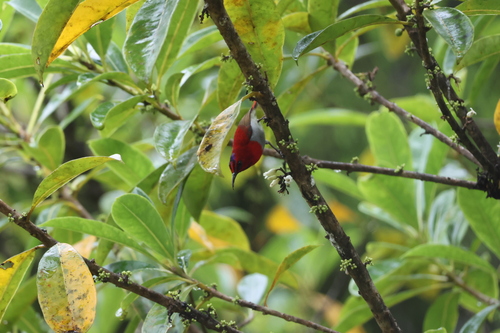 Temminck's Sunbird
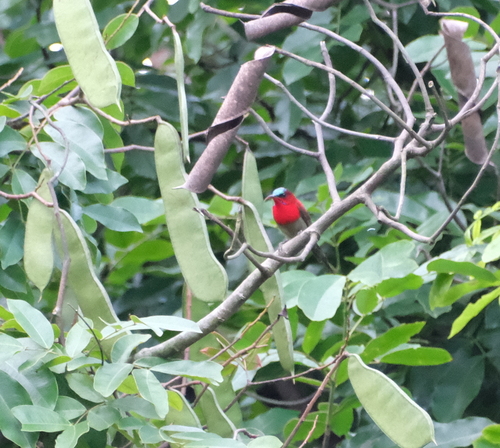 Crimson Sunbird
In breve
Il segno di campo più affidabile tra il Temminck's Sunbird e il Crimson Sunbird è la colorazione della testa e della schiena del maschio: il maschio di Temminck mostra un corpo per lo più scarlatto con quattro strisce viola distinte sulla testa e bande gialle e viola sopra la coda, mentre i maschi di Crimson Sunbird hanno un petto cremisi, una schiena mogano e strisce malari nere. Le femmine sono più difficili da identificare, ma la femmina di Temminck è di un oliva spento con frange rugginose sulle ali e sulla coda, mentre le femmine di Crimson Sunbird sono di un verde oliva sopra con un petto giallastro e punte bianche sulle piume esterne della coda. Entrambe le specie sono simili in dimensioni e struttura, ma sottili differenze nella lunghezza della coda e nel motivo del colore, specialmente nei maschi, sono fondamentali. L'habitat può anche aiutare: Temminck's è uno specialista montano, mentre il Crimson Sunbird è più diffuso.
Consigli di identificazione
- Adult male head pattern: I maschi di Temminck's Sunbird hanno quattro bande viola che si irradiano dal becco attraverso la testa, una caratteristica unica non vista nel Crimson Sunbird. Cerca queste linee in buona luce.
- Adult male back and rump: Temminck's ha bande gialle e viola tra la schiena e la coda, mentre i maschi di Crimson Sunbird hanno una schiena mogano e un'area gialla sulla coda. La schiena mogano e le strisce malari nere sono distintive per il Crimson Sunbird.
- Adult male belly color: Il maschio di Temminck ha un ventre grigiastro; il maschio di Crimson Sunbird ha un ventre oliva. Questo può essere sottile ma è visibile in buone viste.
- Adult male tail: Entrambi possono avere code lunghe, ma i maschi di Crimson Sunbird (eccetto alcune sottospecie) hanno una lunga coda verde-blu, mentre la coda di Temminck non è descritta come verde-blu. La lunghezza della coda da sola non è diagnostica a causa della sovrapposizione e della variazione tra le sottospecie di Crimson Sunbird.
- Female upperparts: La femmina di Temminck è di un oliva spento sopra, con frange rugginose sulle piume delle ali e della coda. La femmina di Crimson Sunbird è di un verde oliva sopra, priva di frange rugginose.
- Female underparts: La femmina di Temminck è di un oliva spento complessivamente; la femmina di Crimson Sunbird ha un petto e un ventre giallastri, spesso più luminosi di quelli di Temminck.
- Female tail pattern: La femmina di Crimson Sunbird ha punte bianche sulle piume esterne della coda, un utile segno di campo. La femmina di Temminck manca di queste punte bianche.
- Bill and feeding behavior: Entrambi hanno becchi di lunghezza media, sottili e curvi verso il basso, adatti per l'alimentazione a base di nettare. La forma del becco non è un separatore affidabile.
- Habitat context: Nella foresta montana sopra i 1000 m, specialmente a Borneo, Sumatra o nella Penisola Malese, è più probabile trovare Temminck's. In habitat di pianura o vari, specialmente al di fuori di quelle regioni, è più probabile trovare il Crimson Sunbird.
- Voice: Se senti un richiamo 'chee-cheewee', è probabile che sia un Crimson Sunbird. Le vocalizzazioni di Temminck's non sono descritte qui.
- Flight and feeding behavior: Entrambe le specie possono sostare brevemente in volo, ma di solito si posano per nutrirsi; questo non è un separatore.
- Overall impression (jizz): Il maschio di Temminck dà un'impressione più uniforme di scarlatto con strisce uniche sulla testa, mentre il maschio di Crimson Sunbird appare più contrastante con un petto cremisi, una schiena mogano e strisce nere sul viso.
- Pitfalls with immatures: Non è descritto alcun motivo distintivo per le ali immature o giovanili per entrambe le specie, quindi affidati ai segni degli adulti e delle femmine.
- Subspecies variation: Alcune sottospecie di Crimson Sunbird mancano delle lunghe piume centrali della coda; non fare affidamento solo sulla lunghezza della coda per la separazione.
- Overlap and confusion: Entrambe le specie possono verificarsi in regioni sovrapposte, specialmente nella Penisola Malese e a Borneo. Usa una combinazione di motivo della testa, colore della schiena/area della coda e motivo della coda femminile per i migliori risultati.
Taglia
Entrambe le specie sono piccoli sunbirds, con i maschi di Temminck's Sunbird che raggiungono fino a 12,5 cm (femmine 10 cm) e il Crimson Sunbird che misura in media circa 11 cm di lunghezza. I maschi di Temminck's hanno una coda proporzionalmente più lunga rispetto ai maschi di Crimson Sunbird nella maggior parte dell'areale di quest'ultimo, ma questo non è assoluto a causa della variazione della coda tra le sottospecie di Crimson Sunbird. Complessivamente, le dimensioni sono molto simili e non sono un separatore affidabile sul campo.
Piumaggio
Non è descritto alcun motivo distintivo per le ali superiori giovanili o immature per entrambe le specie, quindi ci si concentra sul piumaggio degli adulti e delle femmine. Il maschio adulto di Temminck's Sunbird è per lo più scarlatto con un ventre grigiastro, quattro bande viola che si irradiano dal becco attraverso la testa, e bande gialle e viola tra la schiena e la coda. I maschi di Crimson Sunbird hanno un petto cremisi, una schiena mogano, strisce malari nere, un'area gialla sulla coda, un ventre oliva e una lunga coda verde-blu (eccetto in alcune sottospecie). La femmina di Temminck è di un oliva spento con frange rugginose sulle piume delle ali e della coda, mentre la femmina di Crimson Sunbird è di un verde oliva sopra, giallastra sotto, e ha punte bianche sulle piume esterne della coda. La presenza di bianco nella coda e di giallo sulle parti inferiori è un forte indicatore per la femmina di Crimson Sunbird, mentre le frange rugginose e l'opacità complessiva favoriscono la femmina di Temminck.
Comportamento
Entrambe le specie si nutrono principalmente di nettare e possono prendere insetti, specialmente quando nutrono i giovani. Il loro volo è veloce e diretto, con ali corte. Entrambi possono sostare brevemente per nutrirsi, ma di solito si posano. Non è descritta alcuna forte differenza comportamentale che possa separarle in modo affidabile sul campo.
Habitat
Il Temminck's Sunbird è uno specialista montano, trovato in foreste montane tropicali umide fino a 1800 m a Borneo, Sumatra, Malesia occidentale e Thailandia sud-occidentale. Il Crimson Sunbird è più diffuso e non è limitato alle foreste montane, verificandosi in una gamma più ampia di habitat, comprese le aree di pianura. Pertanto, nella foresta montana sopra i 1000 m, è più probabile trovare Temminck's, mentre il Crimson Sunbird è atteso in habitat di pianura e vari.
Voce
Il richiamo del Crimson Sunbird è descritto come un 'chee-cheewee.' Non è descritta alcuna vocalizzazione distintiva per il Temminck's Sunbird nelle fonti fornite, quindi la voce non è un separatore affidabile a meno che non si senta il richiamo del Crimson Sunbird.
Temminck's Sunbird · Crimson Sunbird · I miei uccelli difficili