

Stripe-crowned Spinetail vs Bay-capped Wren-Spinetail
Cranioleuca pyrrhophia contro Spartonoica maluroides
Fai un quiz con Stripe-crowned Spinetail e Bay-capped Wren-Spinetail
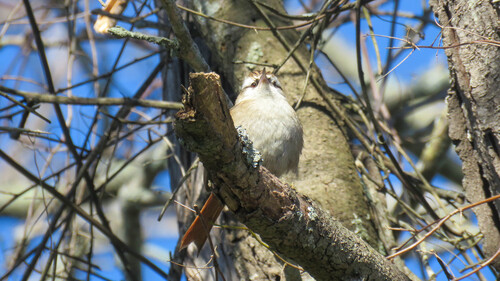 Stripe-crowned Spinetail
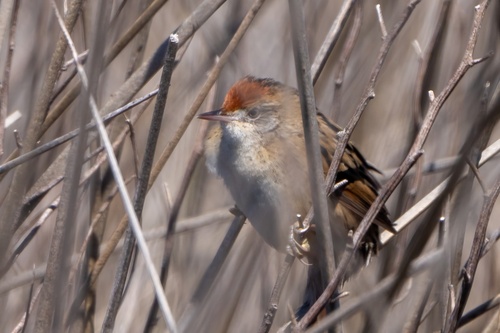 Bay-capped Wren-Spinetail
In breve
Il segno di campo più affidabile per separare Stripe-crowned Spinetail da Bay-capped Wren-Spinetail è il motivo della corona: lo Stripe-crowned adulto ha una corona a strisce audaci, mentre il Bay-capped Wren-Spinetail mostra una corona rufous solida. Lo Stripe-crowned giovanile non ha strisce sulla corona (a differenza degli adulti), ma differisce ancora per la colorazione generale e il motivo della coda. Lo Stripe-crowned Spinetail preferisce boschi e cespugli più secchi, mentre il Bay-capped Wren-Spinetail si trova esclusivamente in paludi e canneti. Entrambi sono piccoli uccelli forno marroni con code appuntite, ma un'attenta attenzione al motivo della testa, all'habitat e alle sottili differenze strutturali eviterà confusione.
Consigli di identificazione
- Motivo della corona (adulti): Lo Stripe-crowned Spinetail mostra sempre una corona a strisce audaci (nerastra e marrone chiaro); il Bay-capped Wren-Spinetail ha una corona rufous solida senza strisce. Questo è il segno più affidabile per gli adulti.
- Motivo della corona (giovanili): Lo Stripe-crowned giovanile non ha strisce sulla corona e ha una corona semplice, ma differisce ancora dal Bay-capped per la parte inferiore complessivamente più scura, leggermente maculata/scalata e per l'habitat. I giovanili del Bay-capped hanno sempre una corona rufous.
- Supercilium: Entrambi hanno un supercilium biancastro, ma quello dello Stripe-crowned è più ampio e contrastante, specialmente sopra le lore marrone scuro e dietro l'occhio. Quello del Bay-capped è più stretto, impostato su un volto marrone sabbioso.
- Motivo del volto: Lo Stripe-crowned mostra lore marrone scuro e una miscela di copritrici auricolari biancastre/marroni; il Bay-capped ha un volto marrone sabbioso semplice.
- Parte superiore: Il Bay-capped ha strisce nere audaci sulla nuca e sulla parte superiore della schiena, che lo Stripe-crowned non ha (la sua schiena è più uniforme grigio-marrone o marrone, a seconda della sottospecie).
- Forma e colore della coda: Entrambi hanno code appuntite e graduate, ma la coda dello Stripe-crowned è più ovviamente forked, con un motivo rufous e marrone (piume centrali marrone scuro/rufous, piume esterne rufous). La coda del Bay-capped è per lo più marrone, con un po' di nero sulla coppia centrale, e meno contrasto di colore.
- Motivo delle ali: Lo Stripe-crowned ha copritrici rufous e piume di volo marrone chiaro; le ali del Bay-capped sono marroni con cannella alla base delle piume di volo. Questo è sottile e meglio visibile da vicino o in buona luce.
- Parte inferiore: Lo Stripe-crowned è grigio-marrone o grigio chiaro, più scuro sull'addome; il Bay-capped è biancastro con un lavaggio color crema o cannella sul petto, sui fianchi e sui lati. I giovanili dello Stripe-crowned hanno parti inferiori leggermente maculate/scalate.
- Colore dell'iride: L'iride dello Stripe-crowned è variabile (rosso scuro a arancione a marrone); quella del Bay-capped è pallida (bianco opaco a bluastro pallido). Questo è visibile solo da vicino.
- Becco e zampe: Entrambi hanno una struttura del becco simile; le zampe dello Stripe-crowned sono verde oliva a grigio verdastro o marrone giallastro, mentre quelle del Bay-capped sono di un beige chiaro. Questo non è un segno di campo forte.
- Habitat: Se l'uccello si trova in una palude, specialmente tra canne o giunchi, il Bay-capped è fortemente favorito. Se in bosco, cespuglio o savana secca, è lo Stripe-crowned.
- Comportamento: Il Bay-capped è tipicamente solitario e si nasconde nella densa vegetazione palustre; lo Stripe-crowned è più arboricolo, spesso in coppie o piccoli gruppi, e più attivo in alberi e cespugli.
- Dimensioni: Lo Stripe-crowned è leggermente più grande e pesante, ma questo è raramente utile sul campo a meno che entrambi non siano visti fianco a fianco.
- Voce: Se si sente un canto simile a un ronzio di cavalletta, indica il Bay-capped. Altrimenti, la voce non è un forte separatore con le informazioni disponibili.
- Stagione e distribuzione: Entrambe le specie si sovrappongono in parti di Argentina, Brasile, Paraguay e Uruguay, ma solo lo Stripe-crowned si trova a quote più elevate e in habitat più secchi. Considera sempre l'habitat e l'elevazione nei casi ambigui.
Taglia
Stripe-crowned Spinetail is slightly heavier (15.0 g vs. 11.0 g) and a bit longer (13–16 cm) than Bay-capped Wren-Spinetail (13–14.5 cm). In the field, this difference is subtle and not usually diagnostic, but Stripe-crowned may appear a touch bulkier. Both are small, slender birds; size alone is rarely a safe separator.
Piumaggio
- Juveniles: Juvenile Stripe-crowned Spinetail lacks the adult's crown stripes, showing a plain crown and darker, faintly mottled or scaled underparts. Bay-capped Wren-Spinetail juveniles are not described as differing much from adults, but always have a solid rufous crown.
- Adults: Stripe-crowned Spinetail (all subspecies) shows a strikingly striped crown (blackish and buffy brown), a wide white supercilium, and a graduated, pointed tail with rufous and brown patterning. Bay-capped Wren-Spinetail has a solid rufous crown, a whitish supercilium, sandy brown face, and a tail that is mostly brown with some black on the central feathers.
- Upperparts: Stripe-crowned is grayish to brownish above, with less obvious streaking; Bay-capped has bold black streaks on the nape and upper back.
- Underparts: Stripe-crowned is brownish gray to buffish gray, darker on the belly; Bay-capped is whitish with a buff or cinnamon wash on breast and flanks.
- Wings: Stripe-crowned has rufous wing coverts and dull brownish flight feathers; Bay-capped's wings are brown with cinnamon at the base of the flight feathers.
- Iris color: Stripe-crowned varies (dark red to orange to brown); Bay-capped is pale (dull white to pale bluish).
Comportamento
Lo Stripe-crowned Spinetail è tipicamente visto mentre cerca cibo in una varietà di habitat boschivi e cespugliosi, spesso muovendosi tra rami e fogliame, a volte in coppie o piccoli gruppi. È agile e attivo, a volte sbattendo la coda. Il Bay-capped Wren-Spinetail è ristretto a paludi e canneti, di solito visto da solo, muovendosi attraverso erbe dense e giunchi, raccogliendo insetti. Il suo comportamento è più furtivo e legato alla vegetazione umida. Entrambe le specie hanno code graduate e appuntite, ma il Bay-capped è più probabile che venga visto in basso nella vegetazione palustre, mentre lo Stripe-crowned è più arboricolo o in cespugli più secchi.
Habitat
L'habitat è un forte separatore. Lo Stripe-crowned Spinetail abita una vasta gamma di boschi secchi a semi-umidi, foreste galleria, cespugli montani aridi, savane e talvolta boschi andini, da vicino al livello del mare fino a 3.100 m. Evita le vere zone umide. Il Bay-capped Wren-Spinetail è uno specialista delle paludi, trovato solo in canneti e giunchi di paludi d'acqua dolce, salmastra o salata, da livello del mare fino a 900 m. Se l'uccello si trova in una palude, il Bay-capped è molto più probabile; se in bosco o cespuglio, lo Stripe-crowned è il default.
Voce
Le note non forniscono un confronto dettagliato delle vocalizzazioni. Il Bay-capped Wren-Spinetail è descritto come avente un ronzio simile a quello di una cavalletta per il suo canto principale. Il canto dello Stripe-crowned Spinetail non è descritto qui. La voce non è il separatore più affidabile a meno che non si senta il canto ronzante del Bay-capped.
Stripe-crowned Spinetail · Bay-capped Wren-Spinetail · I miei uccelli difficili