

Steller's Sea-Eagle vs Aquila di mare
Haliaeetus pelagicus contro Haliaeetus albicilla
Fai un quiz con Steller's Sea-Eagle e Aquila di mare
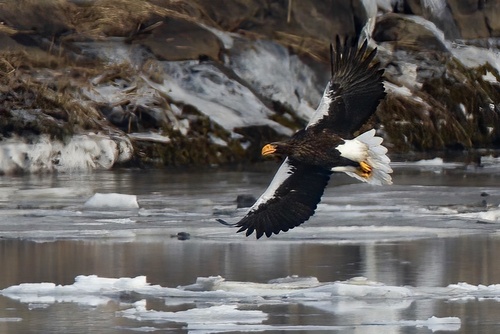 Steller's Sea-Eagle
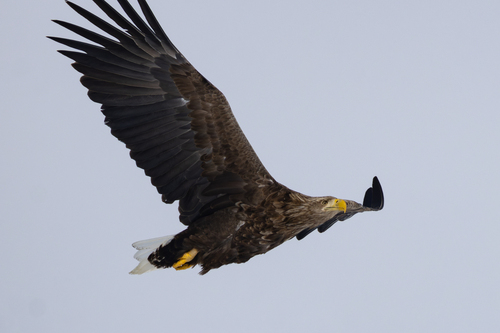 Aquila di mare
In breve
Il segno distintivo più affidabile per separare l'Aquila di mare di Steller da Aquila di mare è il sorprendente motivo bianco sull'adulto Steller: bianco audace sulle spalle, cosce, copritrici delle ali inferiori e una lunga coda bianca a forma di diamante, rispetto alla coda più sobria, più corta e a forma di cuneo dell'Aquila di mare e al piumaggio marrone generalmente uniforme. Gli uccelli giovani e immaturi sono più complicati, ma l'Aquila di mare di Steller è più massiccia, con un becco molto più pesante e un corpo più scuro e uniforme. In volo, l'Aquila di mare di Steller mostra ali a forma di pala e una coda più lunga e a forma di diamante, mentre le ali dell'Aquila di mare sembrano più quadrate e la coda è più corta. Considera sempre l'età, poiché i giovani di entrambe le specie possono sembrare simili, ma l'Aquila di mare di Steller è complessivamente più scura e massiccia, con un becco più robusto.
Consigli di identificazione
- L'adulto Aquila di mare di Steller mostra macchie bianche audaci sulle spalle, cosce, copritrici delle ali inferiori e una lunga coda bianca a forma di diamante—questo motivo pied è unico e diagnostico a qualsiasi distanza. Gli adulti dell'Aquila di mare sono marroni nel complesso con solo la coda bianca, e la coda è più corta e a forma di cuneo.
- L'Aquila di mare di Steller giovane è più scura e più uniforme rispetto all'Aquila di mare giovane, con un corpo marrone scuro e solo leggera maculatura su una coda per lo più bianca (nera alla punta). L'Aquila di mare giovane è più chiara, con una coda disordinata di crema grigia e un contrasto corporeo più variabile.
- L'Aquila di mare di Steller ha un becco molto più massiccio e profondo (giallo brillante negli adulti, nerastro nei giovani) rispetto al becco ampio ma più snello dell'Aquila di mare. Questo è spesso visibile anche a distanza.
- La forma della coda in volo è un forte indizio: l'Aquila di mare di Steller ha una coda più lunga e a forma di diamante; la coda dell'Aquila di mare è più corta, a forma di cuneo, e può sembrare tozza negli adulti.
- La forma dell'ala in volo: le ali dell'Aquila di mare di Steller sono a forma di pala e più larghe, dando un'impressione pesante e ingombrante; le ali dell'Aquila di mare sono più quadrate e profondamente divise, con almeno sei 'dita' visibili alle punte.
- L'ala inferiore dell'adulto Aquila di mare di Steller è audacemente maculata con macchie bianche, specialmente sulle copritrici; l'ala inferiore dell'Aquila di mare è più uniforme marrone con meno contrasto.
- Colore delle gambe e dei piedi: l'adulto Aquila di mare di Steller ha piedi e gambe giallo brillante; quelli dell'Aquila di mare sono giallo sporco (giovane) a giallo (adulto), ma meno vividi.
- Colore della testa e del collo: l'adulto Aquila di mare ha una testa e un collo pallidi, in contrasto con il corpo marrone; l'Aquila di mare di Steller ha una testa scura in tutte le piumature tranne che per rare forme scure, che sono quasi completamente scure.
- Colore del becco giovane: l'Aquila di mare di Steller è marrone nerastro; l'Aquila di mare è metà marrone scuro, metà giallastro opaco o grigio.
- Motivo della coda giovane: l'Aquila di mare di Steller è per lo più bianca con nero alla punta; l'Aquila di mare è disordinata, sporca di bianco con bordi neri e talvolta striature.
- Aspetto in perching: l'Aquila di mare di Steller appare più massiccia, più eretta, e il becco sembra enorme; l'Aquila di mare è grande ma più snella e meno imponente.
- Aspetto in volo: l'Aquila di mare di Steller è più pesante, con battiti d'ala più lenti e profondi e un volo più ingombrante; l'Aquila di mare è ancora pesante ma può mostrare battiti d'ala più veloci intervallati da planate.
- Contesto dell'habitat: Se vista in Eurasia temperata lontano dal Far East russo, è quasi certamente l'Aquila di mare. Nel Far East russo, entrambe possono verificarsi, ma l'Aquila di mare di Steller domina gli habitat costieri e fluviali.
- La rara forma scura dell'Aquila di mare di Steller manca della maggior parte del bianco tranne che per la coda, ma è estremamente rara; in questi casi, fare affidamento su dimensioni, becco e struttura.
- Progresso dell'età: l'Aquila di mare di Steller raggiunge la piumatura adulta entro il quarto o quinto anno; l'Aquila di mare impiega fino a 8 anni per avere una coda completamente bianca e una testa pallida. L'Aquila di mare subadulto può mostrare macchie bianche sulle parti inferiori e sull'ala inferiore, ma mai il motivo pied audace dell'adulto Aquila di mare di Steller.
Taglia
L'Aquila di mare di Steller è notevolmente più grande e pesante dell'Aquila di mare, con una massa corporea media di circa 6675 g rispetto a 4793 g [wikidata]. Sul campo, l'Aquila di mare di Steller appare più massiccia e imponente, con un becco molto più spesso e potente. Entrambe sono aquile molto grandi, ma l'Aquila di mare di Steller è la più grande del genere Haliaeetus, e questa differenza è spesso evidente anche a distanza, specialmente quando sono posate fianco a fianco o viste in volo insieme.
Piumaggio
Gli uccelli giovani e immaturi di entrambe le specie possono essere confusi, ma ci sono differenze chiave:
-
L'Aquila di mare di Steller giovane è per lo più di un marrone scuro uniforme con occasionali striature marrone-grigie sulla testa e sul collo, basi delle piume bianche e leggera maculatura sulla coda (che è bianca con maculatura nera alla punta). Il becco è marrone nerastro, le gambe sono bianche e gli occhi sono marrone scuro. L'effetto complessivo è quello di un uccello molto scuro, quasi nerastro, con un becco massiccio e una coda relativamente lunga e a forma di diamante. I giovani Aquila di mare di Steller sono più scuri e più uniformi rispetto all'Aquila di mare, e la loro coda è bianca più pulita con nero solo alla punta, non disordinata o striata.
-
L'Aquila di mare giovane è anch'essa marrone scuro ma tipicamente più chiara e variabile, con una coda di crema grigia sbiadita che è disordinatamente segnata con bordi e punte di piume nerastre, talvolta leggermente striata. La testa è marrone nerastro e uniforme, ma il corpo può mostrare più contrasto e variazione rispetto all'Aquila di mare di Steller. Il becco è metà marrone scuro, metà giallastro opaco o grigio, e i piedi sono gialli sporchi. I giovani hanno una coda più lunga rispetto agli adulti, ma la coda è più corta e a forma di cuneo rispetto a quella dell'Aquila di mare di Steller.
-
L'Aquila di mare di Steller adulta è inconfondibile: marrone scuro a nero nel complesso, con bianco audace sulle copritrici superiori minori e mediane, copritrici delle ali inferiori, cosce, copritrici della coda e una lunga coda bianca a forma di diamante. Il becco, gli occhi e i piedi sono gialli brillanti. Le rare forme scure mancano della maggior parte del bianco tranne che per la coda, ma sono estremamente rare.
-
L'Aquila di mare adulta è marrone nel complesso con una testa e un collo pallidi, e una coda bianca corta a forma di cuneo. Le ali sono larghe e a punta quadrata, e l'ala inferiore è meno contrastante rispetto a quella dell'Aquila di mare di Steller. Il becco è grande ma meno massiccio rispetto a quello dell'Aquila di mare di Steller, e il giallo è meno vivido.
-
In volo: l'Aquila di mare di Steller mostra ali a forma di pala e una lunga coda a forma di diamante; l'Aquila di mare ha ali più quadrate e una coda più corta e a forma di cuneo. Il motivo dell'ala inferiore dell'Aquila di mare di Steller è più sorprendentemente maculato negli adulti.
Comportamento
Entrambe le specie sono potenti aquile che volano lentamente e che planano e si librano con battiti d'ala profondi e costanti. L'Aquila di mare di Steller tende a sembrare ancora più pesante e ingombrante in volo, con ali più larghe e un aspetto più pesante. Quando è posata, l'Aquila di mare di Steller appare più massiccia e più eretta, con un becco enorme che è evidente anche a distanza. L'Aquila di mare si posa in una posizione più eretta su rami o rocce, ma a terra può sedere più orizzontalmente. Entrambe le specie possono essere viste cacciare sopra l'acqua o posate vicino a coste e fiumi, ma l'Aquila di mare di Steller appare spesso più dominante e imponente in raduni misti di aquile.
Habitat
L'Aquila di mare è ampiamente distribuita in Eurasia temperata e si trova in una gamma di habitat vicino a grandi corpi d'acqua, inclusi laghi, fiumi e aree costiere. L'Aquila di mare di Steller è più ristretta al Far East russo e alle regioni adiacenti, preferendo aree costiere, foci di fiumi e estuari, specialmente in inverno. Entrambe le specie possono sovrapporsi in alcune parti della Russia orientale, ma l'Aquila di mare di Steller è più associata a coste accidentate e grandi sistemi fluviali, mentre l'Aquila di mare è più flessibile nell'habitat. In aree miste, l'Aquila di mare di Steller è l'aquila più grande e dominante.
Steller's Sea-Eagle · Aquila di mare · I miei uccelli difficili