

Spike-heeled Lark vs Dusky Lark
Chersomanes albofasciata contro Pinarocorys nigricans
Fai un quiz con Spike-heeled Lark e Dusky Lark
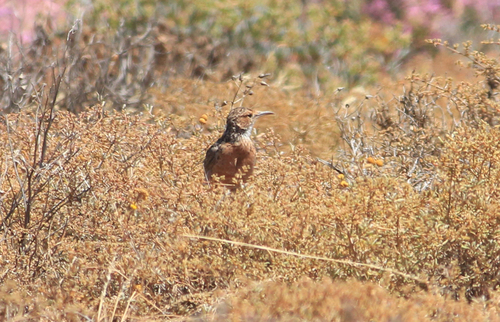 Spike-heeled Lark
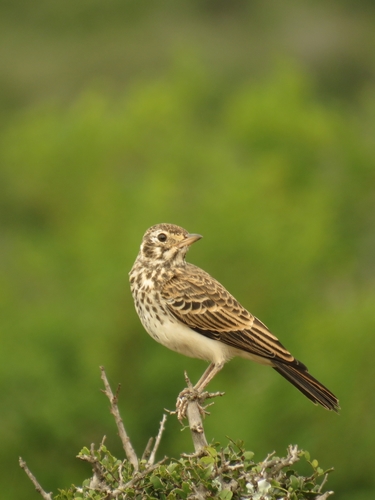 Dusky Lark
In breve
The most reliable way to separate Spike-heeled Lark from Dusky Lark is by size and structure: Dusky Lark is noticeably heavier-bodied and bulkier. In the field, Spike-heeled Lark is smaller, more delicate, and often shows a longer, finer bill. Both species can be found in southern Africa, but Dusky Lark is more migratory and tends to appear in different habitats. If you see a lark that looks unusually robust for its kind, especially with a heavier build, consider Dusky Lark. For perched or walking birds, focus on overall proportions and bill shape.
Consigli di identificazione
- Size is a major clue: Dusky Lark is much heavier and bulkier than Spike-heeled Lark. If the bird looks large for a lark, favor Dusky.
- Bill shape: Spike-heeled Lark often shows a longer, finer, and more decurved bill, while Dusky Lark's bill is proportionally shorter and stouter. This is best judged on perched or feeding birds.
- Overall build: Spike-heeled Lark is slender and delicate, Dusky Lark is robust and stocky. Compare head and body proportions if possible.
- Plumage tone: Dusky Lark tends to be darker or duskier overall, sometimes with a hint of rufous on the rump, but this is subtle and variable. Spike-heeled Lark is generally paler or warmer, sometimes with rufous tones, but this is not always obvious.
- Habitat context: Spike-heeled Lark is more likely in dry shrubland and seasonally wet grassland in southern Africa. Dusky Lark is more migratory and may appear in a wider range of open habitats, especially during migration.
- Range and season: If you are outside the breeding range of Spike-heeled Lark, especially during migration periods, consider Dusky Lark. Spike-heeled Lark is more resident.
- Social behavior: Dusky Lark may appear in flocks during migration; Spike-heeled Lark is more often seen singly or in pairs.
- No strong age-specific flight marks: Neither species has a distinctive juvenile or immature upperwing pattern described in the sources, so do not rely on flight pattern for separation.
- Voice not diagnostic: No vocal differences are described in the available notes; do not use song or call for separation unless you have local experience.
- Pitfalls: Both species are brownish larks and can look similar at a distance or in poor light. Focus on size, structure, and context rather than subtle plumage shades.
- When in doubt: If you cannot judge size or bill shape, and the bird is not in a clear habitat or range context, identification may remain uncertain. Use multiple clues together for best results.
Taglia
Dusky Lark is substantially heavier (38.0g) than Spike-heeled Lark (24.7g) [wikidata]. This difference is often visible in the field: Dusky Lark appears bulkier, with a more robust frame, while Spike-heeled Lark is smaller and more lightly built. If you see both together, the size gap is obvious, but even singly, a lark that feels large and stocky for a southern African lark is likely Dusky. Spike-heeled Lark is more delicate and slender overall.
Piumaggio
There are no detailed, age-specific upperwing or flight pattern marks in the available notes for either species. Both are generally brownish larks, but Dusky Lark is described as 'dusky' or darker overall, sometimes called 'rufous-rumped.' Spike-heeled Lark is often called 'rufous long-billed lark,' suggesting warmer or more rufous tones, especially on the back or flanks, but this is subtle and variable. Without more detailed descriptions, plumage differences are not reliably diagnostic, especially for immatures or birds in worn plumage.
Comportamento
No direct behavioral differences are noted in the sources. Both are ground-dwelling larks typical of open country. Dusky Lark is migratory, so may appear suddenly in areas where it is not resident, sometimes in flocks. Spike-heeled Lark is more resident and may be seen singly or in pairs. In the field, both species walk and run on the ground, but behavioral differences are not a reliable separation point based on current notes.
Habitat
Spike-heeled Lark is found in subtropical or tropical dry shrubland and seasonally wet or flooded lowland grassland in southern Africa [wikipedia]. Dusky Lark is native to southern Central Africa and is migratory, so it may turn up in a wider range of open habitats, sometimes outside its breeding range. If you are in dry shrubland or seasonally wet grassland in southern Africa, Spike-heeled Lark is more likely. In more central or migratory contexts, especially during influxes, Dusky Lark may be present.