

Soft-plumaged Petrel vs Antarctic Prion
Pterodroma mollis contro Pachyptila desolata
Fai un quiz con Soft-plumaged Petrel e Antarctic Prion
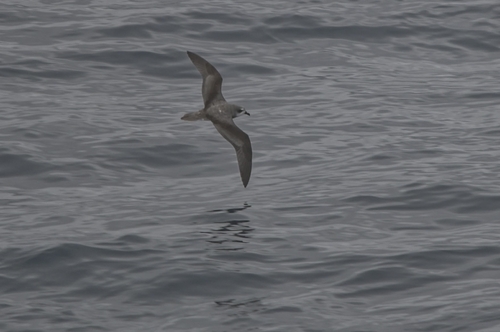 Soft-plumaged Petrel
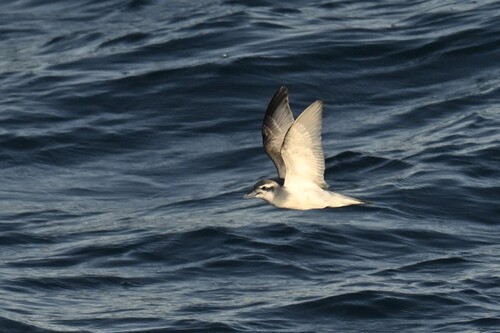 Antarctic Prion
In breve
The most reliable field mark between Soft-plumaged Petrel and Antarctic Prion is the head and face pattern: Soft-plumaged Petrel shows a dark grey head with a strong white cheek and throat patch, plus a dark eye patch, while Antarctic Prion has a blue-grey head with a white eyebrow and lacks the bold white cheek. In flight, Antarctic Prion displays a distinctive dark 'M' pattern across its upperwings and back, which Soft-plumaged Petrel lacks. Structure also helps: Soft-plumaged Petrel is notably heavier and bulkier, with a more pointed tail and longer, black bill, compared to the prion's smaller, more delicate build and blue-grey bill. Both species have white underparts and grey upperparts, but careful attention to face pattern, wing markings, and overall size will separate them in most conditions.
Consigli di identificazione
- Upperwing pattern in flight (all ages): Antarctic Prion shows a bold dark 'M' or 'W' across the upperwings and back, formed by dark greater coverts and a dark line from back to wingtips. Soft-plumaged Petrel lacks this, showing plainer grey upperwings.
- Head and face pattern: Soft-plumaged Petrel has a dark grey head with a prominent white cheek and throat patch, plus a dark eye patch and white speckling on the forehead. Antarctic Prion has a blue-grey head with a white eyebrow, lacking the bold white cheek.
- Bill color and shape: Soft-plumaged Petrel has a long, black, sharply hooked bill (~25–32 mm). Antarctic Prion's bill is shorter, blue-grey, and less hooked.
- Tail shape: The petrel has a pointed tail, often obvious in flight. Antarctic Prion's tail is wedge-shaped with a black tip.
- Body size and jizz: Soft-plumaged Petrel is much heavier and bulkier (300g vs 156g), with a more powerful, direct flight. Antarctic Prion is lighter, more delicate, and has a fluttery, agile flight style.
- Leg and foot color: If seen well, Soft-plumaged Petrel has pink legs with black on the outer webs and toes; Antarctic Prion has blue feet.
- Underwing color: Soft-plumaged Petrel's underwings are mostly dark grey; Antarctic Prion's underwings are not described as strongly marked.
- Plumage morphs: Be aware that Soft-plumaged Petrel can show a dark morph, but the facial pattern and structure remain distinctive.
- Flock behavior: Antarctic Prion is more likely to be seen in large flocks; Soft-plumaged Petrel is more solitary or in small groups.
- Vocalizations: Only Soft-plumaged Petrel is described as noisy at colonies; both are usually silent at sea.
- Habitat context: Both are pelagic, but Antarctic Prion may be more common in areas rich in zooplankton.
- Confusion risk: Antarctic Prion is very similar to Salvin's Prion, so be cautious if other prion species are present. The petrel is less likely to be confused with other species if the head pattern is seen well.
- Pitfalls: Distant or poor views may obscure the face pattern and wing markings; prioritize clear flight views for the 'M' pattern (prion) or the bold white cheek (petrel).
- Age/sex: No strong age or sex differences are described for either species in the notes; the key marks apply to all ages.
- Bill structure at distance: In side profile, the petrel's longer, more hooked bill may be visible even at range, compared to the prion's shorter, stubbier bill.
Taglia
Soft-plumaged Petrel is substantially larger and heavier (body mass ~300g) compared to Antarctic Prion (~156g). The petrel has a bulkier body and a more robust, hooked bill, while the prion is more slender and lightweight. Antarctic Prion's length is about 27 cm with a wingspan of 61–66 cm, making it the largest prion but still smaller and lighter than Soft-plumaged Petrel. In direct comparison, expect the petrel to appear more powerful and deep-chested, with a longer bill and a more pointed tail.
Piumaggio
- Juvenile/immature upperwing pattern: Antarctic Prion (all ages) shows a striking dark 'M' or 'W' pattern across the upperwings and back, created by dark greater coverts and a dark line from the back to the wingtips. This mark is absent in Soft-plumaged Petrel of all ages, which has plainer grey upperwings without the 'M'.
- Head and face: Soft-plumaged Petrel has a dark grey head with a prominent white cheek and throat, plus a dark eye patch and white speckling on the forehead. Antarctic Prion has a blue-grey head with a white eyebrow and lacks the bold white cheek.
- Underparts: Both species have mostly white underparts, but Soft-plumaged Petrel's underwings are dark grey, while Antarctic Prion's are less distinctly marked below.
- Tail: Soft-plumaged Petrel has a pointed tail; Antarctic Prion's tail is grey, wedge-shaped, with a black tip.
- Bill and legs: Soft-plumaged Petrel has a black, hooked bill and pink legs with black on the outer webs; Antarctic Prion has a blue-grey bill and blue feet.
- Morphs: Soft-plumaged Petrel can show a dark morph, which may complicate identification, but the facial pattern and structure remain distinctive.
Comportamento
Both species are pelagic and rarely seen on land except at breeding sites. In flight, Soft-plumaged Petrel appears more powerful and direct, with narrow wings and a pointed tail, often gliding with stiffer wingbeats. Antarctic Prion is more buoyant and agile, with a fluttery flight and frequent changes of direction. The prion's lighter build and shorter bill contribute to a more delicate, less forceful impression. Both may be seen in mixed flocks at sea, but the petrel often stands out due to its larger size and more purposeful flight.
Habitat
Both species inhabit the Southern Ocean and are strictly pelagic outside the breeding season. Antarctic Prion is more likely to be seen in large flocks, especially near upwellings where zooplankton is abundant. Soft-plumaged Petrel is more solitary or in smaller groups. Habitat alone is not a reliable separator unless observing flock size and feeding behavior, which may give subtle clues.
Voce
Soft-plumaged Petrel is described as noisy, with medium-pitched moans and shrill squeaks, especially at breeding colonies. Antarctic Prion's voice is not described in the notes, and at sea both are usually silent. Vocalizations are not a reliable field mark at sea.
Soft-plumaged Petrel · Antarctic Prion · I miei uccelli difficili