

Quaglia tridattila vs Bronze-winged Courser
Turnix sylvaticus contro Rhinoptilus chalcopterus
Fai un quiz con Quaglia tridattila e Bronze-winged Courser
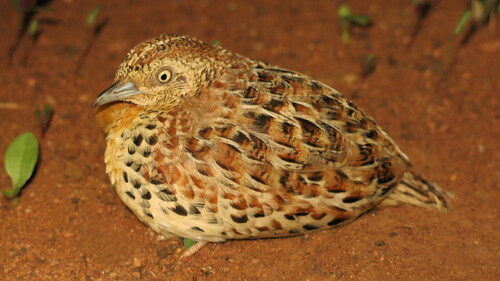 Quaglia tridattila
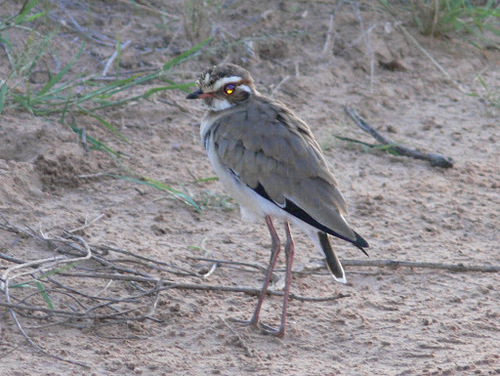 Bronze-winged Courser
In breve
Il segno distintivo più affidabile per separare la Quaglia tridattila dal Bronze-winged Courser si vede in volo: la quaglia mostra una stretta barra alare biancastra su ali altrimenti grigie, mentre il courser lampeggia punte delle ali iridescenti di rame-viola e copritrici delle ali inferiori bianche, senza barra alare. Le piume giovanili sono anche distinte: i giovani quaglie sono più macchiati sotto, mentre i courser giovanili hanno parti superiori con punte color crema e una debole banda sul petto. Strutturalmente, il courser è molto più grande, con lunghe gambe rosse e un becco ricurvo, rispetto alla costruzione piccola, rotonda e simile a una quaglia della quaglia. Le quaglie sono estremamente schive e raramente volano, mentre i courser sono più propensi a essere visti correre o volare in terreno aperto.
Consigli di identificazione
- In volo, cerca il motivo delle ali: La Quaglia tridattila mostra una stretta barra alare biancastra su ali altrimenti grigie (tutte le età), mentre il Bronze-winged Courser lampeggia copritrici delle ali inferiori bianche e primarie scure con punte iridescenti di rame-viola (adulti), senza barra alare.
- Piumaggio giovanile: I giovani quaglie sono più macchiati sotto e hanno un volto semplice; i courser giovanili hanno parti superiori con punte color crema e una debole banda sul petto, con i pulcini che sono macchiati sopra e bianchi sotto.
- Motivo della testa: La quaglia ha un volto semplice; il courser ha un supercilium bianco crema audace, una corona anteriore e una linea oculare posteriore, con lore scuri e copritrici auricolari (adulti).
- Banda sul petto: Gli adulti del courser hanno una sottile banda nera che separa il petto superiore marrone-grigio dalla pancia color buff; la quaglia non ha questa caratteristica.
- Colore e lunghezza delle gambe: Il courser ha lunghe gambe rosso brillante (adulti); la quaglia ha gambe corte e poco appariscenti.
- Forma del becco: Il becco del courser è lungo, leggermente ricurvo e nero con una base rosso-viola; il becco della quaglia è corto e dritto.
- Anello oculare: Gli adulti del courser mostrano un brillante anello oculare rosso-viola; la quaglia non ha alcuna caratteristica del genere.
- Motivo della coda: Il courser ha una coda superiore bianca con bordo marrone scuro e bianco; la coda della quaglia non è distintiva.
- Dimensione del corpo: Il courser è molto più grande e pesante (153 g) rispetto alla piccola quaglia.
- Comportamento: La quaglia è estremamente schiva, raramente vola e preferisce correre e nascondersi; il courser è più propenso a essere visto correre in aperto o prendere il volo.
- Habitat: La quaglia si trova in erba densa o cespugli; il courser preferisce savane aperte e semi-aride e terreni recentemente bruciati.
- Aspetto in perching: La quaglia appare tozza e rotonda; il courser sta alto e dritto.
- Colorazione delle parti inferiori: La quaglia è color buff sotto con marcature nere sui fianchi; il courser è color buffy sotto con una distinta banda nera sul petto.
- Marcature sui fianchi: La quaglia mostra marcature nere sui fianchi; il courser non lo fa.
- Quando in dubbio: Se vedi un piccolo uccello grigio che corre in copertura fitta e evita di volare, è probabile che sia una quaglia. Se l'uccello è grande, con lunghe gambe e un motivo di testa audace, che corre o vola in terreno aperto, è un courser.
Taglia
Il Bronze-winged Courser è drammaticamente più grande, con una massa corporea adulta di circa 153 g [wikidata], rispetto alla molto più piccola Quaglia tridattila (non misurata direttamente qui, ma tipicamente intorno ai 15 cm di lunghezza e molto più leggera). Il courser ha lunghe gambe e un becco ricurvo proporzionalmente più lungo, mentre la quaglia è compatta, con gambe corte e simile a una quaglia. Sul campo, il courser appare alto e dritto, mentre la quaglia è tozza e corre vicino al suolo.
Piumaggio
- Giovani/immaturi: I giovani Quaglia tridattila sono più macchiati sotto, con parti superiori marrone sabbia striate e un volto semplice. I giovani Bronze-winged Coursers sono meno vivaci degli adulti, con punte giallo crema sulle piume superiori e una banda sul petto molto sottile; i pulcini sono macchiati sopra e bianchi sotto.
- Adulti in volo: Le quaglie mostrano una stretta barra alare biancastra su ali grigie, con parti superiori marrone sabbia altrimenti semplici e parti inferiori color buff con marcature nere sui fianchi. Gli adulti del Bronze-winged Courser mostrano copritrici delle ali inferiori bianche, primarie nere scure con punte iridescenti di rame-viola (la 'ala di bronzo'), e una coda superiore bianca con bordo marrone scuro e bianco. La testa del courser è audacemente marcata con un supercilium color crema, una corona anteriore e una linea oculare posteriore, e una sottile banda nera separa il petto superiore marrone-grigio dalla pancia color buff.
- Adulti in perching: Le quaglie sono grigie, con un volto semplice e parti superiori marrone sabbia striate. Gli adulti del courser sono più appariscenti, con un motivo distintivo sulla testa, un anello oculare rosso-viola e lunghe gambe rosse.
Comportamento
Le Quaglie tridattila sono segrete, terrestri e raramente volano, preferendo correre e nascondersi in copertura densa. Sono estremamente difficili da far volare e spesso non vengono viste. I Bronze-winged Coursers, pur essendo anche terrestri, sono più propensi a essere visti correre in terreno aperto o prendere il volo quando disturbati. Sono solitari o in coppie, spesso attivi al crepuscolo o di notte, e nidificano in aree aperte recentemente bruciate. Il comportamento del courser è più evidente, specialmente quando vola e mostra il suo distintivo motivo delle ali.
Habitat
Le Quaglie tridattila preferiscono praterie dense o cespugli, dove possono rimanere nascoste ed evitare di essere scoperte. Sono raramente viste in aree aperte. Il Bronze-winged Courser abita savane e boschi semi-aridi, preferendo terreni aperti, specialmente in aree recentemente colpite da incendi. Il courser è più propenso a essere incontrato in habitat aperti e asciutti, mentre le quaglie sono associate a vegetazione più densa e più nascosta.
Quaglia tridattila · Bronze-winged Courser · I miei uccelli difficili