

Torillo Andaluz vs Corredor Patirrojo
Turnix sylvaticus frente a Rhinoptilus chalcopterus
Juega un quiz con Torillo Andaluz y Corredor Patirrojo
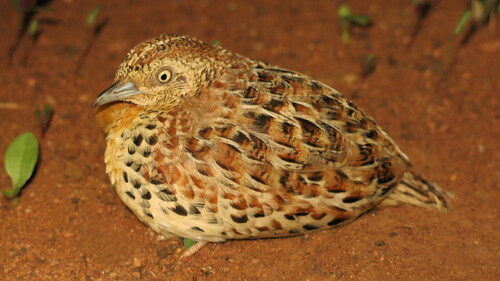 Torillo Andaluz
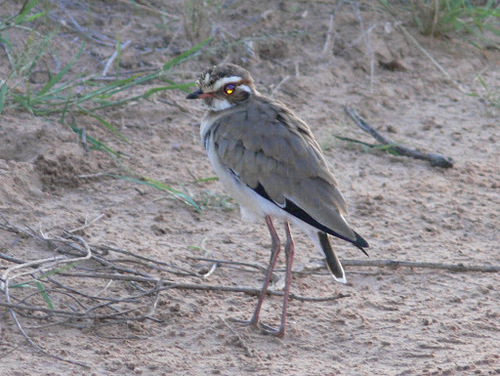 Corredor Patirrojo
En breve
La marca de campo más confiable para separar el Torillo Andaluz del Corredor Patirrojo se observa en vuelo: el torillo muestra una estrecha barra alar blanquecina en alas de otro modo grises, mientras que el corredor destella puntas de alas iridiscentes de cobre-violeta y cobertoras de alas blancas, sin barra alar. Los plumajes juveniles también son distintos: los jóvenes torillos son más manchados por debajo, mientras que los corredores juveniles tienen partes superiores con puntas crema y una banda pectoral tenue. Estructuralmente, el corredor es mucho más grande, con largas patas rojas y un pico curvado hacia abajo, en comparación con la pequeña, redonda y similar a un codorniz estructura del torillo. Los torillos son extremadamente esquivos y rara vez vuelan, mientras que los corredores son más propensos a ser vistos corriendo o volando en terreno abierto.
Consejos de identificación
- En vuelo, busca el patrón de las alas: El Torillo Andaluz muestra una estrecha barra alar blanquecina en alas de otro modo grises (todas las edades), mientras que el Corredor Patirrojo destella cobertoras de alas blancas y primarias oscuras con puntas iridiscentes de cobre-violeta (adultos), sin barra alar.
- Plumaje juvenil: Los torillos juveniles son más manchados por debajo y tienen una cara simple; los corredores juveniles tienen partes superiores con puntas crema y una banda pectoral tenue, con los polluelos siendo moteados por encima y blancos por debajo.
- Patrón de la cabeza: El torillo tiene una cara simple; el corredor tiene un supercilio, coronilla y línea ocular posterior de color crema-blanco, con loretes oscuros y cobertoras de las orejas (adultos).
- Banda pectoral: Los adultos del corredor tienen una delgada banda negra que separa el pecho superior marrón-gris del vientre amarillento; el torillo carece de esta característica.
- Color y longitud de las patas: El corredor tiene largas patas rojas brillantes (adultos); el torillo tiene patas cortas e inconspicuas.
- Forma del pico: El pico del corredor es largo, ligeramente curvado hacia abajo y negro con una base rojo-púrpura; el pico del torillo es corto y recto.
- Anillo ocular: Los adultos del corredor muestran un brillante anillo ocular rojo-púrpura; el torillo carece de cualquier característica similar.
- Patrón de la cola: El corredor tiene una cola superior blanca con marrón oscuro bordeada de blanco; la cola del torillo no es distintiva.
- Tamaño del cuerpo: El corredor es mucho más grande y pesado (153 g) que el pequeño torillo.
- Comportamiento: El torillo es extremadamente esquivo, rara vez vuela y prefiere correr y esconderse; el corredor es más propenso a ser visto corriendo en terreno abierto o despegando.
- Hábitat: El torillo se encuentra en pastizales densos o matorrales; el corredor prefiere sabanas semiáridas abiertas y terrenos recientemente quemados.
- Postura posada: El torillo parece bajo y redondo; el corredor se mantiene erguido y alto.
- Coloración de las partes inferiores: El torillo es amarillento por debajo con marcas negras en los flancos; el corredor es amarillento por debajo con una distintiva banda negra en el pecho.
- Marcas en los flancos: El torillo muestra marcas negras en los flancos; el corredor no.
- Cuando tengas dudas: Si ves un ave pequeña, sosa, corriendo en una densa cobertura que evita volar, es probable que sea un torillo. Si el ave es grande, con patas largas y un patrón de cabeza audaz, corriendo o volando en terreno abierto, es un corredor.
Tamaño
El Corredor Patirrojo es dramáticamente más grande, con una masa corporal adulta de aproximadamente 153 g [wikidata], en comparación con el mucho más pequeño Torillo Andaluz (no medido directamente aquí, pero típicamente alrededor de 15 cm de longitud y mucho más ligero). El corredor tiene patas largas y un pico curvado hacia abajo proporcionalmente más largo, mientras que el torillo es compacto, de patas cortas y similar a un codorniz. En el campo, el corredor parece alto y erguido, mientras que el torillo es bajo y corre cerca del suelo.
Plumaje
- Juveniles/inmaduros: Los juveniles del Torillo Andaluz son más manchados por debajo, con partes superiores de color marrón arenoso estriado y una cara simple. Los juveniles del Corredor Patirrojo son menos vibrantes que los adultos, con puntas crema-amarillentas en las plumas superiores y una banda pectoral muy delgada; los polluelos son moteados por encima y blancos por debajo.
- Adultos en vuelo: Los torillos muestran una estrecha barra alar blanquecina en alas grises, con partes superiores marrón arenoso de otro modo simples y partes inferiores amarillentas con marcas negras en los flancos. Los adultos del Corredor Patirrojo muestran cobertoras de alas blancas, primarias negras oscuras con puntas iridiscentes de cobre-violeta (el 'ala de bronce'), y una cola superior blanca con marrón oscuro bordeada de blanco. La cabeza del corredor está marcadamente marcada con un supercilio crema, coronilla y línea ocular posterior, y una delgada banda negra separa el pecho marrón-gris superior del vientre amarillento.
- Adultos posados: Los torillos son sosa, con una cara simple y partes superiores marrón arenoso estriado. Los adultos del corredor son más llamativos, con un patrón de cabeza distintivo, anillo ocular rojo-púrpura y largas patas rojas.
Comportamiento
Los Torillos Andaluz son secretos, terrestres y rara vez vuelan, prefiriendo correr y esconderse en una densa cobertura. Son extremadamente difíciles de asustar y a menudo pasan desapercibidos. Los Corredores Patirrojos, aunque también son terrestres, son más propensos a ser vistos corriendo en terreno abierto o despegando cuando se sienten perturbados. Son solitarios o en parejas, a menudo activos al atardecer o por la noche, y anidan en áreas abiertas, recientemente quemadas. El comportamiento del corredor es más conspicuo, especialmente al volar y mostrar su distintivo patrón de alas.
Hábitat
Los Torillos Andaluz prefieren pastizales densos o matorrales, donde pueden permanecer ocultos y evitar ser detectados. Rara vez se ven en áreas abiertas. El Corredor Patirrojo habita sabanas y bosques semiáridos, favoreciendo terrenos abiertos, especialmente en áreas recientemente afectadas por el fuego. Es más probable encontrar al corredor en hábitats abiertos y secos, mientras que los torillos están asociados con vegetación más densa y oculta.