

Svasso cornuto vs Western Wood-Pewee
Podiceps auritus contro Contopus sordidulus
Fai un quiz con Svasso cornuto e Western Wood-Pewee
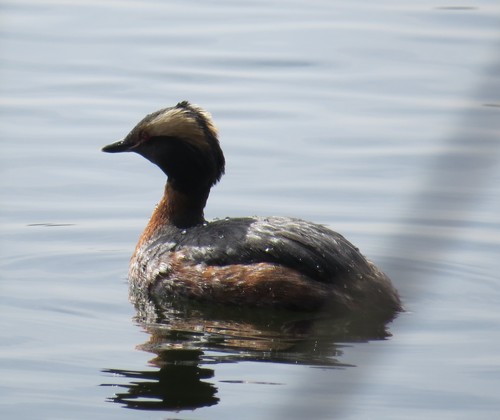 Svasso cornuto
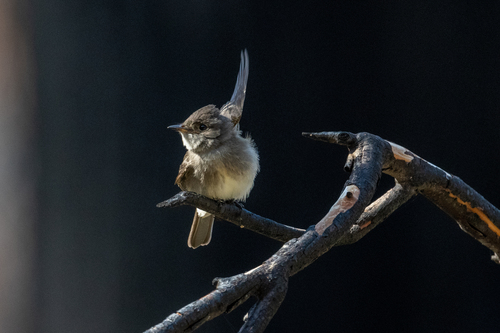 Western Wood-Pewee
In breve
The Slavonian Grebe (Horned Grebe) and Western Wood-Pewee are extremely unlikely to be confused in the field due to their radically different structure, size, and habitat, but quiz mix-ups can happen, especially with distant or out-of-context photos. The most reliable separation is overall structure: the grebe is a chunky waterbird with a pointed bill and, in breeding plumage, striking orange 'horns,' while the pewee is a small, slim, upright songbird with a thin bill and two pale wingbars. Juvenile and non-breeding grebes lack the horns but still show a compact, swimming profile and black-and-white face pattern, never resembling the olive-gray, perching pewee. In flight, the grebe shows a short neck and body with white wing panels, while the pewee's flight is more fluttery and direct, with long wings and a small head. Habitat is a major clue: grebes are always on water, pewees in trees or on wires.
Consigli di identificazione
- Habitat is decisive: Slavonian Grebe is always on water; Western Wood-Pewee is always perched on branches or wires, never on water. If you see the bird swimming or diving, it's a grebe.
- Overall size and shape: Grebe is much larger, with a chunky, duck-like body, short tail, and moderately long neck. Pewee is small, slim, upright, with a proportionally large head and long wings.
- Bill shape: Grebe has a straight, pointed bill with a white tip (especially visible at close range); pewee has a thin, straight flycatcher bill, dark with yellow at the base of the lower mandible.
- Breeding plumage (grebe): Look for bright orange-red 'horns' and chestnut neck/flanks on the grebe—unique and unmistakable. Pewee never shows any head plumes or chestnut coloring.
- Non-breeding/juvenile grebe: Black crown, white cheeks/throat, straight border behind eye, dull white underparts, brown-tinged back in juveniles. No wingbars or olive wash.
- Pewee plumage: Gray-olive upperparts, pale underparts with olive wash on breast, two pale wingbars, and a dark bill with yellow base. Never shows black-and-white face contrast or chestnut tones.
- Wingbars: Only the pewee has two pale wingbars on each wing; grebe never shows wingbars at any age or season.
- Flight silhouette: Grebe in flight is compact, with short neck and body, and shows white wing panels; pewee is slim, with long wings and a small head, showing two wingbars.
- Behavior: Grebe dives frequently, sits low in water, and is rarely seen flying except when flushed. Pewee perches upright, sallies for insects, and returns to the same or nearby perch.
- Vocalizations: Pewee gives a loud, buzzy 'peeer' and descending 'tsees'; grebe does not make such calls.
- Face pattern: Grebe (non-breeding/juvenile) has a sharp black-and-white face contrast with a straight border behind the eye; pewee has a plain face with no sharp contrast, just a faint pale eyering at best.
- Legs and feet: Grebe has large, lobed feet visible when preening or in flight; pewee has small, typical passerine feet, usually hidden when perched.
- Context: If seen in a flock of ducks or other waterbirds, it's a grebe; if with other flycatchers or small songbirds, it's a pewee.
- Seasonal confusion: Grebe's breeding plumage is unique; in non-breeding/juvenile plumage, rely on face pattern, habitat, and structure. Pewee does not change much seasonally.
- Quiz pitfalls: Out-of-context photos (e.g., a grebe on land or a pewee on a rock) can be misleading—always check for water, structural proportions, and bill shape.
Taglia
Slavonian Grebe is vastly larger and heavier: about 31–38 cm long with a body mass around 450 g [wikidata], compared to the Western Wood-Pewee's 14–16 cm length and 11–14 g mass [wikipedia]. The grebe is a chunky, duck-sized swimmer, while the pewee is a small, sparrow-sized perching bird. Wingspan also differs greatly: grebe 55–74 cm, pewee about 26 cm. Even at a distance, the grebe's bulk and swimming posture are unmistakable compared to the pewee's slim, upright stance.
Piumaggio
- Juvenile/immature grebe: Duller version of non-breeding adult, with brown-tinged back, less distinct black-and-white face border, and pale bill. Never shows wingbars or olive tones.
- Adult Slavonian Grebe (breeding): Striking orange-red 'horns,' black crown, chestnut neck/flanks, white belly. No wingbars.
- Adult Slavonian Grebe (non-breeding): Black crown, white cheeks/throat, straight border behind eye, white underparts, dark back. No wingbars or olive wash.
- Western Wood-Pewee (all ages): Gray-olive upperparts, pale underparts with olive wash on breast, two pale wingbars, dark bill with yellow base to lower mandible. Never shows black crown/white cheek contrast or chestnut tones.
- In flight: Grebe shows white wing panels, short neck, and compact body; pewee shows long wings, small head, and two wingbars.
Comportamento
Slavonian Grebe is always found swimming or diving on open water, rarely seen on land except at nest. It dives frequently for food and sits low in the water. Western Wood-Pewee is a classic flycatcher: perches upright on exposed branches, sallies out to catch insects, and returns to perch. Never seen swimming or diving. Flight is fluttery and direct for pewee, while grebe's flight is heavy and direct, usually only seen when flushed from water.
Habitat
Grebes are strictly aquatic, found on lakes, ponds, and marshes, rarely venturing far from water. Pewees are found in open woodlands, forest edges, and sometimes suburban parks, always perching on branches or wires, never on water. If you see the bird on water, it's a grebe; if in trees or on a wire, it's a pewee.
Voce
Western Wood-Pewee gives a loud, buzzy 'peeer' and a song of three rapid descending 'tsees' ending with a descending 'peeer' [wikipedia]. Slavonian Grebe's vocalizations are not described here, but grebes generally give trilled or chattering calls, not pewee-like whistles or buzzes. If you hear a loud, clear 'peeer,' it's the pewee.
Svasso cornuto · Western Wood-Pewee · I miei uccelli difficili