
Short-tailed Hawk vs Zone-tailed Hawk
Buteo brachyurus contro Buteo albonotatus
Fai un quiz con Short-tailed Hawk e Zone-tailed Hawk
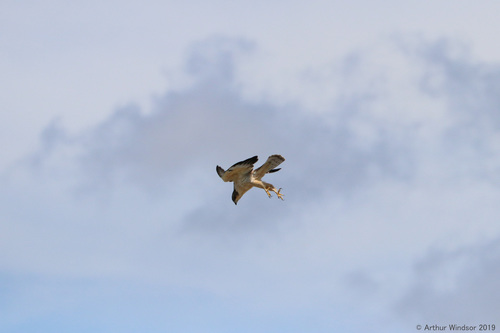 Short-tailed Hawk
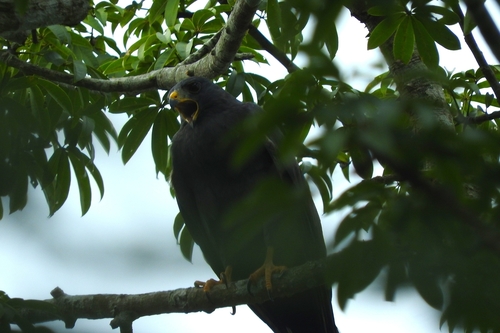 Zone-tailed Hawk
In breve
Il segno di campo più affidabile per separare il Short-tailed Hawk dallo Zone-tailed Hawk è il modello della coda e delle ali in volo: lo Zone-tailed Hawk mostra più bande chiare ('zone') attraverso la coda e piume da volo barrate argentate, mentre il Short-tailed Hawk manca di queste audaci bande sulla coda e ha una coda più corta e meno barrata. Gli immaturi Zone-tailed Hawks mostrano anche piccole macchie bianche sul petto e una punta della coda scura e larga, che i Short-tailed Hawks non hanno. Strutturalmente, lo Zone-tailed Hawk ha ali più lunghe e una coda più lunga, con una silhouette e uno stile di volo più simili a quelli di un avvoltoio, mentre il Short-tailed Hawk è compatto e spesso appare con una coda e ali più corte. Entrambi possono essere scuri nel complesso, ma il modello e le proporzioni sono fondamentali sul campo.
Consigli di identificazione
- Modello della coda in volo (tutte le età): Lo Zone-tailed Hawk mostra 3–4 bande chiare attraverso la coda, con la seconda dalla punta che è larga e ovvia; il Short-tailed Hawk manca di queste, con una coda più corta e meno distintamente barrata.
- Modello delle ali (adulti): Lo Zone-tailed Hawk ha piume da volo argentate e barrate che contrastano con le copritrici nerastre; le ali del Short-tailed Hawk sono più uniformi e mancano della forte barratura.
- Macchie sul petto degli immaturi: Gli immaturi Zone-tailed Hawks hanno piccole macchie bianche sul petto; i Short-tailed Hawks non le hanno.
- Punta della coda negli immaturi: Gli immaturi Zone-tailed Hawks mostrano una punta scura e larga sulla coda; gli immaturi Short-tailed Hawk non lo fanno.
- Silhouette in volo: Lo Zone-tailed Hawk è long-winged e long-tailed, con un aspetto snodato e simile a un avvoltoio; il Short-tailed Hawk è compatto, con una coda e ali più corte.
- Stile di volo: Lo Zone-tailed Hawk vola con le ali in un dihedro e oscilla da lato a lato, spesso tra gli avvoltoi; il Short-tailed Hawk vola più come un tipico Buteo e può planare contro vento.
- Postura in perching: Lo Zone-tailed Hawk spesso si appollaia in posti aperti e visibili; il Short-tailed Hawk è segreto, spesso nascosto nella chioma o con solo la testa visibile.
- Colore del viso e delle gambe (adulti): Lo Zone-tailed Hawk mostra cere e gambe gialle, e a volte un tocco di bianco sul viso; il Short-tailed Hawk è meno contrastante in queste aree.
- Oscurità complessiva: Entrambi possono apparire molto scuri, specialmente nella forma scura del Short-tailed Hawk, ma lo Zone-tailed Hawk è più probabile che mostri bande chiare contrastanti e ali argentate.
- Associazione con avvoltoi: Se visto volare con i Turkey Vultures, sospettare dello Zone-tailed Hawk; il Short-tailed Hawk non si unisce tipicamente ai gruppi di avvoltoi.
- Contesto dell'habitat: In regioni aperte, secche o semi-aride, è più probabile trovare lo Zone-tailed Hawk; in bordi boschivi o foreste subtropicali, è più probabile trovare il Short-tailed Hawk.
- Impressione di dimensione: Lo Zone-tailed Hawk è più grande e robusto, specialmente sul campo quando confrontato fianco a fianco, ma fare attenzione agli effetti di sovrapposizione e distanza.
- Differenze sessuali: Solo lo Zone-tailed Hawk mostra un significativo dimorfismo sessuale in termini di dimensioni, con le femmine che sono molto più pesanti.
- Vocalizzazioni: Non diagnostico con le informazioni attuali.
- Trappole: La forma scura del Short-tailed Hawk può sembrare superficialmente simile allo Zone-tailed Hawk, ma controllare sempre le bande della coda e la barratura delle ali in volo, e utilizzare la struttura e il comportamento come controlli secondari.
Taglia
Lo Zone-tailed Hawk è la specie più grande e robusta, con una massa corporea media di circa 762,5 g (e fino a 1080 g nelle femmine), una lunghezza di 46–56 cm e un'apertura alare di 117–140 cm. Il Short-tailed Hawk è più piccolo e compatto, ma mancano dati precisi sulla massa. Sul campo, gli Zone-tailed Hawks appaiono più snelli e long-winged, specialmente rispetto all'aspetto tozzo e short-tailed del Short-tailed Hawk. I sessi sono simili in entrambi, ma le femmine di Zone-tailed Hawk sono notevolmente più pesanti dei maschi.
Piumaggio
- Uccelli immaturi/giovanili: Gli immaturi Zone-tailed Hawk hanno piccole macchie bianche sul petto e una coda con bande grigie e nere strette più una punta scura e larga. Gli immaturi Short-tailed Hawk non mostrano questi segni; le loro code sono più corte e mancano delle audaci bande chiare multiple dello Zone-tailed Hawk.
- Adulti in volo: Gli adulti Zone-tailed Hawk sono per lo più nerastre con piume da volo barrate e argentate e una coda con tre o quattro bande chiare (la seconda dalla punta è particolarmente larga e conspicua). Gli adulti Short-tailed Hawk (nella forma scura) sono anch'essi scuri nel complesso ma mancano della forte barratura sulla coda e hanno una coda più corta; le loro ali inferiori non mostrano la stessa barratura argentata.
- Uccelli in perching: Entrambi possono apparire scuri, ma lo Zone-tailed Hawk può mostrare un tocco di bianco sul viso e cere/gambe gialle, mentre il Short-tailed Hawk è meno probabile che mostri tale contrasto. L'impressione generale è che lo Zone-tailed Hawk sia più patternato (soprattutto nella coda e nelle ali), mentre il Short-tailed Hawk è più uniforme.
Comportamento
Lo Zone-tailed Hawk è famoso per la sua mimetizzazione del Turkey Vulture: vola con le ali tenute in un dihedro (forma a V), oscilla da lato a lato e spesso si mescola con gli avvoltoi. Questo comportamento è raro nel Short-tailed Hawk, che vola anch'esso ma tende a planare (sospendersi con il viso contro vento con le ali ferme) ed è meno probabile che si unisca ai gruppi di avvoltoi. Il Short-tailed Hawk è più spesso visto cacciare da un volo alto o, raramente, da un posatoio, ed è generalmente più segreto quando è in perching, spesso nascosto nella chioma.
Habitat
Entrambe le specie si trovano nelle parti calde delle Americhe, ma lo Zone-tailed Hawk favorisce habitat secchi, aperti o semi-aperti ed è spesso visto in aree dove i Turkey Vultures sono comuni. Il Short-tailed Hawk è più associato a bordi boschivi, confini forestali e habitat subtropicali/tropicali, ed è meno probabile che venga visto in regioni aperte e aride. In Florida e Arizona, il Short-tailed Hawk è locale e raro, mentre lo Zone-tailed Hawk è più diffuso in habitat secchi adatti.
Short-tailed Hawk · Zone-tailed Hawk · I miei uccelli difficili