

Shikra vs Little Sparrowhawk
Tachyspiza badia contro Tachyspiza minulla
Fai un quiz con Shikra e Little Sparrowhawk
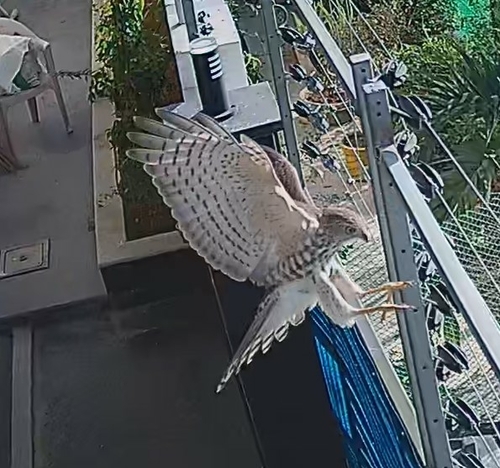 Shikra
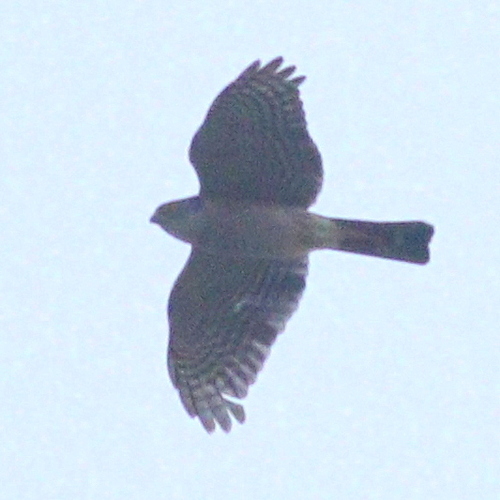 Little Sparrowhawk
In breve
The most reliable field mark to separate Shikra from Little Sparrowhawk is the presence of two distinct white spots on the underside of the central tail feathers and a narrow white lower rump patch in Little Sparrowhawk—features absent in Shikra. Juvenile plumage is also diagnostic: juvenile Little Sparrowhawks are spotted below and have pale-tipped upperparts, while juvenile Shikras show streaks/spots on the upper breast and more narrowly barred wings and tail. Shikra is slightly larger and longer-tailed, with adult males showing a red iris (versus deep yellow in Little Sparrowhawk). Both species have fine rufous barring below, but the Little Sparrowhawk male is darker above and more sharply marked. In flight or perched, focus on tail pattern, iris color, and overall size for the most reliable separation.
Consigli di identificazione
- Tail pattern (all ages): Little Sparrowhawk always shows two distinct white spots on the underside of the central tail feathers and a narrow white lower rump patch—Shikra never shows these.
- Juvenile underparts: Juvenile Little Sparrowhawk is spotted below and browner overall, with pale-tipped upperparts; juvenile Shikra is streaked/spotted on the upper breast with narrowly barred wings and tail.
- Adult male upperparts: Little Sparrowhawk male is dark grey (almost black) above, with this color extending onto the cheeks and sharply contrasting with the white throat; Shikra male is paler grey above, with a less contrasting face.
- Adult female upperparts: Female Little Sparrowhawk is browner above and has browner, less fine barring below; female Shikra is brownish above with heavier barring below.
- Iris color (adults): Adult male Shikra has a red iris; Little Sparrowhawk has deep yellow eyes (brown in juveniles). Female Shikra has a less red (yellowish orange) iris.
- Rump patch: The narrow white lower rump patch is unique to Little Sparrowhawk and visible in flight or when perched with tail spread.
- Size and structure: Shikra is slightly larger and bulkier, with a proportionally longer and narrower tail. Little Sparrowhawk is noticeably smaller and more delicate.
- Throat stripe: Shikra has a narrow dark mesial throat stripe; Little Sparrowhawk's throat is clean white, sharply contrasting with the dark cheeks in males.
- Underpart barring: Both species have fine rufous barring below, but Little Sparrowhawk male's barring is finer and more sharply defined; female Little Sparrowhawk's barring is browner and less fine than the male.
- Leg and cere color: Little Sparrowhawk has yellow legs and cere (cere yellowish-green in juveniles); Shikra's cere and leg color are not diagnostic in these notes.
- Flight jizz: Both species have short, rounded wings and long tails, but Shikra's tail is less distinctly marked and appears longer and narrower in flight.
- Habitat context: In Asia or urban/farmland settings, Shikra is far more likely; in African woodland or forest edge, Little Sparrowhawk is possible.
- Vocalization: Only Shikra's call is described; a two-note 'pee-wee' or sharp 'kik-ki' in flight may indicate Shikra, but absence of vocalization is not diagnostic.
- Perched posture: Both species perch upright, but Little Sparrowhawk's smaller size and white rump patch may be visible when perched with tail slightly fanned.
- Pitfalls: Overlapping fine rufous barring below and similar overall shape can confuse, especially in poor light or quick flight views; focus on tail spots, rump patch, and iris color for best separation.
Taglia
Shikra is slightly larger, measuring 26–30 cm in length, while Little Sparrowhawk is 23–27 cm long. Shikra is also a bit more robust, with a proportionally longer and somewhat narrower tail. Both species are small accipiters, but Shikra generally appears bulkier and longer-winged, especially in direct comparison. The Little Sparrowhawk is the smallest Tachyspiza, and its daintier build is noticeable if both are seen together.
Piumaggio
Juvenile plumage is a key separator: juvenile Little Sparrowhawks are browner overall, with pale tips to upperpart feathers and spotting (not barring) below; their rump feathers have only the tips white. Juvenile Shikras, in contrast, show dark streaks and spots on the upper breast, narrowly barred wings, and a tail with narrow dark bands. Adult male Little Sparrowhawks have dark grey (almost black) upperparts extending onto the cheeks, sharply contrasting with the white throat and fine rufous barring below. Adult male Shikras have grey upperparts, a narrow dark throat stripe, and fine rufous barring below, but lack the strong cheek contrast and white rump patch. Female Little Sparrowhawks are browner above and have browner, less fine barring below, while female Shikras are brownish above with heavier barring below. The diagnostic white spots on the underside of the central tail feathers and the narrow white lower rump patch are unique to Little Sparrowhawk of all ages. Eye color also differs: adult male Shikra has a red iris, while Little Sparrowhawk has deep yellow eyes (brown in juveniles).
Comportamento
Both species are agile, fast-flying accipiters with typical flap-and-glide flight. Shikra is often seen singly or in pairs, sometimes soaring on thermals during breeding season, and is known for stooping at each other in display. Little Sparrowhawk behavior is less detailed in the notes, but as the smallest Tachyspiza, it is likely even more agile and quick in close woodland or bush. Shikra may descend to the ground to feed on insects or carrion, and its presence often alarms small birds and mammals.
Habitat
Shikra is highly adaptable, found in forests, farmland, and urban areas across Asia and Africa. Little Sparrowhawk is Afrotropical and favors woodland and forest edge habitats. While both can occur in wooded environments, Shikra is more likely in open country and urban settings, whereas Little Sparrowhawk is more restricted to African woodland and forest edge.
Voce
Shikra's call is a two-note 'pee-wee', with the first note higher and the second longer; in flight, it gives shorter, sharper 'kik-ki... kik-ki' calls. No vocalization details are provided for Little Sparrowhawk in these notes, so voice is not a reliable separator here.