

Scalloped Woodcreeper vs Peruvian Recurvebill
Lepidocolaptes falcinellus contro Syndactyla ucayalae
Fai un quiz con Scalloped Woodcreeper e Peruvian Recurvebill
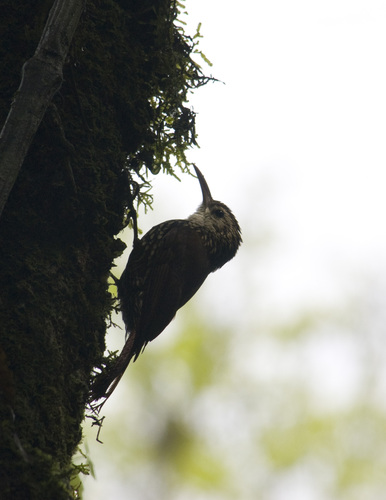 Scalloped Woodcreeper
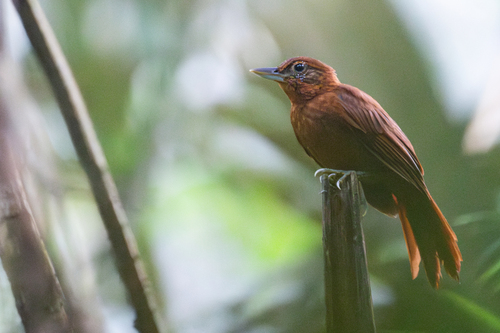 Peruvian Recurvebill
In breve
Il segno di campo più affidabile per separare il Scalloped Woodcreeper dal Peruvian Recurvebill è la forma del becco: il woodcreeper ha un becco lungo, snodato e leggermente curvato verso il basso, mentre il recurvebill ha un becco pesante, a forma di cuneo, che è nettamente rivolto verso l'alto. Inoltre, il Scalloped Woodcreeper mostra un motivo squamoso e striato sulle parti inferiori e un volto pallido e maculato, mentre il Peruvian Recurvebill è più uniformemente arancione-rossiccio sotto con solo deboli striature e un volto più scuro e rossiccio. I giovani Peruvian Recurvebills possono mostrare un forte motivo scallopato nero sotto, ma la loro struttura differisce ancora. Anche la dimensione è un indizio: il recurvebill è notevolmente più robusto. L'habitat e il comportamento di foraggiamento possono aiutare, ma la struttura e il motivo delle parti inferiori sono i migliori segni di campo.
Consigli di identificazione
- La forma del becco è il segno più affidabile: il Scalloped Woodcreeper ha un becco lungo, snodato e leggermente curvato verso il basso; il Peruvian Recurvebill ha un becco pesante, a forma di cuneo e nettamente rivolto verso l'alto. Questo è ovvio di profilo, anche a distanza.
- Motivo delle parti inferiori: l'adulto Scalloped Woodcreeper mostra audaci striature buff bordate di nero sulle parti inferiori olivastre, dando un aspetto squamoso o 'scallopato'. L'adulto Peruvian Recurvebill è arancione-rossiccio sotto con solo deboli striature pallide, principalmente sul petto e sulla gola; il ventre e i fianchi sono quasi privi di striature.
- Confusione giovanile: il giovane Peruvian Recurvebill può mostrare un forte motivo scallopato nero su parti inferiori più chiare, ma l'uccello è più robusto, il becco è rivolto verso l'alto e il motivo del volto differisce (supercilium più luminoso, corona più scura).
- Volto e supercilium: il Scalloped Woodcreeper ha un volto bianco crema con maculature nerastre e un chiaro supercilium pallido. Il volto del Peruvian Recurvebill è più scuro, con un supercilium rossiccio pallido, malar rossiccio e lore/coverts auricolari screziati.
- Colore delle parti superiori: il Scalloped Woodcreeper è marrone oliva a marrone cannella sopra con un sottocoda e una coda rossiccio-castagna. Il Peruvian Recurvebill è più uniformemente marrone rossiccio sopra, con un collare leggermente più rossiccio e una coda castagna scura.
- Motivo della corona: il Scalloped Woodcreeper ha una corona e una nuca grigio scuro a nero opaco con evidenti macchie buff ricche. La corona del Peruvian Recurvebill è marrone rossiccio scuro con deboli striature sulla fronte (adulti) o macchie rossicce scure (giovani).
- Dimensione e struttura: il Peruvian Recurvebill è sostanzialmente più grande e robusto (47 g vs. 28 g), con una testa e un becco più pesanti. Il Scalloped Woodcreeper è più snello e allungato.
- Colore delle gambe e dei piedi: il Scalloped Woodcreeper ha gambe e piedi grigio verdastro a marrone verdastro; quelli del Peruvian Recurvebill sono oliva a verde oliva. Questo è sottile e raramente diagnostico sul campo.
- Comportamento di foraggiamento: il Scalloped Woodcreeper si arrampica su tronchi e rami, spesso nei livelli medi o nella chioma; il Peruvian Recurvebill foraggia in bambù denso o canne, spesso picchiando o scavando, e di solito rimane basso.
- Habitat: se l'uccello si trova in bambù denso o canne fluviali nell'Amazzonia occidentale, è probabile che sia un Peruvian Recurvebill. In foreste più aperte o habitat di margine al di fuori dell'Amazzonia, ci si aspetta il Scalloped Woodcreeper.
- Volo e motivo delle ali: nessuna delle due specie mostra un pannello distintivo sulle ali superiori o un motivo di piumaggio da volo contrastante che sia diagnostico a distanza, ma le piume di volo del woodcreeper hanno membrane esterne marroni e membrane interne castagne con punte bruno-nerastre.
- Colore della coda: entrambe le specie hanno code rossicce a castagne, ma quella del recurvebill è più scura e più uniformemente castagna rossiccia.
- Voce: se senti un breve, aspro, ronzio ascendente (2–3 sec) o un forte, rauco 'chack', questo è il Peruvian Recurvebill. La voce del Scalloped Woodcreeper non è descritta qui.
- Sessi simili: entrambe le specie hanno un piumaggio simile nei maschi e nelle femmine; non usare il sesso come segno di campo.
- Fagotti misti: entrambe possono unirsi a fagotti di specie miste, ma il recurvebill rimarrà basso nel bambù, mentre il woodcreeper può essere più in alto nella chioma o sui tronchi.
Taglia
Il Peruvian Recurvebill è sostanzialmente più pesante (47 g vs. 28 g) e leggermente più lungo (19–20 cm vs. 17–20 cm) rispetto al Scalloped Woodcreeper. Sul campo, il recurvebill appare più robusto e massiccio, specialmente nella testa e nel becco, mentre il woodcreeper è più snello e allungato. Questa differenza è più evidente quando entrambe le specie sono viste fianco a fianco o con esperienza, ma la maggiore dimensione e la costruzione più pesante del recurvebill sono solitamente evidenti anche a distanza.
Piumaggio
I giovani Peruvian Recurvebills hanno un forte motivo scallopato nero su parti inferiori più chiare, un supercilium più luminoso e un dorso più scuro e meno rossiccio rispetto agli adulti. Gli adulti di entrambe le specie hanno parti inferiori striate o scallopate, ma le striature del Scalloped Woodcreeper sono audaci, bordate di nero e su uno sfondo olivastro, dando un aspetto nettamente squamoso. Il suo volto è bianco crema con maculature nerastre e un chiaro supercilium pallido. Al contrario, l'adulto Peruvian Recurvebill è arancione-rossiccio sotto con solo deboli striature pallide sul petto e sulla gola, e il volto è più scuro con un supercilium rossiccio pallido e malar rossiccio. Le parti superiori del recurvebill sono più uniformemente marrone rossiccio, mentre il woodcreeper ha un dorso marrone oliva a marrone cannella e un sottocoda e una coda rossiccio-castagna. In volo, il woodcreeper mostra membrane esterne marroni e membrane interne castagne alle piume di volo, con punte bruno-nerastre, ma nessuna delle due specie ha un pannello distintivo sulle ali o un motivo di ali superiori contrastante che sia diagnostico a distanza.
Comportamento
Il Scalloped Woodcreeper di solito foraggia arrampicandosi su tronchi e rami dai livelli medi alla chioma, spesso unendosi a fagotti di specie miste e a volte lanciandosi per la preda. È più arboricolo e trascorre meno tempo nella vegetazione densa. Il Peruvian Recurvebill, d'altra parte, è uno specialista del bambù, foraggiando principalmente in fitte boscaglie di bambù e nel sottobosco della foresta, raramente avventurandosi sopra il piano medio. Si nutre picchiando, scavando e sfaldando il bambù, mostrando un comportamento più orientato al suolo e di sondaggio. Entrambi possono unirsi a fagotti misti, ma i loro substrati di foraggiamento e movimenti sono piuttosto diversi.
Habitat
Il Scalloped Woodcreeper si trova in una gamma di tipi di foresta nel sud del Brasile, Paraguay, Uruguay e nord dell'Argentina, di solito in foreste più aperte o di margine e non specificamente legato al bambù. Il Peruvian Recurvebill è uno specialista del bambù del bacino dell'Amazzonia occidentale (Perù, Bolivia, Brasile occidentale), quasi sempre trovato in o vicino a fitte boscaglie di bambù Guadua o canne fluviali. Se l'uccello è visto in ampie aree di bambù o canne fluviali, specialmente nell'Amazzonia occidentale, è molto più probabile che sia un recurvebill; in foreste più aperte o habitat di margine al di fuori dell'Amazzonia, ci si aspetta il woodcreeper.
Voce
Il Peruvian Recurvebill ha una vocalizzazione distintiva: un breve, forte, aspro, ronzio ascendente che dura 2–3 secondi, con l'ultima nota che a volte scende di tono, e un forte, rauco 'chack'. Nessuna descrizione vocale è disponibile per il Scalloped Woodcreeper in queste note, quindi la voce è solo diagnostica se si sente il ronzio unico del recurvebill.
Scalloped Woodcreeper · Peruvian Recurvebill · I miei uccelli difficili