

Topino vs Southern Rough-winged Swallow
Riparia riparia contro Stelgidopteryx ruficollis
Fai un quiz con Topino e Southern Rough-winged Swallow
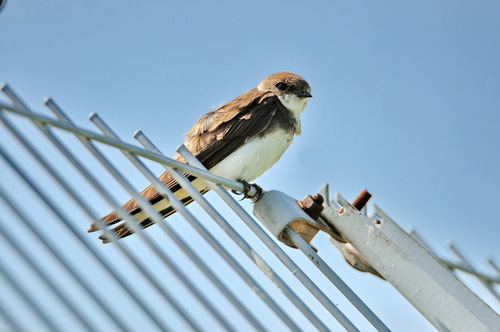 Topino
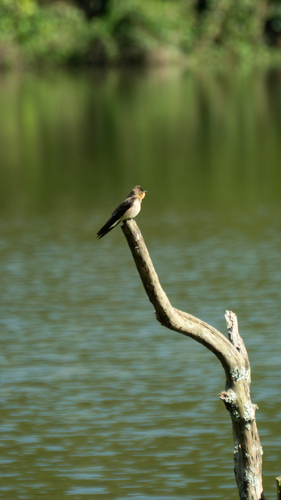 Southern Rough-winged Swallow
In breve
Il segno distintivo più affidabile per separare il Topino dal Southern Rough-winged Swallow è la presenza di una banda pettorale marrone stretta e ben definita sul Topino di tutte le età, che il Southern Rough-winged Swallow non ha. I giovani Topini mostrano anche copritrici delle ali con punte rugginose e bordi secondari rugginosi, mentre i giovani Southern Rough-winged Swallows hanno piume della schiena con bordi chiari ma non le stesse marcature sulle ali. Il Topino è più piccolo e più compatto, con un volo più rapido e nervoso, rispetto al Southern Rough-winged Swallow, che è leggermente più grande, con la coda quadrata e un volo più lento. Entrambe le specie sono marroni sopra e chiare sotto, ma la colorazione della gola e del petto differisce: il Topino ha una gola e un ventre bianchi, mentre il Southern Rough-winged Swallow mostra una gola color cannella o marrone chiaro e un ventre grigio-marrone giallastro. In vista da posato o in volo, concentrati sulla banda pettorale e sul colore della gola per la separazione più chiara.
Consigli di identificazione
- Banda pettorale (tutte le età): Il Topino mostra sempre una banda pettorale marrone stretta e ben definita attraverso il petto superiore. Il Southern Rough-winged Swallow non ha mai una banda pettorale; il suo petto è semplice o leggermente più scuro del ventre ma senza marcature.
- Colore della gola: Il Topino ha una gola bianca pulita, in contrasto con la banda pettorale marrone. Il Southern Rough-winged Swallow ha una gola color cannella, marrone chiaro o marrone più opaco (a seconda della sottospecie e dell'età), che si fonde con il petto e manca di un contrasto netto.
- Ventre e parti inferiori: Il ventre e il sottocoda del Topino sono bianchi brillanti. Il ventre del Southern Rough-winged Swallow è grigio-marrone giallastro, e le copritrici del sottocoda sono bianche, ma l'effetto complessivo è più opaco e meno nitido rispetto al Topino.
- Copritrici delle ali juvenile: I giovani Topini hanno punte rugginose sulle copritrici delle ali e bordi rugginosi sulle secondarie, visibili in buona luce o in vista ravvicinata. I giovani Southern Rough-winged Swallows hanno bordi chiari sulle piume della schiena, non sulle ali, quindi controlla per rugginoso nell'area delle ali per il Topino.
- Forma della coda: La coda del Topino è leggermente biforcuta, particolarmente evidente in volo. La coda del Southern Rough-winged Swallow è quadrata.
- Dimensioni e struttura: Il Topino è più piccolo e più compatto, con un becco corto e un volo rapido e nervoso. Il Southern Rough-winged Swallow è più pesante, più massiccio e ha un volo più rilassato e lento.
- Parte superiore: Entrambi sono marroni sopra, ma il Southern Rough-winged Swallow è più scuro e può mostrare un posteriore più chiaro o biancastro in alcune sottospecie. La schiena del Topino è marrone semplice.
- Differenze sessuali: Solo i maschi del Southern Rough-winged Swallow hanno barbette rigide ricurve sulle primarie esterne, ma queste non sono visibili sul campo.
- Stile di volo: Il volo del Topino è rapido ed erratico, con rapidi cambi di direzione e discese. Il Southern Rough-winged Swallow vola in modo più costante e spesso cerca cibo più in alto o in gruppi più sciolti.
- Habitat e distribuzione: In Nord America, si trova solo il Topino. In Sud America, specialmente vicino all'acqua o in campagna aperta, entrambi possono essere presenti nella stagione non riproduttiva, ma il Topino è un migratore e il Southern Rough-winged Swallow è residente.
- Postura da posato: Il Topino appare spesso più compatto e eretto quando è posato, mentre il Southern Rough-winged Swallow può sembrare più lungo e pesante.
- Voce: Il Topino emette un cinguettio ghiaioso in volo; il richiamo del Southern Rough-winged Swallow non è distintivo nelle note fornite.
- Variazione delle sottospecie: Le sottospecie del Southern Rough-winged Swallow possono mostrare rumps più chiari o gole più rugginose, ma nessuna sviluppa una vera banda pettorale.
- Comportamento coloniale: Il Topino si riproduce in grandi colonie in banchi sabbiosi; il Southern Rough-winged Swallow si riproduce singolarmente o in piccoli gruppi.
- Contesto stagionale: Se visto in gran numero nell'Olarctico durante la stagione riproduttiva, è il Topino. In Sud America al di fuori della stagione riproduttiva, controlla la banda pettorale per confermare il Topino tra i Southern Rough-winged Swallows residenti.
Taglia
Il Topino è leggermente più piccolo, misurando 12–13 cm di lunghezza e pesando 11–16 g (fino a 19.5 g prima della migrazione) [wikipedia]. Il Southern Rough-winged Swallow è lungo circa 13 cm e più pesante a 14–18 g [wikipedia]. L'apertura alare è fornita solo per il Topino (26.5–29 cm), ma nel complesso, il Southern Rough-winged Swallow appare più massiccio e robusto. Anche la forma della coda differisce: il Topino ha una coda leggermente biforcuta, mentre la coda del Southern Rough-winged Swallow è quadrata.
Piumaggio
- Giovani: I giovani Topini mostrano punte rugginose sulle copritrici delle ali e margini rugginosi sulle secondarie, che possono essere visibili in volo o a riposo. I giovani Southern Rough-winged Swallow hanno bordi chiari sulle piume della schiena, ma non sulle copritrici delle ali o sulle secondarie, quindi questa è una differenza chiave per gli immaturi.
- Adulti: Il Topino di tutte le età e sessi ha una chiara banda pettorale marrone stretta che separa la gola bianca dal ventre bianco. Il Southern Rough-winged Swallow non ha alcuna banda pettorale; invece, gli adulti hanno una gola color cannella (o marrone chiaro, a seconda della sottospecie) e un ventre grigio-marrone giallastro, con un petto grigio-marrone scuro che si fonde con le parti inferiori. Le loro parti superiori sono entrambe marroni, ma il Southern Rough-winged Swallow è più scuro e può mostrare un posteriore più chiaro in alcune sottospecie. Le parti inferiori del Topino sono bianche pulite tranne che per la banda pettorale, mentre quelle del Southern Rough-winged Swallow sono più opache e più lavate con toni marroni o giallastri.
- Ali e coda: Il Topino ha una coda leggermente biforcuta; la coda del Southern Rough-winged Swallow è quadrata. Solo i maschi del Southern Rough-winged Swallow hanno barbette rigide ricurve sulle primarie esterne (non visibili sul campo).
Comportamento
Il Topino vola tipicamente con battiti d'ala rapidi e nervosi e rapidi cambi di direzione, spesso basso sopra l'acqua o il terreno aperto. Il Southern Rough-winged Swallow ha uno stile di volo più lento e rilassato, spesso cercando cibo in piccoli gruppi e talvolta più in alto sopra il terreno o l'acqua. Il Topino è più probabile da vedere in grandi colonie durante la riproduzione, mentre il Southern Rough-winged Swallow si riproduce singolarmente o in piccoli gruppi. Entrambe le specie catturano insetti in volo, ma il volo del Topino è più frenetico e compatto.
Habitat
Il Topino si riproduce in colonie in banchi sabbiosi, bordi di fiumi e habitat aperti simili, principalmente nell'Olarctico (Europa, Asia, Nord America), e sverna in Africa, Asia meridionale e Sud America. Il Southern Rough-winged Swallow è residente o migratorio in America Centrale e Meridionale (eccetto il Cile), trovato in una vasta gamma di habitat aperti, specialmente vicino all'acqua, ma anche in radure all'interno delle foreste e fino ad alte altitudini nelle Ande. L'overlap è possibile solo in Sud America durante la stagione non riproduttiva, ma il Topino è generalmente un migratore lì, mentre il Southern Rough-winged Swallow è residente o un migratore parziale.
Voce
Il Topino emette un cinguettio continuo e ghiaioso in volo e un tono conversazionale quando è posato, con un richiamo di allerta aspro in risposta ai predatori. Nessuna vocalizzazione distintiva è descritta per il Southern Rough-winged Swallow nelle note fornite, quindi la voce non è un separatore affidabile sul campo basato su queste fonti.
Topino · Southern Rough-winged Swallow · I miei uccelli difficili