

Ruddy Ground Dove vs Eared Dove
Columbina talpacoti contro Zenaida auriculata
Fai un quiz con Ruddy Ground Dove e Eared Dove
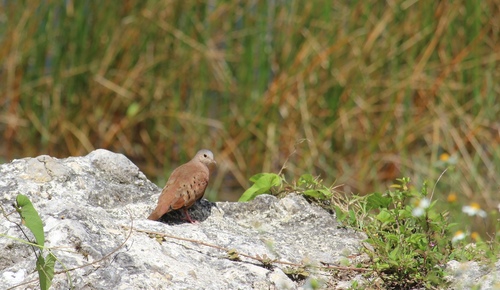 Ruddy Ground Dove
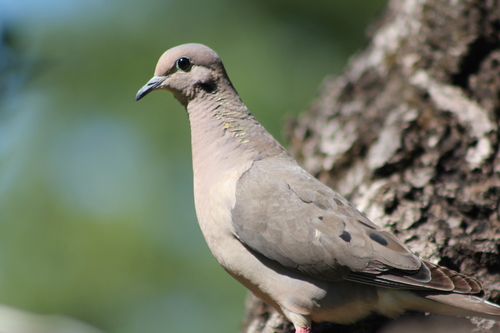 Eared Dove
In breve
Il segno di campo più affidabile per separare il Ruddy Ground Dove dall'Eared Dove è la dimensione complessiva e la forma della coda: il Ruddy Ground Dove è molto più piccolo e notevolmente con la coda corta, mentre l'Eared Dove è più grande con una coda lunga e a forma di cuneo. In volo o posato, i maschi di Ruddy Ground Dove mostrano una testa grigia chiara e una parte superiore rugginosa ricca con macchie nere sulle copritrici alari, mentre i maschi di Eared Dove sono di colore oliva-marrone sopra con una corona grigia e segni neri distintivi dietro l'occhio e sulle copritrici inferiori dell'orecchio. Le femmine e gli immaturi di entrambe le specie sono più opachi, ma l'Eared Dove è sempre più robusto e con la coda più lunga. Entrambe le specie mostrano macchie nere sulle copritrici alari, ma il contesto e le proporzioni sono fondamentali. I giovani/immaturi Eared Doves sono particolarmente opachi e marroni, privi delle tonalità rugginose dei giovani Ruddy Ground Doves. Usa prima la struttura e la lunghezza della coda, poi il piumaggio e il modello della testa per conferma.
Consigli di identificazione
- Dimensione e robustezza: Il Ruddy Ground Dove è molto più piccolo e compatto rispetto all'Eared Dove. Se l'uccello appare delle dimensioni di un piccione o più grande, è quasi certamente un Eared Dove. Questo è affidabile per tutte le età e i sessi.
- Lunghezza e forma della coda: Il Ruddy Ground Dove ha una coda corta e quadrata; l'Eared Dove ha una coda lunga e a forma di cuneo. In volo o posato, la coda dell'Eared Dove è notevolmente più lunga e appuntita.
- Modello della testa (maschi adulti): I maschi di Ruddy Ground Dove hanno una testa e un collo grigi chiari che contrastano con la parte superiore rugginosa. I maschi di Eared Dove hanno una corona grigia, una linea nera dietro l'occhio e copritrici inferiori dell'orecchio blu-nerastre ('segno' dell'orecchio); nessuna tonalità rugginosa.
- Colore della parte superiore: I maschi di Ruddy Ground Dove sono rugginosi sopra, le femmine sono marroni; l'Eared Dove è oliva-marrone sopra in entrambi i sessi, privo di rugginoso.
- Copritrici alari: Entrambe le specie hanno macchie nere sulle copritrici alari, ma nel Ruddy Ground Dove queste sono impostate contro il rugginoso o marrone, mentre nell'Eared Dove lo sfondo è oliva-marrone.
- Colore delle ali inferiori: Il Ruddy Ground Dove mostra ali inferiori cannella e nere, specialmente quando si espone al sole o in volo; l'Eared Dove manca di questo forte contrasto nelle ali inferiori.
- Segni facciali: L'Eared Dove ha una distintiva linea nera dietro l'occhio e copritrici inferiori dell'orecchio blu-nerastre; il Ruddy Ground Dove manca di questi segni.
- Parte inferiore: Il Ruddy Ground Dove è di un marrone più chiaro sotto; l'Eared Dove ha parti inferiori vinose (color vino).
- Punta della coda: La coda dell'Eared Dove è appuntita di cannella; la coda del Ruddy Ground Dove è bordata di nero.
- Confusione femmina/immatura: La femmina di Ruddy Ground Dove è completamente marrone, ma è comunque piccola e con la coda corta. Gli immaturi Eared Doves sono di un grigio-marrone opaco con striature chiare, sempre più grandi e con la coda più lunga di qualsiasi Ruddy Ground Dove.
- Comportamento: Il Ruddy Ground Dove è spesso solitario o in piccoli gruppi, l'Eared Dove è frequentemente in grandi stormi, specialmente nei campi aperti.
- Abitudini di posarsi: L'Eared Dove spesso si posa su fili e pali; il Ruddy Ground Dove è più spesso visto a terra o su posatoi bassi.
- Sovrapposizione dell'habitat: Entrambi possono verificarsi in aree urbane e rurali, ma l'Eared Dove domina in grandi paesaggi agricoli aperti ed è più probabile che venga visto in stormi massicci.
- Vocalizzazioni: Il richiamo del Ruddy Ground Dove è un morbido cur-WOO; quello dell'Eared Dove è un più profondo oo-ah-oo. Usa solo come prova di supporto.
- Trappole: Non fare affidamento solo sulle macchie nere delle ali o sul comportamento di alimentazione a terra; usa dimensione, coda e modello della testa per un'identificazione sicura, specialmente in stormi misti o in ambienti urbani.
Taglia
Il Ruddy Ground Dove è significativamente più piccolo e leggero, con una massa corporea media di circa 46,5 g e una lunghezza di 12–18 cm. L'Eared Dove è molto più grande, tipicamente intorno ai 24 cm di lunghezza e pesa circa 112 g. La differenza di dimensione è ovvia in un confronto diretto o quando visti insieme, ma anche singolarmente, il Ruddy Ground Dove appare compatto e con la coda corta, mentre l'Eared Dove è notevolmente più robusto con una coda lunga e a forma di cuneo. Questo contrasto di dimensione e coda è affidabile in tutte le età e i sessi.
Piumaggio
- Giovani/immaturi: I giovani Ruddy Ground Doves mostrano già indizi di colore basati sul sesso: i maschi sono rugginosi con una testa grigia chiara, le femmine sono completamente marroni, entrambe con macchie nere sulle copritrici alari. Gli immaturi Eared Doves sono molto opachi, grigio-marroni con striature chiare e mancano di qualsiasi rugginoso o forte contrasto; il loro modello della testa è smorzato, ma la lunga coda è ancora evidente.
- Maschi adulti: I maschi di Ruddy Ground Dove hanno una testa e un collo grigi chiari, una parte superiore rugginosa ricca e copritrici alari macchiate di nero. I maschi di Eared Dove sono oliva-marrone sopra, con una corona grigia, una linea nera dietro l'occhio e copritrici inferiori dell'orecchio blu-nerastre (il segno 'orecchiato'), parti inferiori vinose e una coda appuntita di cannella.
- Femmine adulte: Le femmine di Ruddy Ground Dove sono complessivamente grigio-marroni con meno contrasto tra testa e corpo, mostrando ancora copritrici alari macchiate di nero. Le femmine di Eared Dove sono più opache dei maschi ma mantengono la lunga coda e i segni facciali neri, sebbene meno pronunciati. Entrambi i sessi di Eared Dove hanno un aspetto più uniforme e oliva-marrone rispetto alle tonalità rugginose più calde del Ruddy Ground Dove.
- Ali in volo: Entrambe le specie mostrano macchie nere sulle copritrici alari, ma le ali inferiori del Ruddy Ground Dove sono di colore cannella e nero (specialmente visibili quando si abbronzano o in volo), mentre l'Eared Dove manca di questo forte contrasto nelle ali inferiori.
Comportamento
Il Ruddy Ground Dove è spesso visto in coppie o piccoli gruppi, alimentandosi a terra e può essere piuttosto avvicinabile. I maschi sono aggressivi l'uno verso l'altro, mostrando alzando un'ala e a volte si abbronzano con un'ala distesa, rivelando piume nere delle ali inferiori. L'Eared Dove è molto più gregario, formando spesso grandi stormi, specialmente al di fuori della stagione riproduttiva. Il suo volo è alto, veloce e diretto, simile ai piccioni, ma la lunga coda è evidente. Gli Eared Doves sono anche più propensi a essere visti posati su fili o in grandi dormitori comuni.
Habitat
Entrambe le specie prosperano in campagna aperta, terreni coltivati e ambienti urbani. Il Ruddy Ground Dove è particolarmente comune in cespugli, aree aperte e parchi cittadini, spesso visto alimentarsi accanto ai piccioni selvatici. L'Eared Dove è abbondante in savane, campi aperti e aree urbane, ed è particolarmente numeroso nelle regioni agricole con coltivazioni di cereali. In alcune regioni, l'Eared Dove sta sostituendo il Ruddy Ground Dove dagli habitat urbani. Entrambi si adattano bene ai paesaggi alterati dall'uomo, ma l'Eared Dove è più probabile che venga trovato in stormi molto grandi nei campi aperti.
Voce
Il Ruddy Ground Dove emette un morbido richiamo di cooing cur-WOO. L'Eared Dove ha un richiamo più profondo e morbido oo-ah-oo. Entrambi sono morbidi e simili a quelli delle colombe, ma il richiamo dell'Eared Dove è più profondo e più prolungato. Queste differenze vocali sono sottili e non sempre diagnostiche sul campo, specialmente con rumori di fondo.