

Pernice bianca vs Spruce Grouse
Lagopus muta contro Canachites canadensis
Fai un quiz con Pernice bianca e Spruce Grouse
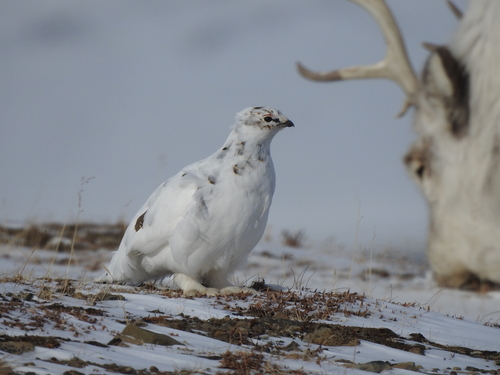 Pernice bianca
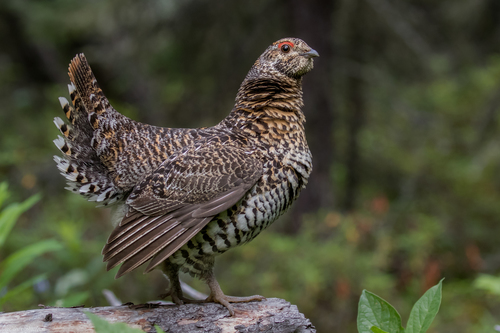 Spruce Grouse
In breve
Il segno di campo più affidabile tra la Pernice bianca e lo Spruce Grouse è il piumaggio bianco stagionale della Pernice bianca, specialmente in inverno, rispetto al modello a barre e macchie costante dello Spruce Grouse. Se vedi un gallo di media grandezza completamente bianco (eccetto per la coda nera e la linea dell'occhio), è una Pernice bianca in inverno; lo Spruce Grouse non diventa mai bianco. In estate, i maschi della Pernice bianca hanno un becco più snello e più bianco sulle ali e sulle parti inferiori, mentre i maschi dello Spruce Grouse sono più scuri sotto con macchie bianche e un pettine rosso sopra l'occhio. L'habitat è anche un forte indizio: la Pernice bianca predilige terreni aperti, aridi e spesso ad alta quota, mentre lo Spruce Grouse è legato a foreste conifere dense. La forma del becco, il modello della coda e il comportamento (soprattutto le abitudini arboree nello Spruce Grouse) aiutano anche a separarli.
Consigli di identificazione
- Il piumaggio invernale è decisivo: Se l'uccello è completamente bianco tranne per la coda nera e (nei maschi) una striscia nera sopra l'occhio, è una Pernice bianca. Lo Spruce Grouse non diventa mai bianco.
- L'habitat è un forte indizio: La Pernice bianca si trova in habitat aperti, rocciosi o di tundra, spesso sopra la linea degli alberi; lo Spruce Grouse si trova in foreste conifere dense.
- Forma del becco: La Pernice bianca ha un becco snello; il becco dello Spruce Grouse è più robusto e più tipico dei galli di foresta.
- Pettine rosso sopra l'occhio: Il maschio adulto dello Spruce Grouse mostra un prominente pettine rosso sopra l'occhio; i maschi della Pernice bianca hanno pettini rossi sopra l'occhio ma anche una striscia nera sopra l'occhio nel piumaggio nuziale, che lo Spruce Grouse non ha.
- Modello della coda: Lo Spruce Grouse ha una coda scura con una banda terminale chiara; la coda della Pernice bianca è nera all'estremità e più corta.
- Parti inferiori: Durante la stagione degli amori, i maschi della Pernice bianca hanno parti inferiori bianche; i maschi dello Spruce Grouse sono neri sotto con macchie bianche.
- Parti superiori: I maschi della Pernice bianca sono grigi sopra in estate; i maschi dello Spruce Grouse sono più uniformemente grigi sopra, ma con macchie bianche sui lati.
- Confusione femminile/immatura: Le femmine e i giovani dello Spruce Grouse sono marroni o grigi e a barre, con una coda scura e una banda chiara; le femmine della Pernice bianca sono più criptiche e si mimetizzano con il terreno roccioso in estate, ma diventano bianche in inverno.
- Arboreo vs terrestre: Lo Spruce Grouse è spesso visto posato sugli alberi; la Pernice bianca è quasi sempre a terra.
- Comportamento: Lo Spruce Grouse è notevolmente mansueto e immobile, a volte permettendo un avvicinamento ravvicinato; la Pernice bianca è più allerta e può volare via a distanza, ma è anche ben mimetizzata.
- Vocalizzazioni: I maschi della Pernice bianca sono molto più vocali, specialmente in primavera, con richiami gorgoglianti e fruscianti; lo Spruce Grouse è per lo più silenzioso, ma i maschi possono produrre battiti d'ali o un leggero tambureggiamento.
- Display di volo: I maschi della Pernice bianca eseguono display aerei con battiti d'ali rapidi e planate, accompagnati da vocalizzazioni; i maschi dello Spruce Grouse possono concludere brevi voli con un battito d'ali (sottospecie franklinii).
- Cambiamento stagionale: Solo la Pernice bianca subisce una completa muta invernale bianca; il piumaggio dello Spruce Grouse rimane simile tutto l'anno.
- La dimensione non è affidabile: Entrambi sono galli di media grandezza con misure sovrapposte; usa il piumaggio e l'habitat invece.
- Contesto geografico: Se ti trovi in Arctic, alpino o tundra senza alberi, aspettati la Pernice bianca; nella foresta boreale, aspettati lo Spruce Grouse.
Taglia
Pernice bianca averages around 610 g [wikidata], while Spruce Grouse males weigh 550–650 g and females 450–550 g [wikipedia]. Both are medium-sized grouse, but Spruce Grouse is slightly longer (38–43 cm vs. 34–36 cm for Pernice bianca) and has a similar wingspan (Spruce Grouse: 55–57 cm; Pernice bianca: 54–60 cm). In the field, size alone is not a reliable separator, as there is considerable overlap and both appear similarly robust.
Piumaggio
- Juvenile/immature/first-winter birds: No specific diagnostic upperwing or flight pattern is described for either species at these ages, but juvenile Spruce Grouse resemble adult females: mottled brown or grey with barred underparts and a dark tail with a pale terminal band. Juvenile Pernice bianca would be more cryptic and earth-toned in summer, but turn white in winter.
- Adult males (breeding): Pernice bianca males have greyish upperparts, white wings and underparts, a slender bill, and a black eye stripe. Spruce Grouse males are mainly grey above, black below, with white spots on the sides, and a prominent red eyebrow comb.
- Adult females: Pernice bianca females are mottled to blend with tundra, but become white in winter. Spruce Grouse females are barred and mottled brown or grey (depending on morph), with a dark tail and pale band at the tip.
- Winter: Pernice bianca is entirely white except for black tail feathers and (in males) a black eye stripe. Spruce Grouse remains barred and spotted, never turning white.
- Tail: Pernice bianca's tail is short and black-tipped in all seasons. Spruce Grouse has a dark tail with a pale terminal band (noted as a separation from ruffed grouse, but also useful here).
Comportamento
Lo Spruce Grouse è notevolmente arboreo per un gallo, spesso posato e muovendosi tra gli alberi, specialmente le conifere. La Pernice bianca è più terrestre, tipicamente vista camminare o correre a terra in habitat aperti, rocciosi o di tundra. In volo, la Pernice bianca mostra battiti d'ali rapidi e display di planata durante il corteggiamento, mentre lo Spruce Grouse può eseguire display di battiti d'ali (soprattutto nella sottospecie franklinii) ed è generalmente più riservato e immobile, facendo affidamento sulla mimetizzazione. Lo Spruce Grouse è anche famoso per la sua mansuetudine, a volte permettendo un avvicinamento ravvicinato, mentre la Pernice bianca può essere diffidente ma è anche ben mimetizzata.
Habitat
La Pernice bianca è fortemente associata a habitat aperti, aridi, rocciosi o di tundra, spesso a quote più elevate o in zone artiche/alpine. Evita le foreste dense ed è raramente trovata in aree con una copertura arborea significativa. Lo Spruce Grouse, al contrario, si trova quasi sempre in foreste conifere dense (boreali o taiga), specialmente in boschi di abete, pino o abete. Se incontri un gallo in boschi fitti, specialmente posato su un albero, è quasi certamente uno Spruce Grouse; se in terreno aperto, senza alberi e roccioso, è probabilmente una Pernice bianca.
Voce
I maschi della Pernice bianca producono una serie distintiva di russamenti gutturali e fruscianti, con una canzone raspante e gorgogliante descritta come 'ah-AAH-ah-AAAAH-a-a-a-a-a-a', specialmente durante i display aerei. Lo Spruce Grouse è molto più silenzioso, tra i più silenziosi dei galli, ma i maschi possono produrre display di battiti d'ali non vocali (soprattutto nella sottospecie franklinii) e suoni di tambureggiamento o fruscio della coda. Lo Spruce Grouse non ha la forte canzone gorgogliante della Pernice bianca.