

Roadside Hawk vs Gilded Barbet
Rupornis magnirostris contro Capito auratus
Fai un quiz con Roadside Hawk e Gilded Barbet
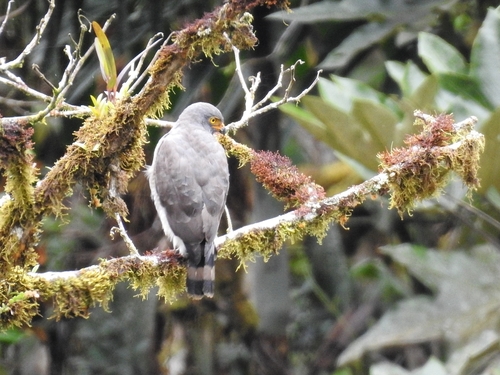 Roadside Hawk
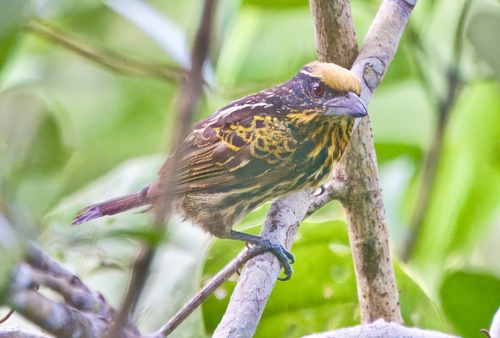 Gilded Barbet
In breve
Il segno distintivo più affidabile per separare il Roadside Hawk dal Gilded Barbet è la struttura generale e il profilo di volo: il Roadside Hawk è un rapace snello e dalla lunga coda con ali corte e larghe, mentre il Gilded Barbet è un uccello canoro massiccio e dalla testa grande con un becco tozzo e una coda corta. In volo, il falco mostra parti inferiori barrate e una lunga coda a bande, mentre il barbet è compatto, con parti superiori nere e riflessi gialli. Se vedi una silhouette simile a un rapace, è il Roadside Hawk; un uccello massiccio con becco tozzo e piumaggio giallo e nero è il Gilded Barbet. L'habitat e il comportamento aiutano anche: i falchi planano o si posano apertamente, i barbets rimangono nella foresta e si muovono in brevi salti.
Consigli di identificazione
- Silhouette e struttura: il Roadside Hawk è snello, con coda lunga, ali corte e larghe e un becco ricurvo; il Gilded Barbet è massiccio, con coda corta, testa grande e becco tozzo. Questo è il modo più veloce per separarli in volo o posati.
- Comportamento di volo: il Roadside Hawk plana frequentemente e può essere visto planare o circolare in alto; il Gilded Barbet non plana mai e si muove in brevi voli diretti all'interno della chioma.
- Forma del becco: il falco ha un grande becco ricurvo (adattato per la predazione), mentre il becco del barbet è spesso, tozzo e dritto, adatto per mangiare frutta.
- Schema della coda: il Roadside Hawk mostra una lunga coda con 4–5 barre grigie distinte, visibili in volo e quando è posato; la coda del Gilded Barbet è corta, nera e priva di barre.
- Parti inferiori: il falco ha barre marroni e bianche sul petto inferiore e sull'addome; il barbet ha parti inferiori giallo pallido con striature nere sui fianchi (e talvolta sul petto nelle femmine).
- Parti superiori e ali: il falco è marrone o grigio sopra, a volte con ruggine sulle ali; il barbet è nero sopra, con macchie gialle e bordi gialli sulle ali.
- Testa e faccia: la testa del falco è marrone o grigia uniforme con occhi gialli o biancastri; il barbet ha una maschera nera, sopracciglia gialle (che si estendono come linee sopra il mantello) e una corona colorata (gialla, arancione o rossa).
- Differenze sessuali: le femmine di barbet hanno più giallo-arancione sulle ali e più striature, specialmente nelle sottospecie più occidentali; i sessi del falco sono simili tranne che per la dimensione (femmine più grandi).
- Colore degli occhi: il falco ha occhi bianchi o gialli; il barbet ha iridi di un marrone scuro.
- Colore delle gambe: il barbet ha gambe grigie; il colore delle gambe del falco non è specificato ma di solito è giallastro in questo gruppo.
- Habitat: il falco è comune in aree aperte, lungo le strade e ai margini delle foreste; il barbet è limitato a foreste pluviali dense e umide.
- Comportamento di poso: il falco si posa apertamente, spesso su fili o rami esposti; il barbet rimane all'interno della chioma o del sottobosco, raramente esposto.
- Vocalizzazione: il falco emette un sibilo acuto e penetrante; il richiamo del barbet non è specificato, ma ci si aspetta una canzone meno simile a un rapace e più ripetitiva.
- Comportamento alimentare: il falco caccia piccoli animali, a volte visto tuffarsi o balzare; il barbet si nutre di frutta, spesso visto mentre raccoglie bacche o seduto tranquillamente.
- Rischio di confusione: i falchi immaturi possono apparire striati sotto, ma non mostrano mai il brillante schema giallo e nero del barbet o la forma massiccia. I barbets non mostrano mai un volo o una struttura simile a un rapace.
Taglia
Il Roadside Hawk è significativamente più grande, misurando 31–41 cm (12–16 in) e pesando 250–300 g. Il Gilded Barbet è molto più piccolo e compatto, con una lunghezza di circa 20 cm (8 in), con una corporatura massiccia ma una massa molto più leggera (non specificata, ma tipica per i barbets). La dimensione del falco è accentuata dalla sua lunga coda e dalle gambe più lunghe, mentre il barbet appare con coda corta e testa pesante.
Piumaggio
Nessuno schema specifico per l'età è descritto per nessuna delle due specie, ma il piumaggio è altamente contrastante. Il Roadside Hawk (adulto e immaturo) è principalmente marrone o grigio sopra, con parti inferiori barrate marroni e bianche e una coda con 4–5 barre grigie; un po' di ruggine è visibile sulle ali in volo. Gli occhi sono bianchi o gialli e il becco è relativamente grande e ricurvo. Il Gilded Barbet di entrambi i sessi è nero sopra (incluse ali e coda), con macchie gialle sulle copritrici maggiori, bordi gialli sulle remiganti e punte gialle sulle terziali. Le parti inferiori sono giallo pallido con striature nere sui fianchi; la gola e la corona sono variabilmente rosse, arancioni o gialle a seconda della sottospecie e del sesso. Le femmine mostrano più giallo-arancione sulle ali e ulteriori striature. Entrambi i sessi hanno un becco grigio con punta nera e occhi di un marrone scuro. In tutte le età, il piumaggio del barbet è molto più colorato e decorato, mentre il falco è più sobrio e striato/barrato.
Comportamento
Il Roadside Hawk spesso si posa in modo appariscente o plana, usando la sua lunga coda e ali corte per manovrare. Caccia piccoli animali ed è spesso visto vicino a strade o aree aperte. Il Gilded Barbet è un abitante della foresta, che si muove in brevi salti o voli all'interno della chioma, raramente planando o posandosi in aperto. Si nutre principalmente di frutta ed è molto meno probabile che venga visto in campagna aperta o in volo.
Habitat
Il Roadside Hawk è comune in habitat aperti o semi-aperti, spesso vicino a strade, margini forestali e radure in gran parte delle Americhe. È spesso il rapace più visibile nel suo areale. Il Gilded Barbet è limitato a foreste pluviali tropicali umide e boschi, principalmente nei bacini dell'Amazzonia occidentale e dell'Orinoco, ed è raramente visto al di fuori di foreste dense o boschi. Se ti trovi in campagna aperta, il falco è molto più probabile; nella foresta profonda, aspettati il barbet.
Voce
Il Roadside Hawk emette un sibilo molto acuto e penetrante, spesso ripetuto e piuttosto forte per le sue dimensioni. La voce del Gilded Barbet non è descritta nelle note, ma i barbets generalmente hanno richiami ripetitivi, a volte con suoni meccanici. Se senti un sibilo acuto e simile a un rapace, è il falco.