

Red-shouldered Hawk vs Short-tailed Hawk
Buteo lineatus contro Buteo brachyurus
Fai un quiz con Red-shouldered Hawk e Short-tailed Hawk
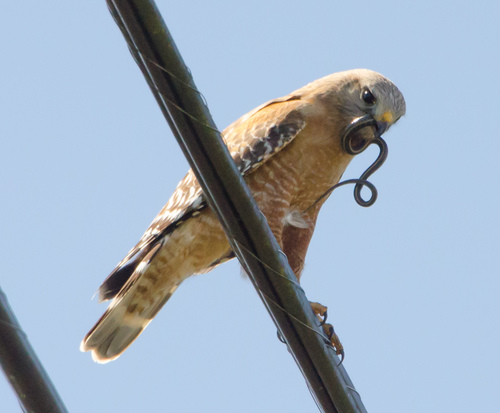 Red-shouldered Hawk
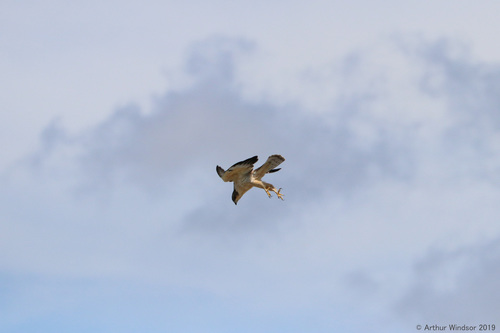 Short-tailed Hawk
In breve
Il segno di campo più affidabile tra Red-shouldered Hawk e Short-tailed Hawk è la presenza di barre rugginose e 'spalle' rosse sul Red-shouldered Hawk, visibili sia in volo che quando è posato, rispetto all'assenza di tale colorazione nel Short-tailed Hawk e alla sua coda molto più corta. I giovani Red-shouldered Hawks hanno code lunghe e strettamente striate e mostrano marcature a forma di mezzaluna pallida vicino alle punte delle ali in volo, mentre i Short-tailed Hawks sono meglio identificabili per la loro silhouette compatta e coda corta e il piumaggio variabile, spesso visibile solo quando planano in alto. Anche la struttura e lo stile di volo differiscono: i Red-shouldered Hawks appaiono più snelli e più simili a un Accipiter in volo, mentre i Short-tailed Hawks sono più compatti e simili a un aquilone. Entrambe le specie possono verificarsi in Florida, ma il Short-tailed Hawk è molto più raro e tipicamente rilevato solo in volo.
Consigli di identificazione
- Lunghezza e modello della coda (tutte le età): Il Red-shouldered Hawk ha una coda lunga con bande bianche strette; il Short-tailed Hawk ha una coda distintamente corta con bande più larghe o a volte appare quasi non marcata da lontano.
- Crescenti delle ali (giovane Red-shouldered): In volo, i giovani Red-shouldered Hawks mostrano marcature a forma di mezzaluna pallida vicino alle punte delle ali (sulle primarie), che sono assenti nel Short-tailed Hawk di qualsiasi età o morfo.
- 'Spalle' rosse (adulto Red-shouldered): Gli adulti mostrano una macchia rugginosa sulle copritrici delle ali superiori ('spalle'), visibile sia posati che in volo. Il Short-tailed Hawk non mostra mai questo segno.
- Colore del petto e della pancia (adulto Red-shouldered): Cerca barre rossastre sul petto e sulla pancia negli adulti Red-shouldered; il Short-tailed Hawk (morfo chiaro) ha parti inferiori bianche, e il morfo scuro è uniformemente scuro sotto.
- Modello dell'ala superiore (adulto Red-shouldered): Il Red-shouldered mostra ali superiori fortemente barrate con macchie pallide; il Short-tailed Hawk ha ali superiori più semplici senza forti barre o macchie.
- Silhouette in volo: Il Red-shouldered Hawk è più snello, con una coda e ali più lunghe, e spesso vola con più battiti e un aspetto leggermente simile a un Accipiter. Il Short-tailed Hawk è compatto, con una coda corta e ali larghe, spesso visto planare o volare in alto.
- Postura posata: Il Red-shouldered Hawk spesso si posa in aperto, mostrando la sua lunga coda e le spalle rosse. Il Short-tailed Hawk è riservato quando è posato, spesso nascosto in una fitta chioma, e raramente offre buone viste posate.
- Variabilità del piumaggio (Short-tailed): Il Short-tailed Hawk è altamente variabile, con morfi sia scuri che chiari. Se vedi un piccolo buteo dalla coda corta che plana in alto, controlla l'assenza di ruggine e la compattezza generale.
- Habitat (contesto della Florida): In Florida, il Red-shouldered Hawk è comune in aree boschive e semiaperte; il Short-tailed Hawk è raro, visto principalmente in campagna aperta o ai margini dei boschi, e quasi sempre rilevato in volo.
- Abbondanza relativa: Se vedi un buteo di dimensioni medie in Florida, è molto più probabile che sia un Red-shouldered Hawk a meno che tu non stia specificamente cercando il Short-tailed Hawk in aree conosciute.
- Colore delle gambe: Il Red-shouldered Hawk ha lunghe gambe gialle, che possono essere visibili quando è posato; questo non è un segno affidabile per il Short-tailed Hawk a causa delle sue abitudini riservate.
- Migrazione e stagione: Il Red-shouldered Hawk è residente o migrante a breve distanza; il Short-tailed Hawk è non migratorio in Florida ma raro e locale.
- Voce: Non diagnostico tra questi due; entrambi sono solitamente silenziosi quando planano.
- Impressione di dimensione: Il Red-shouldered Hawk appare più grande e con una coda più lunga; il Short-tailed Hawk è più piccolo e più compatto, specialmente in volo.
- Confusione comune: I giovani Red-shouldered Hawks sono più propensi a essere scambiati per Short-tailed Hawk, ma controlla sempre la lunghezza della coda, le crescenti delle ali e le barre rugginose per separarli.
Taglia
Il Red-shouldered Hawk è un Buteo di dimensioni medie, con una massa corporea media di circa 625,5 g, un'apertura alare di 90–127 cm e una coda notevolmente lunga per un Buteo. Il Short-tailed Hawk è più piccolo e più compatto nel complesso, con una coda distintamente più corta e una struttura più compatta e meno snella. Sul campo, il Red-shouldered Hawk apparirà solitamente più grande e con ali più lunghe, specialmente quando è posato o planando a distanza moderata, mentre il Short-tailed Hawk appare spesso minuto e con una coda tozza, specialmente quando visto planare in alto. La massa esatta per il Short-tailed Hawk non è fornita, ma è generalmente considerata più piccola del Red-shouldered Hawk.
Piumaggio
I giovani Red-shouldered Hawks sono più propensi a essere confusi con i Short-tailed Hawks, ma possono essere separati dalle loro code lunghe e strettamente striate e dalla presenza di marcature a forma di mezzaluna pallida vicino alle punte delle ali (visibili in volo). Gli adulti hanno teste marroni, petti barrati di ruggine e 'spalle' rosse—queste ultime visibili quando sono posati o a riposo. Le loro parti superiori sono scure con macchie pallide, e la coda è lunga con bande bianche strette. Il Short-tailed Hawk, al contrario, manca completamente delle barre rugginose e della macchia rossa sulle spalle. Il suo piumaggio è altamente variabile (morfi scuri e chiari), ma la coda è sempre corta e l'aspetto complessivo è compatto. Nei morfi chiari, le parti inferiori sono per lo più bianche con piume da volo scure, mentre i morfi scuri sono per lo più marrone scuro o nerastro. L'ala superiore del Short-tailed Hawk manca delle pesanti barre e delle macchie pallide del Red-shouldered Hawk. Quando è posato, il Short-tailed Hawk è spesso nascosto in una fitta chioma, rendendo difficile vedere i dettagli del piumaggio.
Comportamento
Il Red-shouldered Hawk spesso plana con uno stile di volo più battente e simile a un Accipiter ed è più probabile che venga visto posato in aperto, specialmente lungo i margini dei boschi o vicino all'acqua. Il Short-tailed Hawk è principalmente un cacciatore aereo, raramente visto posato in aperto, ed è meglio rilevato quando plana in alto, a volte 'planando' contro vento con le ali ferme. Il Short-tailed Hawk attacca le prede con picchiate ripide e verticali ed è molto più riservato quando è posato. Il Red-shouldered Hawk è più probabile che venga visto planare a basse altitudini o planare tra i posatoi.
Habitat
Il Red-shouldered Hawk è comune nell'est del Nord America, in California e in alcune parti del Messico, preferendo i boschi, specialmente vicino all'acqua, ed è un residente permanente in gran parte del suo areale. Il Short-tailed Hawk è raro e locale in Florida (dove la confusione è più probabile), e altrimenti si trova nelle Americhe tropicali e subtropicali. Preferisce i confini tra aree boschive e aperte, ma è molto più difficile da rilevare a meno che non stia planando. In Florida, il Red-shouldered Hawk è abbondante e diffuso, mentre il Short-tailed Hawk è considerato Criticamente Imperiled ed è raramente visto tranne che da chi è dedicato a scrutare il cielo.
Red-shouldered Hawk · Short-tailed Hawk · I miei uccelli difficili