

Red-naped Sapsucker vs Lewis's Woodpecker
Sphyrapicus nuchalis contro Melanerpes lewis
Fai un quiz con Red-naped Sapsucker e Lewis's Woodpecker
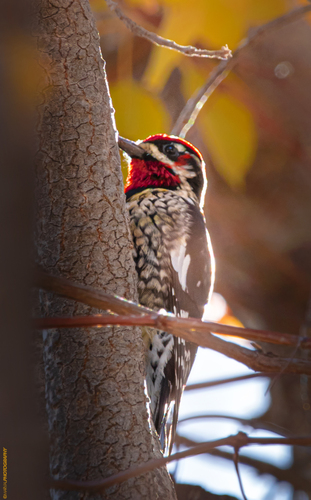 Red-naped Sapsucker
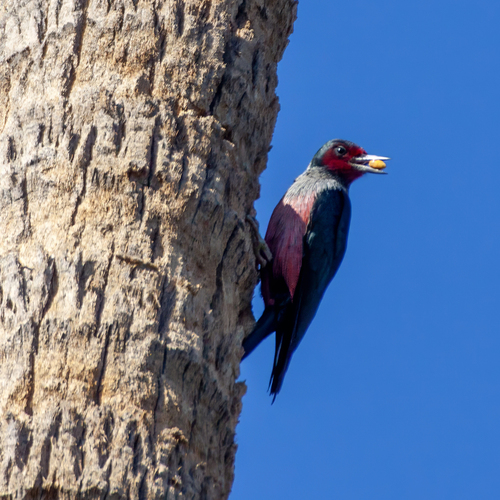 Lewis's Woodpecker
In breve
Il segno di campo più affidabile per separare il Red-naped Sapsucker dal Lewis's Woodpecker è la colorazione e la struttura complessiva: il Red-naped Sapsucker è un picchio di dimensioni medie, compatto, con un audace motivo della testa nero, bianco e rosso e un ventre giallastro, mentre il Lewis's Woodpecker è molto più grande, con una combinazione unica di parti superiori verde scuro-nerastre, un collare grigio, un ventre rosato e un volto rosso. In volo, il Lewis's Woodpecker mostra ali più ampie e uno stile di volo più lento, simile a quello di un corvo, a differenza del volo più tipico del picchio del Red-naped Sapsucker. Il sapsucker ha una distintiva macchia bianca sulle ali e un punto rosso sulla nuca, mentre il Lewis's ne è privo e ha invece un collare grigio e parti inferiori rosate. Se vedi un grande picchio scuro con un collare grigio e un ventre rosa, è il Lewis's; un uccello più piccolo, con un motivo netto e una nuca rossa e una macchia bianca sulle ali è il Red-naped Sapsucker.
Consigli di identificazione
- La dimensione è un indizio forte: il Lewis's Woodpecker è molto più grande e massiccio del Red-naped Sapsucker; se l'uccello sembra delle dimensioni di un corvo o quasi, è il Lewis's.
- Colore e motivo complessivi: il Red-naped Sapsucker ha un motivo netto con nero, bianco e rosso, inclusa una macchia rossa sulla nuca e una grande macchia bianca sulle ali. Il Lewis's è scuro, con un dorso verde scuro-nerastro, collare grigio, ventre rosato e volto rosso, privo di qualsiasi macchia bianca sulle ali.
- Motivo della testa: il Red-naped Sapsucker ha una testa nera con strisce bianche e una fronte rossa; il Lewis's ha un volto rosso ma un collare grigio e manca delle strisce facciali bianche del sapsucker.
- Nuca e collare: il Red-naped Sapsucker mostra un distintivo punto rosso sulla nuca; il Lewis's ha un collare grigio che avvolge il collo, unico tra i picchi nordamericani.
- Parti inferiori: il Red-naped Sapsucker ha un petto e un ventre superiore giallastri, che sfumano in un ventre e un posteriore bianchi. Il Lewis's ha un ventre rosato e un petto superiore grigio, senza tonalità gialle.
- Motivo delle ali: in tutte le età, il Red-naped Sapsucker mostra una prominente macchia bianca sulle ali; il Lewis's ha ali ampie e scure senza macchia bianca.
- Stile di volo: il Lewis's Woodpecker vola con battiti d'ali lenti e uniformi e spesso plana, somigliando a un corvo in volo. Il Red-naped Sapsucker ha un volo più tipico e ondulato da picchio.
- Comportamento di posarsi: il Lewis's spesso si siede in modo aperto, a volte su fili o rami esposti. Il Red-naped Sapsucker è più probabile che venga visto aggrappato a tronchi o rami.
- Becco e struttura: il Lewis's ha un becco proporzionalmente più lungo e pesante e un corpo più allungato; il Red-naped Sapsucker è compatto con un becco più corto.
- Differenze sessuali: nel Red-naped Sapsucker, i maschi hanno una gola completamente rossa, le femmine hanno una gola inferiore rossa e una gola superiore bianca; i sessi del Lewis's sono simili nel piumaggio.
- Contesto dell'habitat: i boschi di pino aperti e i tronchi sparsi favoriscono il Lewis's; le foreste più dense o i boschetti di pioppi sono più propensi a ospitare il Red-naped Sapsucker.
- Colore del volto: il Lewis's ha un ampio volto rosso, mentre nel Red-naped Sapsucker, il rosso è per lo più limitato alla fronte e alla nuca (e alla gola nei maschi).
- Marcature bianche: il Red-naped Sapsucker mostra più bianco in generale, specialmente sulle ali e sul volto; il Lewis's è molto più scuro e privo di aree bianche audaci.
- Voce (limitata): se senti un richiamo aspro e variegato, potrebbe indicare il Lewis's, ma questa non è una separazione affidabile basata sulle note attuali.
- Contesto stagionale: entrambe le specie sono occidentali, ma il Lewis's è più nomade e potrebbe apparire in habitat aperti inaspettati, specialmente al di fuori della stagione riproduttiva.
Taglia
Il Lewis's Woodpecker è sostanzialmente più grande del Red-naped Sapsucker. Il Lewis's misura 26–28 cm (10.2–11.0 in) di lunghezza e pesa 88–139 g, mentre il Red-naped Sapsucker è 19–21 cm (7.5–8.3 in) e pesa circa 49 g. Sul campo, il Lewis's appare più massiccio, con un'apertura alare più lunga (49–52 cm) e un corpo più pesante e allungato. Il Red-naped Sapsucker è più compatto e visibilmente più piccolo quando visto fianco a fianco o con un chiaro riferimento di dimensioni.
Piumaggio
Non sono descritti modelli specifici di ali superiori per giovani o immaturi per nessuna delle due specie nelle fonti, quindi il piumaggio adulto è il più diagnostico. Gli adulti del Red-naped Sapsucker hanno una testa nera con una fronte rossa, un punto rosso sulla nuca, strisce bianche sul volto e una grande macchia bianca sulle ali. Le parti inferiori sono giallastre sul petto e sul ventre superiore, con un ventre e un posteriore bianchi. I maschi hanno una gola completamente rossa, mentre le femmine hanno una gola inferiore rossa e una gola superiore bianca. Al contrario, il Lewis's Woodpecker è molto più scuro in generale: ha un dorso e ali verde scuro-nerastre, un posteriore nero, un collare grigio e un petto superiore grigio, un ventre rosato e un volto rosso. Le ali sono ampie e mancano della macchia bianca del sapsucker. La combinazione di un collare grigio e un ventre rosa è unica per il Lewis's. Il motivo netto in bianco e nero del Red-naped Sapsucker e il punto rosso sulla nuca sono assenti nel Lewis's, che è più uniforme e privo di marcature bianche audaci.
Comportamento
Il Lewis's Woodpecker spesso si posiziona in modo aperto e vola con battiti d'ali lenti e costanti, simili a quelli di un corvo, utilizzando ali ampie e planando più dei picchi tipici. Si dedica anche alla cattura aerea di insetti (hawking), che è insolito per i picchi. Il Red-naped Sapsucker si comporta più come un tipico sapsucker: si aggrappa ai tronchi degli alberi, perfora pozzi di linfa e ha un volo da picchio più rimbalzante e ondulato. I sapsucker sono meno propensi a essere visti mentre saltano per gli insetti nell'aria o si posano in modo aperto per periodi prolungati.
Habitat
Il Lewis's Woodpecker si trova in boschi di pino aperti e aree con alberi e tronchi sparsi, spesso seduto in modo aperto. Il suo areale è principalmente negli Stati Uniti occidentali e centrali, con alcuni movimenti nomadi. Il Red-naped Sapsucker è anche una specie occidentale ma è più strettamente legato alle foreste, specialmente con pioppi o conifere miste, ed è meno probabile che venga visto in ambienti aperti e simili a parchi. Se vedi un picchio in un bosco di pino molto aperto o su posatoi esposti, considera prima il Lewis's.
Voce
Il Lewis's Woodpecker ha un richiamo più aspro rispetto alla maggior parte dei picchi e utilizza una varietà di frasi, ma le vocalizzazioni specifiche non sono dettagliate nelle fonti. La voce del Red-naped Sapsucker non è descritta nelle note fornite, quindi i segnali vocali non sono affidabilmente diagnostici qui.
Red-naped Sapsucker · Lewis's Woodpecker · I miei uccelli difficili