
Red-headed Quelea vs Red-billed Quelea
Quelea erythrops contro Quelea quelea
Fai un quiz con Red-headed Quelea e Red-billed Quelea
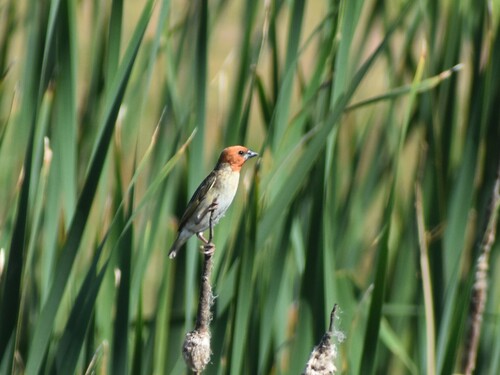 Red-headed Quelea
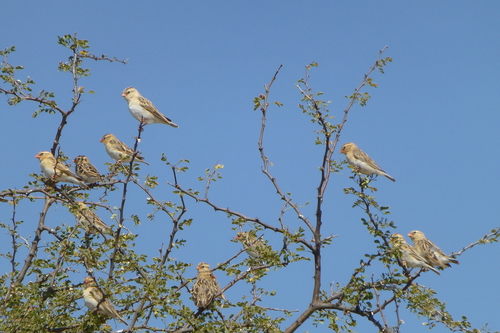 Red-billed Quelea
In breve
Il segno distintivo più affidabile tra il Quelea dal becco rosso e il Quelea dal becco rosso è il colore e il motivo della testa in abito nuziale: i maschi del Quelea dal becco rosso mostrano un volto e una testa di un rosso o ruggine distintivo, mentre i maschi del Quelea dal becco rosso hanno tipicamente una maschera facciale nera circondata da giallo, ruggine o rosa, o talvolta una maschera bianca. Al di fuori della stagione riproduttiva, entrambe le specie diventano molto più opache, ma il colore del becco e il motivo facciale rimangono utili. I giovani e gli uccelli non in riproduzione sono più difficili da distinguere, poiché entrambi sono simili a passeri con becchi conici, ma sottili differenze nel colore del becco e del volto possono aiutare. La struttura e le dimensioni sono quasi identiche, quindi concentrati sui dettagli della testa e del becco, specialmente nei maschi adulti durante la stagione riproduttiva.
Consigli di identificazione
- Colore della testa del maschio in riproduzione: I maschi del Quelea dal becco rosso hanno un volto e una testa di un rosso brillante o ruggine; i maschi del Quelea dal becco rosso hanno una maschera facciale nera (o raramente bianca) circondata da giallo, ruggine, rosa o viola. Questo è il segno più affidabile sul campo durante la stagione riproduttiva.
- Colore del becco delle femmine e dei maschi non in riproduzione: Nel Quelea dal becco rosso, le femmine e i maschi non in riproduzione hanno un becco rosa o rosso opaco, ma le femmine mostrano un becco giallo o arancione e un anello oculare durante la stagione riproduttiva. Il Quelea dal becco rosso è meno variabile ma generalmente mantiene un becco rossastro; cerca qualsiasi accenno di rosso sul volto.
- Motivo facciale in abito non riproduttivo: Il Quelea dal becco rosso perde la maschera e diventa grigio-marrone uniforme con una leggera striscia chiara sopra l'occhio, un mento e una gola bianchi. Il Quelea dal becco rosso è meno descritto ma dovrebbe mantenere alcune tonalità rossastre sul volto, mancando del supercilio chiaro del Quelea dal becco rosso.
- Colore del becco dei giovani: I giovani Quelea dal becco rosso hanno un becco color corno con una sfumatura lavanda, che diventa arancione-viola prima della loro prima muta. I giovani Quelea dal becco rosso non sono ben descritti, ma qualsiasi accenno precoce di rosso sul volto o sul becco può essere suggestivo.
- Parti superiori e parti inferiori: Entrambi sono striati di marrone sopra e chiari sotto, ma i maschi del Quelea dal becco rosso in abito nuziale possono mostrare parti inferiori buff o bianche a seconda della sottospecie, a volte con una sfumatura rosa. Queste differenze sono sottili e non affidabili a distanza.
- Variazione delle sottospecie: Il Quelea dal becco rosso mostra differenze tra le sottospecie nell'estensione e nel colore della maschera e delle parti inferiori, ma tutti hanno la maschera (nera o bianca) come caratteristica. Il Quelea dal becco rosso non mostra questa maschera.
- Forma e colore del becco: Entrambi hanno becchi pesanti e conici, di solito di un rosso brillante nei maschi in riproduzione. Il colore del becco è meno utile al di fuori della stagione riproduttiva ma può supportare altri segni.
- Colore delle gambe: Il Quelea dal becco rosso ha gambe arancioni; il Quelea dal becco rosso non è descritto in dettaglio ma è probabilmente simile.
- Anello oculare: Il Quelea dal becco rosso ha un anello oculare rosso nudo e stretto e un'iride marrone; i dettagli oculari del Quelea dal becco rosso non sono specificati.
- Composizione del gruppo: Se vedi entrambe le specie insieme, cerca i maschi con il volto rosso tra quelli mascherati; i gruppi misti sono possibili in aree sovrapposte.
- Habitat e distribuzione: Entrambi si trovano in habitat aperti simili in gran parte dell'Africa subsahariana; non fare affidamento sull'habitat per la separazione.
- Viste in volo: In volo, entrambe appaiono come piccoli tessitori marroni con poco da separarle; il colore della testa nei maschi può essere visibile in buona luce.
- Trappole: Gli uccelli non in riproduzione e i giovani sono i più difficili da separare; concentrati su sottili differenze nel colore del volto e del becco, e fai attenzione alla sovrapposizione con altri tessitori simili a passeri.
- Voce: Non descritta nelle fonti; non usarla per la separazione.
- Contesto stagionale: Se conosci la stagione riproduttiva, aspettati maschi più brillanti e distintivi; al di fuori di questo periodo, sii cauto e fai affidamento su segni sottili.
Taglia
Entrambe le specie sono molto simili in dimensioni e struttura. Il Quelea dal becco rosso pesa in media 19,4 g, mentre il Quelea dal becco rosso pesa in media 18,8 g [wikidata]. Entrambi sono piccoli tessitori simili a passeri con becchi pesanti e conici e proporzioni complessive simili. La lunghezza è di circa 12 cm per il Quelea dal becco rosso; il Quelea dal becco rosso è comparabile. Sul campo, la dimensione da sola non è un separatore affidabile.
Piumaggio
-
Giovani e immaturi: Entrambe le specie somigliano a passeri, con teste grigiose o marroni e becchi conici. I giovani Quelea dal becco rosso hanno un becco color corno con una sfumatura lavanda, che diventa arancione-viola prima della loro prima muta completa. Dopo la muta post-giovanile (2-3 mesi), i giovani Quelea dal becco rosso assomigliano a adulti non in riproduzione: testa grigia, guance bianche e copritrici alari e penne di volo con bordi buff. Non c'è una descrizione dettagliata dei giovani per il Quelea dal becco rosso, ma aspettati toni simili a passeri; concentrati sul colore del becco se visibile.
-
Maschi adulti in riproduzione: I maschi del Quelea dal becco rosso hanno un volto e una testa di un rosso o ruggine sorprendente, che è diagnostico. I maschi del Quelea dal becco rosso hanno solitamente una maschera facciale nera (fronte, guance, lore, parte superiore della gola), a volte bianca, circondata da giallo, ruggine, rosa o viola, con il resto delle parti inferiori di colore buff o bianco a seconda della sottospecie. Il becco è di un rosso brillante in entrambi, ma il motivo facciale è fondamentale.
-
Maschi adulti non in riproduzione e femmine: Entrambi diventano molto più opachi. I maschi del Quelea dal becco rosso perdono la maschera e diventano grigio-marrone con striature, un mento e una gola bianchi, e un leggero supercilio pallido; il becco diventa rosa o rosso opaco. Le femmine assomigliano ai maschi non in riproduzione ma hanno un becco giallo o arancione e un anello oculare durante la stagione riproduttiva, rosa o rosso opaco altrimenti. Le femmine del Quelea dal becco rosso e i maschi non in riproduzione sono meno ben descritti ma mancano della maschera nera e dovrebbero mantenere alcune tonalità rossastre o rugginose sul volto, specialmente rispetto al Quelea dal becco rosso con il volto uniforme.
Comportamento
Entrambe le specie sono gregarie, spesso viste in grandi gruppi, e hanno abitudini simili a quelle dei tessitori. Sono attive, sociali e si nutrono di semi in habitat aperti. Il volo è veloce e diretto, con i gruppi che si muovono all'unisono. Il comportamento non è un separatore affidabile sul campo.
Habitat
Entrambe le specie si sovrappongono ampiamente in Africa subsahariana e si trovano in praterie aperte, savane e aree agricole. Il Quelea dal becco rosso è particolarmente comune in cespugli spinosi semi-aridi e praterie, evitando le foreste dense. Il Quelea dal becco rosso condivide gran parte di questa gamma e habitat, quindi la posizione e l'habitat da soli non sono diagnostici.
Red-headed Quelea · Red-billed Quelea · I miei uccelli difficili