

Red-billed Pigeon vs Short-billed Pigeon
Patagioenas flavirostris contro Patagioenas nigrirostris
Fai un quiz con Red-billed Pigeon e Short-billed Pigeon
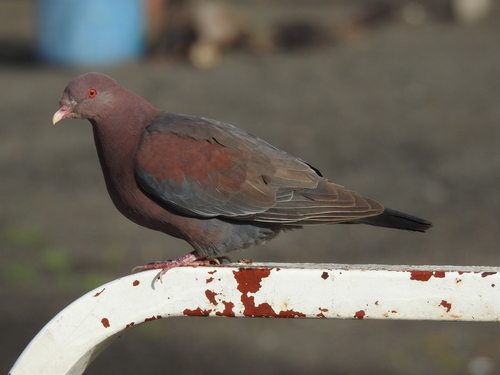 Red-billed Pigeon
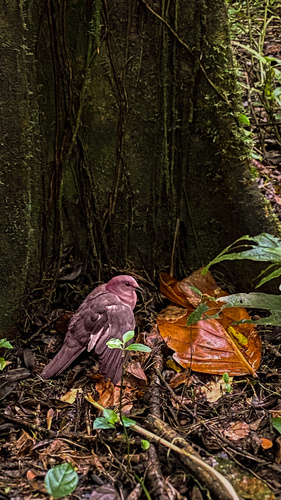 Short-billed Pigeon
In breve
Il segno distintivo più affidabile per separare il Red-billed Pigeon dallo Short-billed Pigeon è il colore del becco: il Red-billed Pigeon mostra un becco rosso distintivo con una punta gialla, mentre lo Short-billed Pigeon ha un becco nero. Negli adulti, il Red-billed Pigeon è più grande, con una corporatura più robusta e un corpo grigio ardesia che contrasta con una testa e un collo color bordeaux o viola, mentre lo Short-billed Pigeon è più piccolo, complessivamente di un colore viola vino più uniforme con parti inferiori più marroni e un dorso olivastro. Le piume giovanili sono più opache in entrambi, ma i giovani del Red-billed Pigeon hanno spalle scure e un mantello più marrone, mentre i giovani dello Short-billed mostrano squame color cannella sulla testa e sulle parti superiori. Anche il colore degli occhi e l'anello orbitale differiscono: il Red-billed ha occhi rossi pallidi con un anello arancione, lo Short-billed mostra occhi viola-rossi. Entrambi possono sovrapporsi nell'areale nel sud del Messico e in America Centrale, quindi è essenziale prestare attenzione a queste caratteristiche.
Consigli di identificazione
- Colore del becco (tutte le età): Il Red-billed Pigeon mostra sempre un becco rosso con una punta gialla; lo Short-billed Pigeon ha un becco nero. Questa è la differenza più consistente e visibile, specialmente a distanza ravvicinata o in buona luce.
- Dimensione e corporatura (adulti): Il Red-billed Pigeon è più grande e robusto (30–37 cm, 230–425 g) rispetto allo Short-billed Pigeon (26,5 cm, 150 g). Usa questo quando gli uccelli sono affiancati o con specie familiari per scala.
- Colore della testa e del collo (adulti): Il Red-billed Pigeon ha una testa e un collo color bordeaux o viola, in netto contrasto con il corpo grigio ardesia. Lo Short-billed Pigeon è più uniformemente viola vino, con meno contrasto tra testa e corpo.
- Dorso e parti inferiori (adulti): Il Red-billed Pigeon ha una pancia e copritail blu-grigi, e un dorso meno marrone. Lo Short-billed Pigeon è più marrone sulla pancia e ha un dorso olivastro. Cerca le tonalità blu-grigie nel Red-billed, specialmente quando è posato o in buona luce.
- Piumaggio giovanile: I giovani del Red-billed Pigeon sono più opachi, con spalle scure e un mantello e ali più marroni. I giovani dello Short-billed mostrano squame color cannella sulla testa e sulle parti superiori e una testa/collo/petto grigio-marrone. Questi segni sono meglio visibili a distanza ravvicinata o in buona luce.
- Colore degli occhi e anello orbitale: Il Red-billed Pigeon ha occhi rossi pallidi con un anello orbitale arancione; lo Short-billed Pigeon ha occhi viola-rossi. Questo può essere sottile ma è utile a distanza ravvicinata.
- Colore delle ali e della coda (adulti): Lo Short-billed Pigeon ha una coda e primarie nerastre, mentre la coda del Red-billed è blu-grigia. In volo, questo può essere difficile da vedere a meno che l'illuminazione non sia eccellente.
- Differenze sessuali: Le femmine di entrambe le specie sono più opache, ma la differenza non è abbastanza forte per una separazione affidabile sul campo; concentrati su altri segni.
- Iridescenza: Nessuna delle due specie ha un piumaggio del collare iridescente forte, quindi questo non è un segno utile per la separazione.
- Vocalizzazioni: Il Red-billed Pigeon emette un lungo, ascendente 'coooo' più tre note 'cuk-c'-c'-coo'; lo Short-billed Pigeon ha un 'coo... cu-COO k’CO coohoo' più lento e complesso. Se senti un richiamo prolungato e ascendente, inclina verso il Red-billed; se il richiamo è più complesso e distanziato, considera lo Short-billed.
- Battito d'ali: Il Red-billed Pigeon produce spesso un suono di battito d'ali al decollo, che è raramente notato nello Short-billed.
- Contesto dell'habitat: In boschi aperti e asciutti o lungo le rive, specialmente nel Messico costiero o nel sud del Texas, è più probabile vedere il Red-billed Pigeon. In foreste umide di pianura o ai margini delle foreste, specialmente a sud del Messico, è più probabile vedere lo Short-billed Pigeon.
- Sovrapposizione dell'areale: Entrambe le specie possono verificarsi nel sud del Messico e in America Centrale. Non fare affidamento solo sull'areale per la separazione in queste aree.
- Comportamento di foraggiamento: Lo Short-billed Pigeon è più spesso visto nella chioma degli alberi e talvolta ai lati delle strade per cercare sabbia; il Red-billed Pigeon può posarsi più apertamente in boschi asciutti.
- Trappole: Entrambe le specie possono apparire opache e marroni quando sono giovani o in scarsa luce. Controlla sempre prima il colore del becco, poi cerca la dimensione del corpo e il contrasto di colore tra testa e corpo.
Taglia
Il Red-billed Pigeon è notevolmente più grande e pesante, misurando 30–37 cm di lunghezza e pesando 230–425 g [wikipedia]. Lo Short-billed Pigeon è più piccolo, circa 26,5 cm e 150 g [wikipedia]. Sul campo, il Red-billed Pigeon appare spesso più robusto e massiccio, mentre lo Short-billed Pigeon sembra più compatto e meno pesante. Questa differenza di dimensione è più evidente quando entrambe le specie sono viste insieme, ma può essere sottile se viste singolarmente o a distanza.
Piumaggio
-
Uccelli giovanili/immaturi: I giovani del Red-billed Pigeon sono più opachi nel complesso, con spalle scure e un mantello e ali più marroni. I giovani dello Short-billed Pigeon hanno una testa, un collo e un petto grigio-marrone, con squame color cannella sulla testa e sulle parti superiori. Queste caratteristiche giovanili sono più utili nella stagione non riproduttiva o quando gli uccelli non sono ancora completamente adulti.
-
Adulti: Gli adulti del Red-billed Pigeon hanno un corpo grigio ardesia con una testa, un collo e copritail color bordeaux o viola, pancia e copritail blu-grigi, e un dorso meno marrone. Gli adulti dello Short-billed Pigeon sono più uniformemente viola vino, diventando più marroni sulla pancia e olivastro sul dorso, con coda e primarie nerastre. Il Red-billed non ha piumaggio del collare iridescente, che non è un fattore nemmeno nello Short-billed. Le femmine di entrambe le specie sono più opache dei maschi, ma la differenza è sottile.
-
Becco e occhi: Il Red-billed Pigeon ha un becco rosso con una punta gialla e occhi rossi pallidi con un anello orbitale arancione. Lo Short-billed Pigeon ha un becco nero e occhi viola-rossi.
Comportamento
Entrambe le specie sono tipicamente viste singolarmente o in coppie, foraggiando sugli alberi per frutta. Lo Short-billed Pigeon si trova spesso nella chioma degli alberi e può anche venire ai lati delle strade per cercare sabbia o invertebrati. Il Red-billed Pigeon è più probabile da vedere in boschi asciutti o lungo le rive, a volte posandosi in modo evidente. In volo, il Red-billed Pigeon produce un suono di battito d'ali evidente al decollo, che è meno spesso notato nello Short-billed.
Habitat
Il Red-billed Pigeon preferisce foreste secche e boschi lungo le rive, specialmente in aree costiere e di pianura dal sud del Texas alla Costa Rica. È più comune in Messico e raro nel sud del Texas, specialmente in inverno. Lo Short-billed Pigeon occupa la chioma delle foreste di pianura e boschi semi-aperti dal sud del Messico al nord-ovest della Colombia. Entrambi possono sovrapporsi nel sud del Messico e in America Centrale, ma il Red-billed è più associato a habitat asciutti e aperti, mentre lo Short-billed è più tipico di foreste umide e margini.
Voce
Il Red-billed Pigeon emette un lungo richiamo acuto: un 'coooo' prolungato seguito da tre note 'cuk-c'-c'-coo', con un tono ascendente. Lo Short-billed Pigeon ha un richiamo complesso, forte e acuto: 'coo... cu-COO k’CO coohoo,' solitamente emesso singolarmente o con lunghe pause. Il richiamo dello Short-billed è più lento e complesso rispetto a quello del Red-billed, ma entrambi sono acuti e possono essere confusi se non ben conosciuti. Il battito d'ali del Red-billed al decollo è anche un utile indizio uditivo.
Red-billed Pigeon · Short-billed Pigeon · I miei uccelli difficili