

Picui Ground Dove vs Blue Ground Dove
Columbina picui contro Claravis pretiosa
Fai un quiz con Picui Ground Dove e Blue Ground Dove
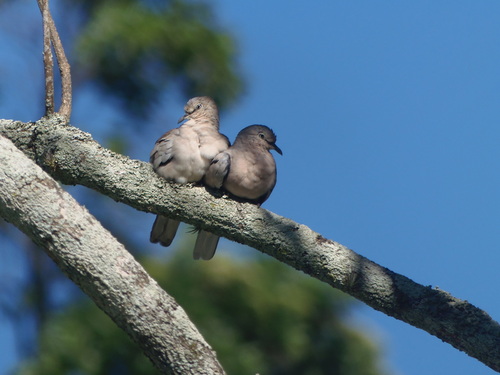 Picui Ground Dove
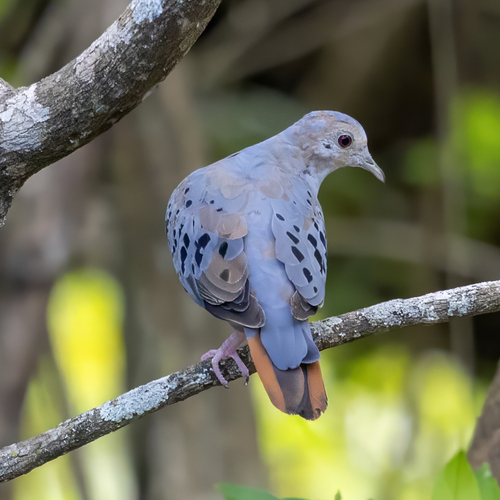 Blue Ground Dove
In breve
Il segno di campo più affidabile tra Picui Ground Dove e Blue Ground Dove è il motivo delle ali: il Picui mostra due bande bianche su un'ala color rosa-fawn, mentre i maschi di Blue Ground Dove hanno ali blu-grigie con macchie o bande nere, e le femmine mostrano macchie color castagno. I giovani di entrambe le specie sono più opachi, ma le bande delle ali del Picui rimangono distintive. Strutturalmente, il Blue Ground Dove è visibilmente più pesante e leggermente più lungo. I maschi sono più facili da separare per il colore generale, ma le femmine e gli immaturi richiedono attenzione ai motivi delle ali e ai toni del piumaggio. Entrambe le specie possono verificarsi insieme in campagna aperta, quindi il contesto da solo non è diagnostico.
Consigli di identificazione
- Motivo delle ali in volo o posato: Il Picui Ground Dove di tutte le età e sessi mostra due bande bianche sulle ali su uno sfondo rosa-fawn, bordato di nero—questo è il segno più affidabile. Il Blue Ground Dove non mostra mai bande bianche sulle ali; invece, cerca macchie o bande nere (maschio) o color castagno (femmina/giovane) sulle ali.
- Piumaggio giovanile/immaturo: Il giovane Picui è più opaco e marrone ma mostra ancora le doppie bande bianche sulle ali. Il giovane Blue Ground Dove assomiglia alla femmina, con squame ruggine sulla schiena e macchie color castagno sulle ali.
- Colorazione del maschio adulto: Il maschio Picui è coronato di grigio con un petto rosa-grigio e una schiena marrone-grigia; il maschio Blue Ground Dove è complessivamente blu-grigio con parti inferiori più chiare e un volto grigio-bianco.
- Colorazione della femmina adulta: La femmina Picui è una versione più opaca e meno rosa del maschio, ma mostra ancora le bande bianche sulle ali. La femmina Blue Ground Dove è marrone sopra, con un sopracciglio e una coda color castagno, e macchie color castagno sulle ali.
- Dimensioni e struttura: Il Blue Ground Dove è visibilmente più grande e pesante (69 g contro 48 g), con una struttura più robusta e un corpo leggermente più lungo (20 cm contro 18 cm). Il Picui è più delicato e snodato.
- Motivo della coda: Il Picui ha penne centrali della coda marrone-grigie; la femmina Blue Ground Dove ha una coda color castagno, e il maschio ha penne esterne della coda nere.
- Segni facciali: Il maschio Picui mostra una stretta striscia nera davanti all'occhio e una fronte e gola bianche; il maschio Blue Ground Dove ha un volto grigio-bianco semplice, privo di forti segni facciali.
- Colore delle parti inferiori: Il Picui ha un petto rosa-grigio e una pancia bianca; il maschio Blue Ground Dove è grigio più chiaro sotto, la femmina è blu-grigia a grigio-marrone nelle parti inferiori.
- Iride e parti nude: Il Blue Ground Dove ha un'iride rossa o gialla, un anello oculare nudo verde e gambe rosa carne (quando viste bene); i colori delle parti nude del Picui non sono descritti, quindi questo è utile solo se le caratteristiche del Blue Ground Dove sono visibili.
- Indizi comportamentali: Le coppie di Blue Ground Dove volano spesso insieme, con un uccello blu-grigio e uno marrone affiancati—questo è un forte indizio se visto.
- Confusione sessuale: Le femmine e i giovani Blue Ground Doves sono i più probabili da confondere con il Picui, ma le macchie color castagno sulle ali (mai nere) e la schiena marrone ruggine sono fondamentali; le bande bianche del Picui sono sempre presenti.
- Possibili insidie: Non confondere le femmine di Blue Ground Dove con le femmine di Ruddy Ground Dove (che sono più piccole e hanno segni neri, non castagni, sulle ali), ma il Picui è separato da entrambe dalle bande bianche sulle ali.
- Sovrapposizione geografica: Entrambe le specie possono verificarsi insieme in gran parte del Sud America; l'areale non è un separatore affidabile nella maggior parte della loro area condivisa.
- Voce: Non sono fornite differenze vocali diagnostiche nelle note; non fare affidamento sul canto o sul richiamo per la separazione.
- Variazione stagionale: Non sono notate forti variazioni nel piumaggio stagionale per entrambe le specie; concentrati sulle differenze di età e sesso.
Taglia
Blue Ground Dove is distinctly larger and heavier than Picui Ground Dove: average body mass is about 69 g for Blue Ground Dove versus 48 g for Picui [wikidata]. In the field, this translates to a noticeably chunkier, more robust impression for Blue Ground Dove, which is also about 2 cm longer (20 cm vs. 18 cm). However, size can be hard to judge unless both species are seen together.
Piumaggio
Juvenile and immature birds: Picui Ground Dove juveniles are duller and browner than adults, but retain the two white wing bands on a pinkish-fawn background, bordered by black—this is visible both perched and in flight. Blue Ground Dove juveniles resemble females, with ruddy scaling on the back and chestnut-brown spots in the wings (not blackish).
Adult males: Picui males have a gray crown and nape, brownish-gray back, and pinkish-fawn wings with two white bands. Blue Ground Dove males are blue-grey above, paler below, with blackish flight and outer tail feathers, and bold black spots or bands on the wings.
Adult females: Picui females are duller and less pink than males, but still show the white wing bands. Blue Ground Dove females have a grey-brown head, neck, and breast, pale blue-grey underwings and belly, a ruddy brown back, chestnut rump and tail, and chestnut-brown wing spots. The female Blue Ground Dove's wing spots are always chestnut-brown, never blackish as in Ruddy Ground Dove.
In all ages and sexes, Picui's white wing bands are unique among small ground doves in its range; Blue Ground Dove's wing spots are always present but change color with sex and age.
Comportamento
Entrambe le specie sono piccioni di terra e possono essere viste nutrirsi su terreno aperto o volare basso. Il Blue Ground Dove è spesso visto in coppia (maschio e femmina) volare insieme, con il maschio blu-grigio e la femmina marrone—questo può essere un utile indizio comportamentale. Il Picui Ground Dove è anche gregario, ma le note non specificano differenze comportamentali uniche. Entrambe le specie possono decollare dal terreno con un volo frusciante.
Habitat
Entrambe le specie si sovrappongono ampiamente in Sud America e utilizzano habitat aperti simili, inclusi campi, margini e boschi aperti. L'areale del Blue Ground Dove si estende più a nord nel Centro America e a Trinidad, ma in gran parte del Sud America entrambe possono essere trovate insieme. L'habitat da solo non è diagnostico.
Picui Ground Dove · Blue Ground Dove · I miei uccelli difficili