

Peaceful Dove vs Bar-shouldered Dove
Geopelia placida contro Geopelia humeralis
Fai un quiz con Peaceful Dove e Bar-shouldered Dove
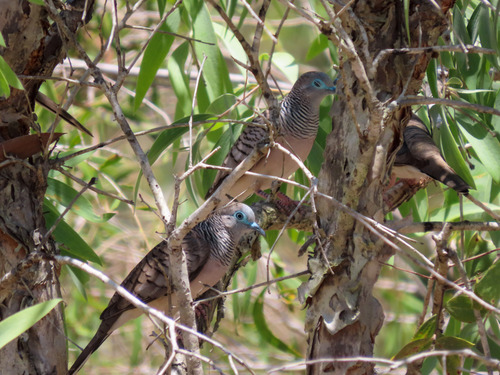 Peaceful Dove
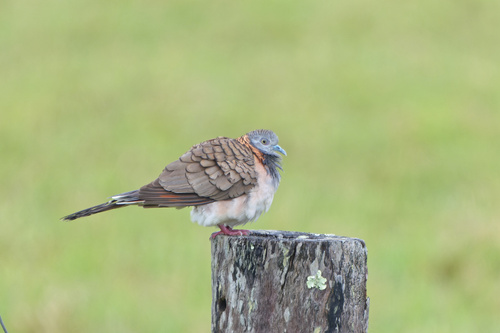 Bar-shouldered Dove
In breve
Per separare la Peaceful Dove dalla Bar-shouldered Dove, concentrati sul motivo del collo e della gola: la Peaceful Dove ha sottili striature (narrow black-and-white bars) che si estendono dalla nuca alla gola, mentre la Bar-shouldered Dove mostra piume della nuca color rame striate ma una gola semplice, senza barre. In tutte le età, la nuca della Bar-shouldered Dove è di colore rame e non presenta barre sulla gola, che è una differenza chiave. La Bar-shouldered Dove è anche notevolmente più grande e robusta, con una coda leggermente più lunga. Entrambe le specie possono mostrare un aspetto simile di tortora terrestre con coda lunga, ma prestare attenzione al motivo del collo e della gola è il segno di campo più affidabile, specialmente a distanza ravvicinata o con buone viste attraverso i binocoli.
Consigli di identificazione
- Motivo del collo e della gola (tutte le età): La Peaceful Dove mostra sottili striature nere e bianche (bars) che si estendono dalla nuca alla gola e ai lati del collo. La Bar-shouldered Dove ha una nuca color rame striata ma una gola semplice, senza barre. Questo è il segno più affidabile a qualsiasi età.
- Colore della nuca (tutte le età): La nuca della Bar-shouldered Dove è color rame o ruggine con striature; la nuca della Peaceful Dove è grigia con sottili barre nere e bianche.
- Petto e pancia: Entrambe le specie hanno petti blu-grigi, ma quello della Peaceful Dove è spesso più chiaro e uniforme, mentre quello della Bar-shouldered Dove può apparire leggermente più scuro e robusto.
- Motivo delle ali: La Bar-shouldered Dove ha ali a scacchi marrone-bronzo, che possono apparire squamose o a motivo in buona luce. Le ali della Peaceful Dove sono meno distintamente a scacchi e più uniformi.
- Anello oculare: La Bar-shouldered Dove ha un anello oculare grigio, che può diventare rosso-bruno durante la stagione riproduttiva. L'anello oculare della Peaceful Dove è meno prominente e non è descritto come cambiamento di colore.
- Dimensioni e struttura: La Bar-shouldered Dove è significativamente più grande (26–30 cm) e più robusta, con una coda più lunga. La Peaceful Dove è più piccola e più delicata. La dimensione è meglio giudicata con un confronto diretto o in stormi misti.
- Coda: Entrambe hanno lunghe code, ma quella della Bar-shouldered Dove è proporzionalmente più lunga e l'uccello appare più robusto nel complesso.
- Stile di volo: Entrambe le specie volano direttamente e rapidamente, ma le ali della Bar-shouldered Dove sono note per fischiare in volo. Ascolta questo suono quando gli uccelli si alzano in volo.
- Voce: Il richiamo della Bar-shouldered Dove è un distintivo, melodioso "cook-a-wook" o "coolicoo." Se senti questo, è probabile che tu stia ascoltando la Bar-shouldered Dove.
- Uccelli juvenili: Anche nei juvenili più opachi, il motivo della gola rimane diagnostico: i juvenili della Peaceful Dove mantengono le striature sulla gola, mentre i juvenili della Bar-shouldered Dove no.
- Contesto: Entrambe le specie possono verificarsi insieme, ma controlla le dimensioni e il motivo della gola prima di fare affidamento sull'habitat o sul comportamento.
- Trappole comuni: Non confondere la nuca color rame della Bar-shouldered Dove con le barre sulla gola—controlla sempre se le barre si estendono sulla gola (Peaceful Dove) o si fermano alla nuca (Bar-shouldered Dove).
- Illuminazione: In scarsa luce, la nuca color rame della Bar-shouldered Dove può apparire più opaca, quindi controlla sempre la gola per le striature.
- Stormi misti: Quando entrambe le specie sono presenti, il confronto diretto delle dimensioni e del motivo della gola è più facile.
- Confusione con la Spotted Turtle Dove: Entrambe le specie possono essere confuse con la Spotted Turtle Dove introdotta, ma quella specie ha un collo maculato piuttosto che a barre e non è coperta in questo confronto.
Taglia
La Bar-shouldered Dove è nettamente più grande, misurando 26–30 cm di lunghezza, rispetto alla più piccola Peaceful Dove (non specificata qui, ma sempre più piccola della Bar-shouldered Dove in confronto diretto) [wikipedia]. La Bar-shouldered Dove appare più robusta e con una coda più lunga, mentre la Peaceful Dove è più minuta e delicata nel complesso. In stormi misti o affiancati, la differenza di dimensioni è solitamente ovvia, ma fai attenzione agli uccelli solitari o a viste scarse, poiché la postura può a volte ingannare.
Piumaggio
- Uccelli juvenili/immaturi: Entrambe le specie sono più opache quando giovani, ma la differenza chiave rimane: i juvenili della Peaceful Dove mostrano ancora sottili striature nere e bianche sia sulla nuca che sulla gola, mentre i juvenili della Bar-shouldered Dove hanno una nuca color rame più opaca ma la gola rimane semplice e senza barre [wikipedia].
- Adulti: La Peaceful Dove ha un petto e una pancia blu-grigi, con sottili barre nere e bianche (striature) che si estendono dalla nuca ai lati del collo e della gola. Anche la Bar-shouldered Dove ha un petto blu-grigi, ma la nuca è color rame con striature, e la gola è semplice e senza barre. Le ali della Bar-shouldered Dove sono a scacchi marrone-bronzo, mentre le ali della Peaceful Dove sono meno distintamente a scacchi. Il colore dell'anello oculare nella Bar-shouldered Dove è solitamente grigio ma può diventare rosso-bruno durante la stagione riproduttiva; questo è meno evidente nella Peaceful Dove.
- In volo: Non sono descritte differenze distintive nei motivi delle ali superiori per queste due specie, quindi la separazione in volo si basa principalmente sulla dimensione complessiva e sulla lunghezza della coda, con la Bar-shouldered Dove che appare più grande e con una coda più lunga.
Comportamento
Entrambe le tortore vengono spesso viste nutrirsi a terra, singolarmente, in coppie o in stormi sciolti. Il volo è diretto e rapido in entrambe le specie, ma le ali della Bar-shouldered Dove sono note per fischiare in volo. Entrambe sono generalmente avvicinabili e non particolarmente timide, ma la Bar-shouldered Dove potrebbe essere più probabile trovarla in gruppi più grandi e sciolti. Non ci sono differenze comportamentali significative diagnostiche sul campo.
Voce
La Bar-shouldered Dove ha un richiamo distintivo e melodioso descritto come "cook-a-wook" o "coolicoo." Non è fornita qui alcuna descrizione vocale per la Peaceful Dove, ma il richiamo della Bar-shouldered Dove è considerato distintivo e può aiutare nella separazione se ascoltato bene.
Peaceful Dove · Bar-shouldered Dove · I miei uccelli difficili