

Pacific Swift vs Asian Palm Swift
Apus pacificus contro Cypsiurus balasiensis
Fai un quiz con Pacific Swift e Asian Palm Swift
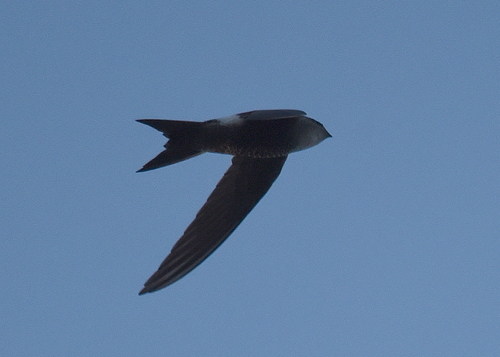 Pacific Swift
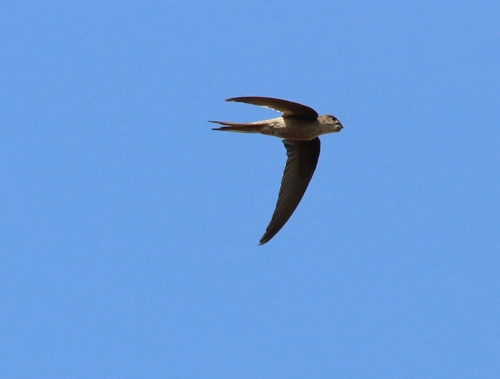 Asian Palm Swift
In breve
Il segno distintivo più affidabile tra il Pacific Swift e l'Asian Palm Swift è la dimensione: il Pacific Swift è molto più grande e massiccio, con una larga banda bianca sul sottocoda e una forcella della coda più profonda, mentre l'Asian Palm Swift è minuscolo, snodato e di un marrone chiaro, con una lunga coda sottile e profondamente biforcuta, di solito tenuta chiusa. I giovani Pacific Swifts mostrano frange di piume chiare, specialmente sulle ali, ma gli immaturi Asian Palm Swift si distinguono principalmente per le code più corte. In volo, il Pacific Swift appare potente e con ali larghe, mentre l'Asian Palm Swift è delicato, con ali a forma di mezzaluna e quasi simile a un pipistrello. Entrambe le specie hanno silhouette simili a quelle dei rondoni, ma le loro proporzioni e il loro stile di volo sono sorprendentemente diversi.
Consigli di identificazione
- Size is the fastest separator: Il Pacific Swift è molto più grande e massiccio dell'Asian Palm Swift. Se vedi un rondone che sembra quasi grande come una rondine o un martin, non è un Asian Palm Swift.
- White rump band: Il Pacific Swift ha una larga banda bianca contrastante sul sottocoda visibile in tutte le livree (più stretta nelle sottospecie meridionali), mentre l'Asian Palm Swift non ha alcun bianco sul sottocoda: il suo dorso è uniformemente marrone chiaro.
- Overall color: Il Pacific Swift è nerastro sopra e sotto, con una testa più grigia e frange di piume chiare sul ventre; l'Asian Palm Swift è complessivamente marrone chiaro, privo di forti contrasti o effetti squamosi.
- Tail shape and use: Entrambe le specie hanno code profondamente biforcute, ma la forcella del Pacific Swift è ovvia in volo, mentre l'Asian Palm Swift di solito tiene la coda chiusa, facendola apparire appuntita o solo leggermente incisa, tranne quando è aperta.
- Wing shape: Il Pacific Swift ha ali lunghe a forma di falce che sembrano larghe e potenti; le ali dell'Asian Palm Swift sono lunghe e ripiegate all'indietro, dando un aspetto a forma di mezzaluna o boomerang, molto più strette e delicate rispetto al Pacific Swift.
- Flight style: Il Pacific Swift vola con forti battiti d'ali diretti e planate, spesso in alto nel cielo; l'Asian Palm Swift è svolazzante, rapido e simile a un pipistrello, spesso basso sopra campi o palme.
- Juvenile marks: I giovani Pacific Swifts mostrano frange chiare sulle piume delle ali e un ventre squamoso; i giovani Asian Palm Swift si distinguono principalmente per le loro code più corte, non per il modello delle ali o del corpo.
- Head and throat: Il Pacific Swift ha una testa leggermente sporgente e, in alcune sottospecie, una macchia bianca più grande sulla gola. La testa dell'Asian Palm Swift è meno prominente e priva di qualsiasi macchia sulla gola.
- Context and habitat: Se l'uccello vola basso sopra le palme o i campi coltivati, specialmente nel sud o nel sud-est asiatico, è più probabile che sia un Asian Palm Swift. Il Pacific Swift è più spesso visto in cieli aperti, a volte lontano dalla vegetazione.
- Vocalization: Un grido persistente e acuto da un piccolo rondone che vola veloce è tipico dell'Asian Palm Swift. Il Pacific Swift è generalmente più silenzioso o chiama meno frequentemente a distanza ravvicinata.
- Perched behavior: Entrambe le specie raramente si posano, tranne per aggrapparsi verticalmente, ma l'Asian Palm Swift può essere visto aggrappato alla parte inferiore delle foglie di palma vicino ai nidi.
- Flock composition: Il Pacific Swift può essere visto in stormi misti di rondoni durante la migrazione, ma la sua dimensione e il sottocoda bianco si fanno notare. L'Asian Palm Swift forma spesso gruppi sciolti e volanti a bassa quota vicino alle palme.
- Sex and age: Entrambe le specie sono sessualmente monomorfiche nella livrea. Solo il giovane Pacific Swift mostra evidenti frange di piume chiare; i giovani Asian Palm Swift sono principalmente a coda più corta.
- Potential confusion: Un Rondone comune leucistico con un sottocoda bianco potrebbe essere scambiato per un Pacific Swift, ma la struttura e il colore dell'Asian Palm Swift non si avvicinano mai a quelli del Pacific Swift.
- When in doubt: Concentrati su dimensione, colore del sottocoda e stile di volo. Se l'uccello è piccolo, chiaro e con ali a forma di mezzaluna, è un Asian Palm Swift; se è grande, nero, con un sottocoda bianco e ali larghe, è un Pacific Swift.
Taglia
Il Pacific Swift è il più grande dei rondoni Apus, misurando 17–18 cm di lunghezza con un'apertura alare di 43–54 cm e una massa corporea di circa 43–45 g. Al contrario, l'Asian Palm Swift è molto più piccolo, con una lunghezza di circa 13 cm e solo 9.2 g di massa. Questa differenza di dimensioni è drammatica sul campo: il Pacific Swift appare robusto e pesante, mentre l'Asian Palm Swift è minuscolo, snodato e quasi delle dimensioni di una rondine. Anche a distanza, la massa e l'apertura alare del Pacific Swift si fanno notare rispetto all'elegante e veloce Asian Palm Swift.
Piumaggio
I giovani Pacific Swifts sono meglio identificabili per le frange chiare sulle piume delle ali, che conferiscono un aspetto squamoso alle parti inferiori e un bordo dell'ala leggermente più chiaro; questo è più visibile prima della loro prima muta completa. I giovani Asian Palm Swift si differenziano dagli adulti principalmente per avere code più corte, non per il modello delle ali o il bordo delle piume. Gli adulti Pacific Swifts sono neri lucidi sopra con una larga banda bianca sul sottocoda (più stretta in alcune sottospecie meridionali), una testa più grigia e parti inferiori nere con frange di piume chiare che creano un effetto squamoso sotto. La loro coda è profondamente biforcuta e le ali sono lunghe e a forma di falce. Gli adulti Asian Palm Swift sono complessivamente marrone chiaro, senza sottocoda bianco, e hanno ali lunghe e ripiegate all'indietro che sembrano a forma di mezzaluna in volo. Anche la loro coda è profondamente biforcuta ma di solito è tenuta chiusa, facendola apparire appuntita piuttosto che ovviamente biforcuta. Entrambe le specie hanno occhi scuri simili e zampe molto corte, ma solo il Pacific Swift mostra un sottocoda bianco contrastante e parti inferiori squamose.
Comportamento
Il Pacific Swift è un potente migratore a lungo raggio, spesso visto in alto nel cielo, volando con forti battiti d'ali diretti e planate. Si nutre raramente a bassa quota e tende a muoversi in stormi veloci e determinati. L'Asian Palm Swift, d'altra parte, è un residente o migratore a breve distanza, fortemente associato a palme e campagna aperta. Trascorre la maggior parte del suo tempo volando basso sopra i campi o vicino alle palme, con un volo rapido e svolazzante, simile a un pipistrello. Gli Asian Palm Swift si nutrono spesso vicino al suolo e sono molto più propensi a essere visti vicino alla vegetazione o agli edifici. Entrambe le specie sono quasi sempre in volo, raramente si posano tranne per aggrapparsi verticalmente alle superfici.
Habitat
Il Pacific Swift nidifica nell'Asia orientale e migra nel sud-est asiatico e in Australia, passando attraverso una vasta gamma di habitat ma di solito visto in cieli aperti, spesso lontano da alberi o edifici. È un migratore di passaggio in alcune parti del sud-est asiatico. L'Asian Palm Swift è un comune nidificante residente nell'Asia tropicale dall'India alle Filippine, quasi sempre trovato in campagna aperta, coltivazioni o vicino a palme da olio. È raramente visto lontano dalle palme o dagli habitat di pianura aperta, e la sua forte associazione con le palme è un buon indizio contestuale.
Voce
L'Asian Palm Swift emette un grido forte e acuto, spesso udito mentre vola basso sopra campi o palme. Il richiamo del Pacific Swift non è descritto nelle note, ma è generalmente meno acuto e meno probabile da sentire a distanza ravvicinata, poiché la specie tende a volare più in alto ed è meno vocale vicino al suolo. In uno stormo misto di rondoni, un grido persistente e penetrante è più probabile che sia dell'Asian Palm Swift.