

Military Macaw vs Great Green Macaw
Ara militaris contro Ara ambiguus
Fai un quiz con Military Macaw e Great Green Macaw
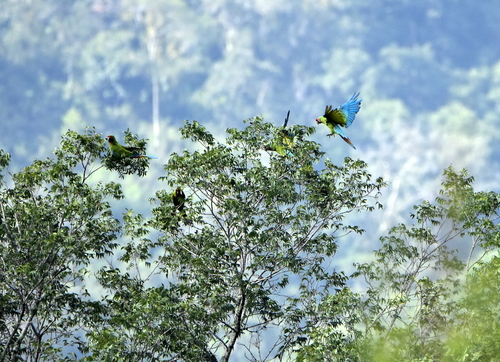 Military Macaw
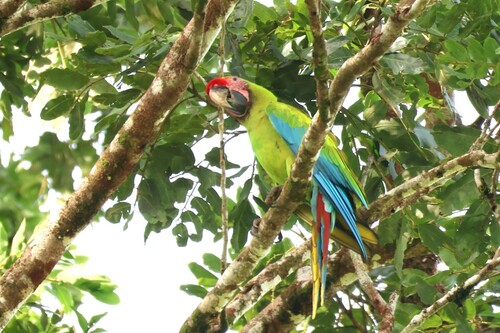 Great Green Macaw
In breve
Il segno di campo più affidabile per separare il Military Macaw dal Great Green Macaw è la dimensione: il Great Green è decisamente più grande e robusto, con un'apertura alare più lunga e una corporatura più pesante. Sul campo, entrambe le specie sono per lo più verdi con fronti rosse e facce bianche scoperte, ma il Military Macaw è più piccolo, di un verde più scuro nel complesso, e ha un becco completamente nero, mentre il Great Green Macaw è di un verde più chiaro, più grande e ha una base del becco più chiara. Entrambi possono sembrare simili a distanza, ma un'attenta attenzione alla dimensione, al colore del becco e alla tonalità generale di verde di solito aiuterà a identificare. L'habitat può anche aiutare: il Military Macaw preferisce foreste decidue più secche, mentre il Great Green Macaw è un uccello delle foreste umide di pianura.
Consigli di identificazione
- La dimensione è il miglior segno di campo: Il Great Green Macaw è significativamente più grande e robusto del Military Macaw. Se visti insieme o con un riferimento di dimensione noto, la differenza è ovvia. Questo vale per tutte le età e i sessi.
- Colore del becco: Il Military Macaw ha un becco completamente nero o grigio ardesia, mentre il Great Green Macaw di solito ha una base del becco superiore più chiara, di colore corno. Questo è visibile a distanza ravvicinata o in buona luce.
- Tonalità generale di verde: Il Military Macaw è di un verde più profondo e scuro; il Great Green Macaw è di un verde più chiaro e brillante. Questo può essere sottile e influenzato dalla luce, ma è utile in un confronto diretto.
- Macchia rossa sulla fronte: Entrambi hanno una fronte rossa brillante, quindi questo non è diagnostico.
- Pelle facciale: Entrambi hanno facce bianche scoperte con striature nere, quindi questo non è un separatore affidabile.
- Ali e piume della coda: Entrambe le specie hanno blu e giallo nelle ali e nella coda, quindi questo non è un forte separatore sul campo.
- Habitat: Il Military Macaw preferisce foreste decidue più secche e aperte; il Great Green Macaw si trova nella foresta pluviale umida di pianura. Usa l'habitat come indizio di supporto, non come segno primario.
- Gamma geografica: Il Military Macaw si estende dal Messico al nord dell'Argentina/Bolivia; il Great Green Macaw è più ristretto all'America Centrale e al nord dell'America del Sud (Nicaragua all'Ecuador). L'overlap è limitato ma possibile in Colombia e aree adiacenti.
- Comportamento: Entrambe le specie sono sociali, rumorose e spesso viste in coppie o piccoli gruppi. Il Great Green Macaw può apparire più pesante e più ponderoso in volo.
- Voce: Entrambi sono forti e rauchi; esistono differenze ma non sono dettagliate nelle note, quindi non fare affidamento sulla voce a meno che tu non abbia esperienza precedente.
- Colore dell'iride: Entrambi hanno iridi gialle; non è un separatore.
- Lunghezza della coda: Il Great Green Macaw può apparire con una coda più lunga a causa della sua dimensione maggiore, ma il colore e la forma della coda non sono separatori affidabili.
- In cattività: Entrambi sono tenuti in zoo e voliere, quindi il contesto è importante per l'identificazione in ambienti non selvatici.
- Piumaggio giovanile/immaturo: Non sono descritte differenze specifiche di età nei modelli di ali o volo nelle note, quindi non fare affidamento sul piumaggio giovanile per la separazione.
- Variazione del piumaggio: Le sottospecie di Military Macaw variano leggermente in dimensione e colore, ma tutte sono più piccole e più scure del Great Green Macaw.
Taglia
Il Great Green Macaw è il più grande dei due, con una lunghezza e un'apertura alare superiori a quelle del Military Macaw. Il Military Macaw misura tipicamente 70–85 cm (28–33 in) di lunghezza con un'apertura alare di 99–110 cm (39–43 in) [wikipedia]. Il Great Green Macaw è visibilmente più grande e robusto in un confronto diretto, anche se i numeri esatti non sono forniti nelle note. In stormi misti o fianco a fianco, il Great Green apparirà con una coda più lunga, un petto più profondo e più pesante nel complesso.
Piumaggio
Non ci sono modelli di ali specifici per età giovanile o immatura descritti per nessuna delle due specie nelle note, quindi ci si concentra sul piumaggio adulto e generale. Entrambe le specie sono predominantemente verdi, ma il Military Macaw è di un verde più profondo e scuro, mentre il Great Green Macaw è di un verde più chiaro e brillante. Entrambi hanno una macchia rossa brillante sulla fronte, ma la faccia del Military Macaw è scoperta, bianca con striature nere, e il becco è completamente nero-ardesia. Anche il Great Green Macaw ha una faccia bianca scoperta, ma con una base del becco superiore più chiara (spesso di colore corno). Le piume di volo e della coda nel Military Macaw sono di un blu chiaro e giallo; il Great Green Macaw è simile ma può apparire ancora più colorato a causa della sua dimensione e del corpo verde più chiaro. Entrambe le specie hanno iridi gialle. Sottile differenze nella tonalità e nel colore del becco sono più utili quando viste bene.
Comportamento
Entrambe le specie sono forti volatori e possono essere viste in coppie o piccoli stormi. Il Great Green Macaw può apparire più pesante e più ponderoso in volo a causa della sua dimensione. Entrambe le specie sono rumorose e appariscenti quando presenti. Il comportamento alimentare non è un segno di campo affidabile per la separazione, poiché entrambi rompono grandi noci e cercano cibo sugli alberi.
Habitat
Il Military Macaw si trova tipicamente in foreste decidue più secche, spesso in boschi più aperti o frammentati, specialmente in Messico e nel nord dell'America del Sud. Il Great Green Macaw è uno specialista delle foreste umide di pianura, specialmente quelle con grandi alberi emergenti come Dipteryx oleifera (almendro), e si trova dal Nicaragua attraverso il nord dell'America del Sud. Se ti trovi in una foresta umida e densa in America Centrale, è più probabile che tu veda il Great Green Macaw; in boschi più secchi e aperti, specialmente più a nord, è più probabile che tu veda il Military Macaw.
Voce
Le note menzionano che le due specie differiscono nei loro richiami e comunicazione, ma non forniscono dettagli. Entrambi sono macaws forti e rauchi, e la voce da sola non è un segno di campo affidabile a meno che tu non sia molto familiare con entrambe le specie.
Military Macaw · Great Green Macaw · I miei uccelli difficili