

Mexican Duck vs American Black Duck
Anas diazi contro Anas rubripes
Fai un quiz con Mexican Duck e American Black Duck
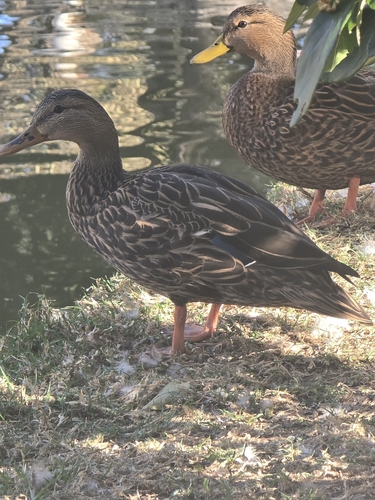 Mexican Duck
 American Black Duck
In breve
Il segno di campo più affidabile per separare il Mexican Duck dall'American Black Duck è il colore e il bordo dello speculum: il Mexican Duck mostra uno speculum blu bordato di bianco evidente, mentre lo speculum dell'American Black Duck è di un blu-viola iridescente con margini per lo più neri e raramente un bordo bianco. In volo, l'American Black Duck mostra anche una sorprendente fodera bianca sotto le ali che contrasta con un corpo scuro, una caratteristica non descritta per il Mexican Duck. Entrambe le specie sono simili nella struttura e nell'aspetto complessivo marrone, ma l'American Black Duck è generalmente più scura e più robusta, con un maggiore contrasto tra testa e corpo. Il colore del becco può aiutare: i maschi di Mexican Duck hanno un becco giallo più brillante, mentre le femmine di American Black Duck hanno un becco verde opaco con segni scuri. Le piume giovanili e femminili sono particolarmente difficili, ma prestare attenzione allo speculum e al motivo sotto le ali è fondamentale.
Consigli di identificazione
- Speculum color and edging: Cerca lo speculum (macchia colorata sulla ala). Il Mexican Duck ha uno speculum blu con bordi bianchi audaci davanti e dietro, visibile sia a riposo che in volo. Lo speculum dell'American Black Duck è blu-viola, bordato per lo più di nero, e raramente mostra un bordo bianco. Questo è il segno più affidabile in tutte le piume.
- Underwing contrast in flight: L'American Black Duck mostra una fodera bianca brillante sotto le ali che spicca contro un corpo scuro e parti superiori. Questo contrasto non è descritto per il Mexican Duck, quindi una fodera bianca sotto le ali è un forte indicatore di Black Duck.
- Overall darkness: L'American Black Duck è generalmente più scura e uniforme, specialmente sul corpo. Il Mexican Duck è marrone ma meno scuro e meno contrastante.
- Head and throat pattern: L'American Black Duck ha una testa marrone leggermente più chiara del corpo, con guance e gola striate e una striscia scura sulla corona. Il Mexican Duck manca di questo forte contrasto e striature.
- Bill color (by sex): I maschi di Mexican Duck hanno un becco giallo brillante; le femmine sono di un giallo più opaco. I maschi di American Black Duck hanno un becco giallo, ma le femmine hanno un becco verde opaco con segni scuri sulla mandibola superiore. Usa questo segno solo se puoi determinare il sesso dell'uccello in modo affidabile.
- Juvenile plumage: I giovani American Black Duck sono più marroni degli adulti, con bordi chiari spezzati sulle piume delle parti inferiori (aspetto striato). I giovani Mexican Duck non sono descritti in modo distintivo, ma probabilmente assomigliano alle femmine adulte e possono essere confusi con i Germani reali.
- Feet color in juveniles: I giovani maschi di American Black Duck hanno piedi arancioni-bruni, mentre le giovani femmine hanno piedi più marroni. Questo segno è sottile e non sempre visibile.
- Size and bulk: L'American Black Duck è più pesante e leggermente più lunga, ma la differenza è sottile e non affidabile a meno che gli uccelli non siano affiancati.
- Habitat and range: Se ti trovi nel Sud-Ovest (Arizona, Nuovo Messico, Messico settentrionale), ci si aspetta di vedere il Mexican Duck. Nel Nord-Est, Grandi Laghi o costa atlantica, l'American Black Duck è la norma. I record fuori dalla gamma sono rari.
- Voice: Entrambe le specie hanno richiami simili a quelli del Germano reale; la femmina di Black Duck emette una serie di quack forti che diminuiscono di tono, ma questo non è un segno di separazione affidabile.
- Hybrid confusion: Entrambe le specie possono ibridarsi con il Germano reale, e gli ibridi possono mostrare caratteristiche intermedie, specialmente nel colore dello speculum e del becco. Fai attenzione con gli uccelli dall'aspetto strano.
- Sexual dimorphism: Entrambe le specie mostrano un dimorfismo sessuale limitato; il colore del becco è la principale differenza, ma la piuma del corpo complessiva è simile tra i sessi in entrambe le specie.
- Comparison to Germano reale: Entrambe le specie possono essere confuse con femmine o Germani reali in eclipse. Concentrati sul colore e sul bordo dello speculum, e sull'oscurità complessiva, per evitare questo tranello.
- Perched vs. in flight: I segni dello speculum e sotto le ali sono visibili sia negli uccelli posati che in volo, ma il contrasto sotto le ali è meglio visibile in volo per l'American Black Duck.
- Lighting conditions: In condizioni di scarsa illuminazione, il colore dello speculum può essere difficile da giudicare. Cerca la presenza o l'assenza di bordi bianchi come caratteristica chiave.
Taglia
American Black Duck is the heavier and slightly larger of the two, averaging about 1180 g (with a range up to 1640 g) and measuring 54–59 cm in length. Mexican Duck is somewhat smaller, at 45–55 cm and 849–1243 g. In the field, this size difference is subtle and easily missed unless the birds are side by side, but American Black Duck often appears bulkier and longer-winged.
Piumaggio
-
Juvenile/immature plumage: Juvenile American Black Ducks resemble adult females but have broken, narrow, pale edges on the underparts, giving a streaked (not scalloped) look, and are overall browner than adults. Juvenile males have brownish-orange feet, and juvenile females have brownish feet and a dusky greyish-green bill. No distinctive juvenile upperwing pattern is described for Mexican Duck, but both species’ young can be confusingly similar to female Mallards.
-
Speculum: Mexican Duck shows a blue speculum with obvious white edging (both front and rear) visible at rest and in flight. American Black Duck’s speculum is iridescent violet-blue, bordered mostly by black, rarely with a white trailing edge, and lacks the prominent white borders of Mexican Duck.
-
Underwing: In flight, American Black Duck shows a white underwing lining contrasting with a blackish underbody and upperparts. This strong contrast is not described for Mexican Duck.
-
Body and head: American Black Duck is overall darker, with a brown head slightly paler than the body, and streaked cheeks and throat. Mexican Duck is mainly brown and less contrasting, with no mention of the darker body vs paler head contrast.
-
Bill color: Male Mexican Ducks have a brighter yellow bill, while female American Black Ducks have a dull green bill with dark marks on the upper mandible. Female Mexican Ducks’ bills are duller yellow.
Comportamento
Entrambe le specie sono anatre di superficie con comportamenti di alimentazione e nuoto simili. Non sono descritte differenze comportamentali distintive nelle fonti per la separazione sul campo.
Habitat
Il Mexican Duck si trova in Messico e nel sud-ovest degli Stati Uniti, mentre l'American Black Duck è nativa dell'America del Nord orientale, riproducendosi da Saskatchewan all'Atlantico e svernando principalmente nell'est-centro degli Stati Uniti, specialmente nelle aree costiere. L'overlap è improbabile tranne che in rare vagabondaggi o in cattività. Se ti trovi nel Sud-Ovest, ci si aspetta di vedere il Mexican Duck; nel Nord-Est o nei Grandi Laghi, l'American Black Duck è la norma.
Voce
Entrambe le specie hanno richiami simili a quelli del Germano reale, con la femmina di American Black Duck che produce una forte sequenza di quack che diminuisce di tono. Non sono descritte differenze vocali distintive per il Mexican Duck, quindi la voce non è un segno affidabile per la separazione.
Mexican Duck · American Black Duck · I miei uccelli difficili