

Albastrello vs Totano moro
Tringa stagnatilis contro Tringa erythropus
Fai un quiz con Albastrello e Totano moro
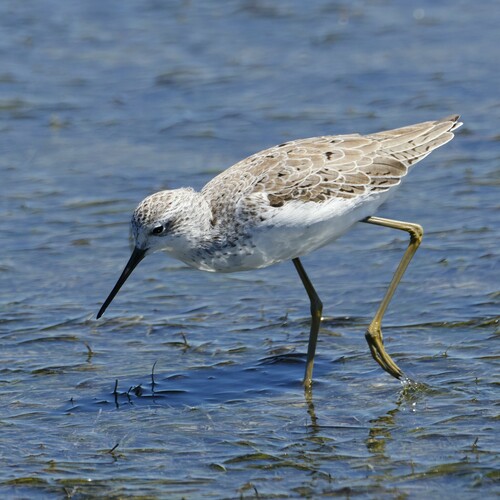 Albastrello
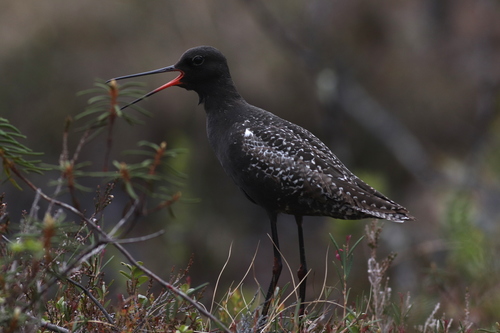 Totano moro
In breve
Il segno distintivo più affidabile tra Albastrello e Totano moro è il colore delle gambe e la struttura generale: l'Albastrello mostra gambe molto lunghe e giallastre e un becco fine e simile a un ago, mentre il Totano moro ha gambe rosse e un becco più pesante e leggermente ricurvo. In volo, entrambi mostrano un cuneo ovale bianco sulla schiena, ma il Totano moro è molto più grande e massiccio. Il Totano moro in riproduzione è sorprendentemente nero, mentre l'Albastrello è sempre chiaro e delicato. I giovani e gli uccelli invernali sono più difficili da distinguere, ma il Totano moro rimane più grande, con un becco più pesante e gambe rosse, mentre l'Albastrello è snello, con gambe giallastre e un aspetto più delicato.
Consigli di identificazione
- Colore delle gambe: L'Albastrello mostra sempre gambe molto lunghe e giallastre; il Totano moro ha gambe rosse (a volte scurendosi in abito nuziale). Questo è visibile sia quando è appollaiato che in volo.
- Struttura del becco: L'Albastrello ha un becco fine, dritto e simile a un ago; il becco del Totano moro è più pesante, più lungo e leggermente ricurvo, con una base rossastra.
- Dimensioni e corporatura: Il Totano moro è molto più grande e pesante, con un corpo più massiccio e un collo più lungo. L'Albastrello è snello, elegante e delicato.
- Abito nuziale: Il Totano moro è quasi completamente nero con macchie bianche e gambe scure—unico e inconfondibile. L'Albastrello rimane grigio-marrone chiaro con una leggera maculatura.
- Abito non nuziale/giovanile: L'Albastrello è sempre chiaro e semplice sopra, con macchie diffuse sul petto; i giovani Totano moro sono più variopinti, con fine maculatura bianca sopra e parti inferiori chiare a strisce.
- Schema di volo: Entrambi mostrano un cuneo ovale bianco sulla schiena, ma quello del Totano moro è più grande e rotondo a causa delle sue dimensioni. Il volo dell'Albastrello è più leggero e più galleggiante.
- Proiezione delle gambe in volo: Le gambe dell'Albastrello sono molto lunghe e si proiettano bene oltre la coda; le gambe del Totano moro sono proporzionalmente più corte, sebbene siano comunque evidenti.
- Contesto dell'habitat: Nelle zone umide aperte, erbose o nelle paludi della taiga, è più probabile trovare l'Albastrello. Il Totano moro si trova più spesso in una varietà di tipi di habitat umidi, comprese le acque costiere e quelle interne più grandi.
- Comportamento: L'Albastrello si nutre con rapidi e leggeri movimenti e una postura più eretta; il Totano moro si muove in modo più costante e può guadare più in profondità.
- Voce: Se senti un crepitio 'teu-it' o 'kyip-kyip-kyip', è il Totano moro. I richiami dell'Albastrello non sono descritti qui.
- Colore del becco: Il becco del Totano moro ha una base rossastra, specialmente al di fuori della riproduzione; il becco dell'Albastrello è completamente scuro e più fine.
- Colore delle gambe in riproduzione: Le gambe del Totano moro possono scurirsi a grigio-nero in pieno abito nuziale, ma sono comunque più spesse e meno gialle rispetto all'Albastrello.
- Impressione generale: L'Albastrello è sempre snello, chiaro ed elegante; il Totano moro è più grande, più pesante e più robusto, particolarmente evidente quando entrambi sono visti insieme.
- Trappole: In scarsa illuminazione, il colore delle gambe può essere difficile da giudicare—usa dimensioni, forma del becco e struttura come supporto. Il giovane Totano moro può apparire più chiaro, ma rimane più grande e più variopinto rispetto all'Albastrello.
- Sesso/età: Non c'è un forte dimorfismo sessuale in nessuna delle due specie; le differenze di età sono principalmente nel pattern del piumaggio come sopra.
Taglia
Il Totano moro è sostanzialmente più grande e pesante rispetto all'Albastrello. Il Totano moro adulto pesa in media 151,5 g, con una lunghezza di 29–31 cm e un'apertura alare di 61–67 cm. L'Albastrello è molto più leggero a 71,55 g, lungo 22–26 cm e con un'apertura alare di 55–59 cm. Sul campo, il Totano moro appare più massiccio, con un corpo più lungo e un becco più lungo, mentre l'Albastrello è notevolmente snello ed elegante.
Piumaggio
L'Albastrello giovanile e non in riproduzione è sempre grigio-marrone chiaro sopra e biancastro sotto, con una maculatura sottile e diffusa sul petto e sul collo. Il giovane Totano moro è grigio-marrone sopra, finemente maculato di bianco, e ha parti inferiori chiare e finemente striate—dando un aspetto più variopinto rispetto all'Albastrello. In volo, entrambi mostrano un cuneo ovale bianco sulla schiena, ma quello del Totano moro è più grande e rotondo a causa delle sue dimensioni. In abito nuziale, l'Albastrello rimane grigio-marrone chiaro con alcune maculature, mentre il Totano moro diventa quasi completamente nero con macchie bianche e gambe scure—una differenza drammatica. In inverno, entrambe le specie diventano più chiare, ma il Totano moro è ancora più grande, più chiaro nel complesso e mantiene le sue gambe e il suo becco rossi, mentre le gambe dell'Albastrello rimangono giallastre e il suo becco è più fine.
Comportamento
L'Albastrello è più delicato nei movimenti, spesso si nutre con rapidi e leggeri movimenti e una postura più eretta a causa delle sue lunghe gambe. Il Totano moro si muove in modo più deliberato, con un passo più pesante, e può guadare più in profondità. In volo, l'Albastrello appare snello e galleggiante, mentre il Totano moro è potente e ha ali forti, con un profilo più lungo e robusto.
Habitat
Entrambe le specie utilizzano zone umide poco profonde, ma l'Albastrello è più probabile trovarlo in steppe erbose aperte e paludi della taiga, specialmente durante la riproduzione. Il Totano moro si riproduce in taiga paludosa ed è più probabile vederlo in una gamma più ampia di habitat umidi durante la migrazione e l'inverno, comprese laghi più grandi, estuari e lagune costiere. L'abbondanza locale può variare, ma il Totano moro è generalmente meno probabile in habitat di steppe molto aperti e erbosi.
Voce
Il Totano moro emette un fischio crepitante distintivo 'teu-it' e un allerta acuto 'kyip-kyip-kyip', che ricorda in parte un gabbiano. Le vocalizzazioni dell'Albastrello non sono descritte nelle note fornite, quindi la voce è solo affidabilmente diagnostica per il Totano moro se udita.