

Archibebe Fino vs Archibebe Oscuro
Tringa stagnatilis frente a Tringa erythropus
Juega un quiz con Archibebe Fino y Archibebe Oscuro
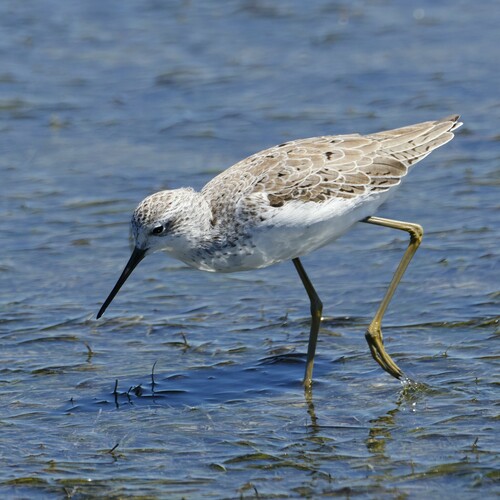 Archibebe Fino
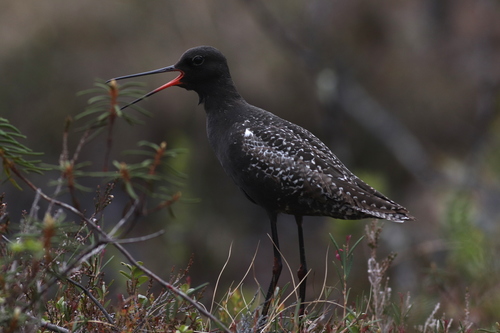 Archibebe Oscuro
En breve
La marca de campo más confiable entre el Archibebe Fino y el Archibebe Oscuro es el color de las patas y la estructura general: el Archibebe Fino muestra patas muy largas y amarillentas y un pico fino y en forma de aguja, mientras que el Archibebe Oscuro tiene patas rojas y un pico más pesado y ligeramente curvado hacia arriba. En vuelo, ambos muestran una cuña o un óvalo blanco en la parte posterior, pero el Archibebe Oscuro es mucho más grande y robusto. El Archibebe Oscuro en cría es strikingmente negro, mientras que el Archibebe Fino siempre es pálido y delicado. Los juveniles y las aves de invierno son más complicados, pero el Archibebe Oscuro sigue siendo más grande, con un pico más pesado y patas rojas, mientras que el Archibebe Fino es esbelto, con patas amarillentas y un aspecto más delicado.
Consejos de identificación
- Color de patas: El Archibebe Fino siempre muestra patas muy largas y amarillentas; el Archibebe Oscuro tiene patas rojas (a veces oscureciendo en plumaje de cría). Esto es visible tanto cuando está posado como en vuelo.
- Estructura del pico: El Archibebe Fino tiene un pico fino, recto y en forma de aguja; el pico del Archibebe Oscuro es más pesado, más largo y ligeramente curvado hacia arriba, con una base rojiza.
- Tamaño y constitución: El Archibebe Oscuro es mucho más grande y pesado, con un cuerpo más robusto y un cuello más largo. El Archibebe Fino es esbelto, elegante y delicado.
- Plumaje de cría: El Archibebe Oscuro es casi completamente negro con manchas blancas y patas oscuras—único e inconfundible. El Archibebe Fino permanece de un gris pálido-marrón con un moteado sutil.
- Plumaje no reproductivo/juvenil: El Archibebe Fino siempre es pálido y sencillo por encima, con un moteado difuso en el pecho; los juveniles del Archibebe Oscuro son más patrones, con un moteado blanco fino por encima y partes inferiores pálidas con barras.
- Patrón de vuelo: Ambos muestran una cuña o un óvalo blanco en la parte posterior, pero el del Archibebe Oscuro es más grande y redondeado debido a su tamaño. El vuelo del Archibebe Fino es más ligero y más flotante.
- Proyección de patas en vuelo: Las patas del Archibebe Fino son muy largas y se proyectan bien más allá de la cola; las patas del Archibebe Oscuro son proporcionalmente más cortas, aunque aún son obvias.
- Contexto de hábitat: En humedales de estepa o taiga abiertos y herbosos, es más probable encontrar al Archibebe Fino. El Archibebe Oscuro se encuentra más a menudo en una variedad de tipos de humedales, incluidos aguas costeras y grandes aguas interiores.
- Comportamiento: El Archibebe Fino se alimenta con un picoteo rápido y ligero y una postura más erguida; el Archibebe Oscuro se mueve de manera más constante y puede vadear más profundo.
- Voz: Si escuchas un chirrido 'teu-it' o 'kyip-kyip-kyip', es el Archibebe Oscuro. Los llamados del Archibebe Fino no se describen aquí.
- Color del pico: El pico del Archibebe Oscuro tiene una base rojiza, especialmente fuera de la cría; el pico del Archibebe Fino es completamente oscuro y más fino.
- Color de patas en cría: Las patas del Archibebe Oscuro pueden oscurecerse a gris-negro en plumaje de cría completo, pero siguen siendo más gruesas y menos amarillas que las del Archibebe Fino.
- Impresión general: El Archibebe Fino es siempre esbelto, pálido y elegante; el Archibebe Oscuro es más grande, más pesado y más robusto, especialmente obvio cuando ambos se ven juntos.
- Trampas: En luz pobre, el color de las patas puede ser difícil de juzgar—usa el tamaño, la forma del pico y la estructura como respaldo. El juvenil del Archibebe Oscuro puede parecer más pálido, pero sigue siendo más grande y más patrón que el Archibebe Fino.
- Sexo/edad: No hay un fuerte dimorfismo sexual en ninguna de las especies; las diferencias de edad son principalmente en el patrón del plumaje como se mencionó anteriormente.
Tamaño
El Archibebe Oscuro es sustancialmente más grande y pesado que el Archibebe Fino. El Archibebe Oscuro adulto promedia 151.5 g, con una longitud de 29–31 cm y una envergadura de 61–67 cm. El Archibebe Fino es mucho más ligero con 71.55 g, 22–26 cm de largo y una envergadura de 55–59 cm. En el campo, el Archibebe Oscuro parece más robusto, con un cuerpo más largo y un pico más largo, mientras que el Archibebe Fino es notablemente esbelto y elegante.
Plumaje
El Archibebe Fino juvenil y no reproductivo es siempre de un gris pálido-marrón por encima y blanquecino por debajo, con un moteado sutil y difuso en el pecho y el cuello. El Archibebe Oscuro juvenil es de un gris-marrón por encima, finamente moteado de blanco, y tiene partes inferiores pálidas y finamente barradas—dando una apariencia más patrón que el Archibebe Fino. En vuelo, ambos muestran una cuña o un óvalo blanco en la parte posterior, pero el del Archibebe Oscuro es más grande y redondeado debido a su tamaño. En plumaje de cría, el Archibebe Fino permanece de un gris pálido-marrón con algo de moteado, mientras que el Archibebe Oscuro se vuelve casi completamente negro con manchas blancas y patas oscuras—una diferencia dramática. En invierno, ambas especies se vuelven más pálidas, pero el Archibebe Oscuro sigue siendo más grande, más pálido en general, y mantiene sus patas y pico rojos, mientras que las patas del Archibebe Fino permanecen amarillentas y su pico es más fino.
Comportamiento
El Archibebe Fino es más delicado en movimiento, a menudo alimentándose con un picoteo rápido y ligero y una postura más erguida debido a sus patas largas. El Archibebe Oscuro se mueve de manera más deliberada, con un andar más pesado, y puede vadear más profundo. En vuelo, el Archibebe Fino parece esbelto y flotante, mientras que el Archibebe Oscuro es poderoso y con alas fuertes, con una silueta más larga y robusta.
Hábitat
Ambas especies utilizan humedales poco profundos, pero el Archibebe Fino es más probable que se encuentre en estepas herbosas abiertas y humedales de taiga, especialmente durante la cría. El Archibebe Oscuro cría en taiga pantanosa y es más probable que se vea en una gama más amplia de hábitats de humedales durante la migración y el invierno, incluidos lagos más grandes, estuarios y lagunas costeras. La abundancia local puede variar, pero el Archibebe Oscuro es generalmente menos probable en hábitats de estepa muy abiertos y herbosos.
Voz
El Archibebe Oscuro emite un silbido chirriante distintivo 'teu-it' y una alarma aguda 'kyip-kyip-kyip', algo reminiscentes de un chorlito. Las vocalizaciones del Archibebe Fino no se describen en las notas proporcionadas, por lo que la voz solo es diagnóstica de manera confiable para el Archibebe Oscuro si se escucha.