

Albastrello vs Totano zampegialle minore
Tringa stagnatilis contro Tringa flavipes
Fai un quiz con Albastrello e Totano zampegialle minore
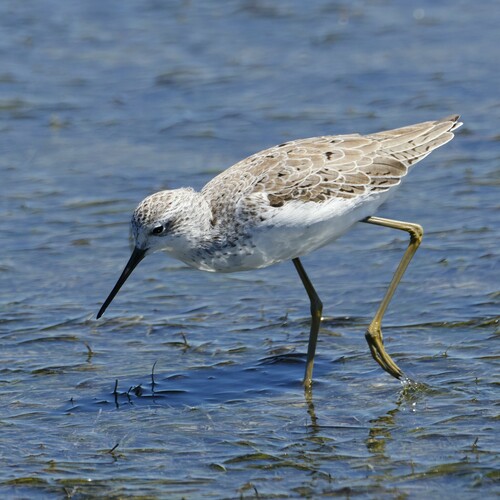 Albastrello
 Totano zampegialle minore
In breve
Il segno distintivo più affidabile per separare l'Albastrello dal Totano zampegialle minore è la struttura del becco: l'Albastrello ha un becco visibilmente più lungo, sottile e simile a un ago, mentre il Totano zampegialle minore mostra un becco dritto, snello, ma più corto, lungo circa quanto la sua testa. Entrambi hanno lunghe zampe giallastre, ma quelle dell'Albastrello sono ancora più lunghe e spesso appaiono più delicate. In volo, l'Albastrello mostra un cuneo bianco lungo la schiena, una caratteristica che può essere utile in qualsiasi età. Le differenze nel piumaggio sono sottili, specialmente negli uccelli non in riproduzione, ma l'Albastrello tende a sembrare più chiaro e più elegante nel complesso. La dimensione non è un forte separatore, poiché entrambi sono simili, ma il Totano zampegialle minore è leggermente più pesante in media.
Consigli di identificazione
- La struttura del becco è fondamentale: l'Albastrello ha un becco lungo, fine e simile a un ago che è visibilmente più lungo della testa; il Totano zampegialle minore ha un becco dritto, snello, ma più corto, lungo circa quanto la testa. Questo è affidabile in tutte le età e stagioni.
- Lunghezza e colore delle zampe: Entrambe le specie hanno zampe giallastre, ma quelle dell'Albastrello sono più lunghe e spesso più chiare o leggermente verdastre. Le zampe del Totano zampegialle minore sono giallo brillante e proporzionalmente più corte.
- Cuneo bianco lungo la schiena (in volo): l'Albastrello mostra un cuneo bianco lungo la schiena in volo a tutte le età; il Totano zampegialle minore manca di questa caratteristica. Cerca questo quando gli uccelli si alzano in volo o passano.
- Forma generale e impressione: l'Albastrello appare più snello, elegante e eretto, con una struttura più fine e zampe più lunghe. Il Totano zampegialle minore è leggermente più robusto e compatto.
- Marcature sul petto e sul collo (riproduzione): l'Albastrello ha piccole macchie marroni diffuse sul petto e sul collo; il Totano zampegialle minore mostra striature marroni irregolari e più audaci in queste aree.
- Parte superiore (riproduzione): l'Albastrello è di un marrone chiaro tenue sopra con macchie più scure; il Totano zampegialle minore è più maculato con grigio-marrone, nero e bianco.
- Piumaggio non riproduttivo: l'Albastrello diventa più chiaro e più uniforme sopra; il Totano zampegialle minore è più uniforme grigio-marrone ma mantiene marcature fini sui fianchi.
- Dimensione: Entrambi sono simili in lunghezza, ma il Totano zampegialle minore è leggermente più pesante e con ali più larghe. Questo è sottile e poco affidabile sul campo.
- Comportamento di foraggiamento: il Totano zampegialle minore è molto attivo, con un passo alto e collo disteso; l'Albastrello è più grazioso e deliberato.
- Postura: l'Albastrello spesso sta più eretto e appare con zampe più lunghe, specialmente quando è all'erta.
- Contesto dell'habitat: Se in Eurasia, ci si aspetta l'Albastrello; in Nord America, il Totano zampegialle minore è il default. Entrambi possono verificarsi come vagabondi, quindi controlla tutti i segni sul campo.
- Non sono state notate forti differenze specifiche per età nel pannello superiore dell'ala o nel bordo posteriore, quindi concentrati sulla struttura e sul modello di volo.
- La voce non è diagnostica con le informazioni fornite; non fare affidamento sui richiami per la separazione.
- In stormi misti: l'Albastrello può risaltare per la sua eleganza e zampe più lunghe tra i totani.
- Trappole: In luce fioca o a distanza, entrambi possono sembrare simili in dimensione e colore. Controlla sempre la lunghezza del becco e il modello di volo per conferma.
Taglia
Entrambe le specie sono simili in dimensione, ma il Totano zampegialle minore è marginalmente più pesante (massa corporea media: Albastrello ~71.5g, Totano zampegialle minore ~81g) e ha un'apertura alare leggermente più ampia (Totano zampegialle minore: 59–64 cm; Albastrello: 55–59 cm). La lunghezza si sovrappone (Albastrello: 22–26 cm; Totano zampegialle minore: 23–25 cm), quindi la dimensione da sola non è affidabile sul campo. L'Albastrello può apparire più snello e con un becco fine, mentre il Totano zampegialle minore è un po' più robusto e robusto nella struttura.
Piumaggio
Gli uccelli giovanili e non in riproduzione di entrambe le specie possono essere confusi, ma l'Albastrello in tutti i piumaggi mostra un distintivo cuneo bianco lungo la schiena in volo, che il Totano zampegialle minore manca. In piumaggio di riproduzione, l'Albastrello è marrone grigiastro sopra con piccole macchie marroni diffuse sul petto e sul collo, mentre il Totano zampegialle minore è più audacemente e irregolarmente striato sul petto e sul collo, con la parte superiore maculata di grigio-marrone, nero e bianco. L'Albastrello non in riproduzione è più chiaro e più uniforme sopra, mentre il Totano zampegialle minore diventa più uniforme grigio-marrone ma mantiene alcune marcature fini sui fianchi. Entrambi hanno zampe gialle, ma quelle dell'Albastrello sono più lunghe e possono apparire leggermente più verdi o più chiare. Non sono state notate forti differenze specifiche per età nel pannello superiore dell'ala o nel bordo posteriore, ma il cuneo bianco lungo la schiena è una caratteristica costante dell'Albastrello.
Comportamento
Entrambe le specie foraggiano attivamente in acque poco profonde, ma il Totano zampegialle minore è descritto come molto attivo, muovendosi rapidamente con un passo alto e collo disteso. L'Albastrello può apparire più grazioso e delicato nei suoi movimenti. Il Totano zampegialle minore è noto per essere aggressivo nella difesa del nido, ma questo non è un segno sul campo per la separazione. In stormi misti, l'Albastrello tende a risaltare per la sua postura più elegante e eretta e zampe più lunghe.
Habitat
L'Albastrello nidifica in steppe erbose aperte e zone umide di taiga dall'Europa orientale più estrema fino all'Estremo Oriente russo, mentre il Totano zampegialle minore nidifica nelle foreste boreali nordamericane e sverna fino a sud fino all'America del Sud. Nelle regioni in cui entrambe le specie potrebbero verificarsi come vagabondi, è possibile una sovrapposizione dell'habitat in zone umide poco profonde, ma l'Albastrello è più probabile che si trovi in zone umide aperte, erbose o simili a steppe, mentre il Totano zampegialle minore preferisce i bordi delle zone umide boschive o cespugliose. Tuttavia, durante la migrazione e l'inverno, entrambe possono essere trovate in habitat simili di acqua dolce o salmastra poco profonda.
Voce
Non è disponibile un confronto diretto dei richiami nelle note fornite. Si nota che il Totano zampegialle minore ha un richiamo più morbido rispetto al Greater Yellowlegs, ma questo non è direttamente utile per separarlo dall'Albastrello. La voce non è un separatore affidabile con le informazioni fornite.
Albastrello · Totano zampegialle minore · I miei uccelli difficili