

Magpie-lark vs Broad-billed Flycatcher
Grallina cyanoleuca contro Myiagra ruficollis
Fai un quiz con Magpie-lark e Broad-billed Flycatcher
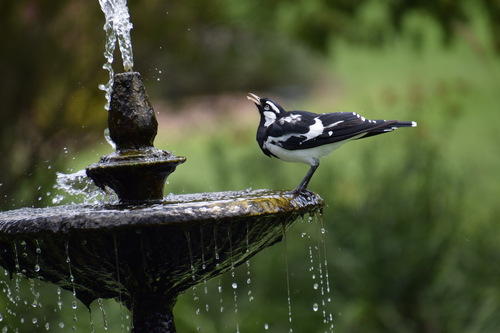 Magpie-lark
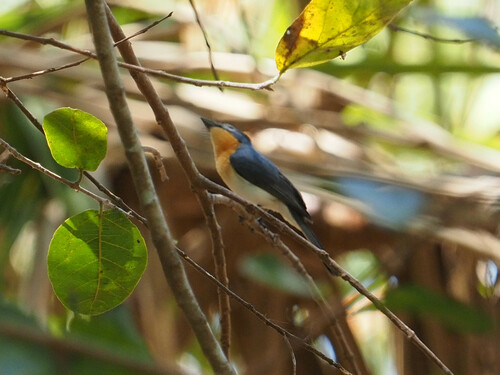 Broad-billed Flycatcher
In breve
Il segno distintivo più affidabile che distingue il Magpie-lark dal Broad-billed Flycatcher è la struttura generale e il piumaggio: il Magpie-lark è un uccello di medie dimensioni, audacemente bianco e nero, con una postura forte e eretta, mentre il Broad-billed Flycatcher è molto più piccolo, semplice e di colore più uniforme, con un becco visibilmente largo. I giovani Magpie-lark mostrano lo stesso contrasto sorprendente degli adulti, mentre i Broad-billed Flycatcher sono sempre molto più sobrii. In volo, i pannelli bianchi del Magpie-lark e il forte contrasto sono evidenti, a differenza del modello più tenue del flycatcher. La dimensione e l'aspetto sono anche notevolmente diversi, con il Magpie-lark che è quasi cinque volte più pesante e molto più robusto. L'habitat può aiutare: il Magpie-lark è spesso visto in aree aperte, mentre il Broad-billed Flycatcher si mantiene ai margini di foreste o mangrovie.
Consigli di identificazione
- Size is a major clue: Il Magpie-lark è quasi cinque volte più pesante e molto più lungo del Broad-billed Flycatcher. Se l'uccello appare piccolo, delicato e simile a un flycatcher, non è un Magpie-lark.
- Bold black-and-white plumage: Tutte le età e i sessi del Magpie-lark mostrano un forte contrasto bianco e nero, specialmente sul viso, sulla gola, sulle ali e sulle parti inferiori. Il Broad-billed Flycatcher è sempre molto più semplice, privo di qualsiasi modello netto bianco e nero.
- Face pattern by sex and age: Il Magpie-lark maschio adulto ha una gola nera e un sopracciglio bianco; la femmina adulta ha una gola bianca. I giovani hanno una gola bianca (come la femmina) e una striscia nera sugli occhi (come il maschio). Il Broad-billed Flycatcher non mostra mai questi modelli.
- White belly and throat: Il Magpie-lark mostra sempre una pancia bianca e, nella maggior parte delle età/sessi, una gola bianca. Il Broad-billed Flycatcher è più uniformemente colorato sotto, mai con una pancia o una gola bianche nette.
- Flight pattern: In volo, il Magpie-lark lampeggia bianco nelle ali e nella coda, visibile da lontano. Il Broad-billed Flycatcher non ha alcun modello di volo contrastante.
- Bill shape: Il Broad-billed Flycatcher ha un becco visibilmente largo e piatto tipico dei flycatcher monarchi, adatto a catturare insetti in volo. Il Magpie-lark ha un becco passeriforme più convenzionale e appuntito.
- Perching behavior: Il Magpie-lark spesso si posiziona eretto in spazi aperti, su recinzioni, fili o a terra. Il Broad-billed Flycatcher si posiziona nella chioma o ai margini della foresta, raramente in spazi aperti.
- Habitat context: Se visto in parchi aperti, prati o aree urbane, è probabile che sia un Magpie-lark. Se in profondità nelle mangrovie, nella foresta o in cespugli d'acqua densi, è più probabile che sia un Broad-billed Flycatcher.
- Territorial aggression: Il Magpie-lark può scacciare uccelli più grandi o anche persone; il Broad-billed Flycatcher non è aggressivo ed è più riservato.
- Vocalizations: Richiami forti, melodiosi e in duetto indicano il Magpie-lark. Richiami silenziosi o poco appariscenti (o silenzio) sono più tipici del Broad-billed Flycatcher.
- Jizz: Il Magpie-lark è eretto, robusto e cammina o corre a terra. Il Broad-billed Flycatcher è leggero, si muove rapidamente tra i posatoi e raramente cammina a terra.
- Upperwing pattern in juveniles: Il giovane Magpie-lark mostra lo stesso forte contrasto degli adulti; i giovani del Broad-billed Flycatcher sono semplici e privi di qualsiasi forte modello.
- Sex differences: Solo il Magpie-lark mostra un chiaro dimorfismo sessuale nel modello di viso/gola; il Broad-billed Flycatcher non lo fa.
- Confusion risk: Da lontano, un rapido sguardo a un piccolo uccello scuro in un albero potrebbe causare confusione, ma la dimensione, la struttura e la mancanza di bianco audace nel flycatcher dovrebbero rapidamente escludere il Magpie-lark.
- Regional context: Entrambe le specie possono verificarsi nel nord dell'Australia, ma il Magpie-lark è molto più diffuso e comune in habitat aperti, mentre il Broad-billed Flycatcher è ristretto a specifiche aree umide o boschive.
Taglia
Il Magpie-lark è sostanzialmente più grande e pesante (massa corporea ~47.5g) rispetto al Broad-billed Flycatcher (~10.1g). Il Magpie-lark raggiunge i 25–30 cm di lunghezza—circa le dimensioni di un merlo europeo—mentre il flycatcher è molto più piccolo, con una lunghezza di 14–17 cm. Questa differenza di dimensione è evidente sul campo, anche da lontano o in volo. Il Magpie-lark appare robusto e massiccio, mentre il Broad-billed Flycatcher è delicato e leggero.
Piumaggio
I giovani e gli adulti Magpie-lark sono sempre audacemente macchiati di nero e bianco, con una pancia bianca e modelli facciali distintivi: i maschi adulti hanno una gola nera e un sopracciglio bianco, le femmine hanno una gola bianca e i giovani combinano la gola bianca della femmina con la striscia nera sugli occhi del maschio. Questi contrasti sono visibili in tutte le età e in tutte le stagioni. In volo, il Magpie-lark mostra un forte modello di ali e coda bianco e nero. Il Broad-billed Flycatcher, al contrario, non ha alcun modello audace bianco e nero a qualsiasi età; è complessivamente semplice, con una colorazione più uniforme e senza un forte contrasto tra le parti inferiori e superiori. Il flycatcher non mostra mai una pancia o una gola bianche nettamente distinte dalle parti superiori scure. Non ci sono modelli specifici per età nelle ali o nella coda del flycatcher che possano essere confusi con il sorprendente contrasto del Magpie-lark.
Comportamento
Il Magpie-lark è spesso visto camminare o correre su terreni aperti, posandosi eretto e audacemente in spazi aperti, ed è altamente territoriale—talvolta attaccando uccelli più grandi o anche persone. È evidente e non timido. Il Broad-billed Flycatcher, d'altra parte, si trova solitamente a muoversi silenziosamente nella chioma o ai margini di foreste/mangrovie, raramente avventurandosi in terreni aperti. Si nutre catturando insetti ma è molto meno evidente e più riservato rispetto al Magpie-lark.
Habitat
Il Magpie-lark preferisce habitat aperti come parchi, prati, strade e boschi aperti, spesso vicino all'acqua ma non limitato alla foresta. È comune e visibile in spazi aperti urbani e rurali in gran parte dell'Australia. Il Broad-billed Flycatcher si trova in foreste umide, mangrovie e cespugli densi vicino all'acqua, specialmente nel nord dell'Australia e nelle isole adiacenti. Evita terreni aperti e viene raramente visto lontano dalla vegetazione densa o dal margine della foresta.
Voce
Il Magpie-lark è ben noto per il suo canto in duetto forte e melodioso, con coppie che producono note alternate che possono sembrare un singolo uccello all'orecchio umano. I suoi richiami sono note acute e ripetute 'pee-wee' o 'pee-wit', spesso emesse da posatoi esposti. Le vocalizzazioni del Broad-billed Flycatcher non sono descritte in dettaglio nelle fonti, ma non produce i forti richiami in duetto del Magpie-lark ed è generalmente molto più silenzioso e meno evidente vocalmente.
Magpie-lark · Broad-billed Flycatcher · I miei uccelli difficili