

Long-billed Curlew vs Marbled Godwit
Numenius americanus contro Limosa fedoa
Fai un quiz con Long-billed Curlew e Marbled Godwit
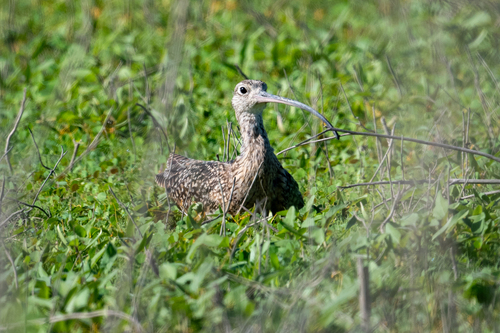 Long-billed Curlew
 Marbled Godwit
In breve
Il segno di campo più affidabile tra Long-billed Curlew e Marbled Godwit è il becco: quello del curlew è estremamente lungo, sottile e fortemente ricurvo verso il basso, mentre quello del godwit è lungo ma più dritto con una leggera curvatura verso l'alto e una base rosata. In volo, entrambi mostrano toni ricchi di cannella sotto le ali, ma quelli del godwit sono particolarmente evidenti come rivestimenti delle ali di un brillante colore cannella. Il curlew è visibilmente più grande e massiccio, con un collo più lungo e un becco più esagerato. Entrambe le specie condividono un piumaggio complessivamente marrone, striato, ma un'attenta attenzione alla struttura e alla forma del becco risolverà la maggior parte delle confusioni sul campo, specialmente a distanza o tra gli immaturi.
Consigli di identificazione
- Forma e lunghezza del becco: La caratteristica diagnostica più importante. Long-billed Curlew ha un becco estremamente lungo, sottile e fortemente ricurvo verso il basso, spesso quasi il doppio della lunghezza della testa. Il becco del Marbled Godwit è lungo ma solo leggermente curvato verso l'alto, con una base rosata e una punta scura. Questo è visibile a grande distanza e in tutti i piumaggi.
- Dimensione e massa: Il curlew è molto più grande e pesante, con un collo visibilmente più lungo e un corpo più massiccio. Nei gruppi misti, i curlews sovrastano i godwits.
- Collo e testa: Il curlew ha un collo proporzionalmente più lungo e una testa più piccola, dando un aspetto più allungato. La testa e il collo del godwit sono più equilibrati e compatti.
- Colore della parte inferiore dell'ala in volo: Entrambi mostrano parti inferiori delle ali di colore cannella, ma quelle del godwit sono particolarmente brillanti e concentrate nei rivestimenti delle ali, lampeggiando un ricco arancio-cannella in volo. La parte inferiore dell'ala del curlew è di colore cannella ma meno appariscente e più diffusa.
- Colore delle gambe: Il godwit ha lunghe gambe blu-grigie, che possono risaltare in buona luce. Le gambe del curlew sono meno appariscenti e non così distintamente colorate.
- Schema del dorso e dei fianchi: Il dorso del godwit è più pesantemente maculato e il petto/i fianchi sono distintamente barrati. Le parti inferiori del curlew sono più uniformemente di un pallido colore cannella, con una corona striata.
- Colore del becco: Il becco del godwit è distintamente rosa alla base con una punta scura, soprattutto evidente a distanza ravvicinata. Il becco del curlew è tutto scuro.
- Postura di foraggiamento: Il curlew si nutre spesso con il suo lungo becco che si muove da un lato all'altro nel fango morbido o nell'erba, mentre il godwit può cercare prede a vista nell'erba corta.
- Silhouette in volo: Il lungo collo e il becco del curlew si proiettano bene oltre il corpo in volo, dando un aspetto allungato, quasi goffo. Il godwit è più compatto, con un becco più dritto e meno proiezione del collo.
- Differenze sessuali: Le femmine di curlew sono ancora più grandi e con becco più lungo rispetto ai maschi, ma entrambi i sessi sono facilmente separabili dal godwit per struttura.
- Contesto dell'habitat: Il curlew è più probabile trovarlo in praterie secche o campi aperti, specialmente in stagione di nidificazione, mentre il godwit è più legato a fanghi umidi e paludi, ma entrambi si sovrappongono ampiamente durante la migrazione e l'inverno.
- Confusione stagionale: In inverno, entrambe le specie possono essere trovate insieme su fanghi costieri; la struttura e la forma del becco rimangono i migliori punti di separazione.
- Confusione giovanile: Non sono descritti schemi distintivi delle ali giovanili per nessuna delle due specie, quindi fare affidamento sulla struttura e sul becco anche per gli immaturi.
- Voce: Non trattata in dettaglio nelle fonti; non fare affidamento sulle vocalizzazioni per la separazione in questa coppia.
- Trappole: A lunga distanza, un godwit con il becco inclinato verso il basso può sembrare superficialmente un curlew, ma il becco non è mai così lungo o così profondamente curvato. Il becco di un curlew è sempre drammaticamente più lungo e più curvato di qualsiasi godwit.
Taglia
Long-billed Curlew è sostanzialmente più grande e pesante di Marbled Godwit. Il curlew pesa in media circa 699 g [wikidata], con una lunghezza di 50–65 cm e un'apertura alare di 62–90 cm [wikipedia]. Marbled Godwit è più piccolo, con una lunghezza di 40–50 cm e un'apertura alare di 70–88 cm, e le femmine pesano in media circa 391 g [wikipedia]. Sul campo, i curlews appaiono più massicci, con un collo più lungo e un becco proporzionalmente molto più lungo. I godwits, pur essendo grandi per uccelli di riva, sono comunque visibilmente più snelli e leggeri rispetto ai curlews.
Piumaggio
-
Schema delle ali giovanili/immaturi: Entrambe le specie mostrano toni di cannella nella parte inferiore dell'ala in volo, ma quelle del Marbled Godwit sono particolarmente brillanti e evidenti come rivestimenti delle ali di un ricco colore cannella. Anche il Long-billed Curlew mostra parti inferiori delle ali di colore cannella, ma l'effetto è meno appariscente e più diffuso. Non sono menzionati pannelli superiori neri o bianchi distintivi o bordi posteriori per nessuna delle due specie a qualsiasi età.
-
Adulti: Entrambe le specie hanno parti superiori marroni, striate e parti inferiori da pallido cannella a marrone. Le parti inferiori e il collo del curlew sono di un colore cannella più pallido e uniforme, mentre il petto e i fianchi del godwit sono barrati e il dorso è più pesantemente maculato. Le gambe del godwit sono blu-grigie e risaltano, mentre quelle del curlew sono meno appariscenti. Il becco del godwit è rosa alla base con una punta scura, mentre quello del curlew è completamente scuro e molto più lungo.
-
Sesso/stagione: Le femmine di curlew sono ancora più grandi e con becco più lungo rispetto ai maschi, ma altrimenti le differenze nel piumaggio sono sottili. I sessi del godwit sono simili nel piumaggio, con le femmine leggermente più grandi e con becco più lungo.
Comportamento
Entrambe le specie si nutrono sondando nel fango, nelle paludi e sulle spiagge, ma il Marbled Godwit è più probabile vederlo mentre cerca insetti nell'erba corta a vista. Entrambe le specie possono essere viste riposare in aree aperte, spesso in piedi su una gamba. In volo, i curlews mostrano un volo più languido e ondulato con un lungo collo e becco in proiezione, mentre i godwits sono più diretti e compatti. I curlews mostrano voli di corteggiamento elaborati nei terreni di nidificazione, ma questo è raramente un punto di separazione sul campo al di fuori della stagione di nidificazione.
Habitat
Entrambe le specie nidificano in praterie e migrano verso fanghi costieri e spiagge in inverno. Il Long-billed Curlew nidifica nel centro-ovest del Nord America e sverna principalmente verso sud e verso la costa. Il Marbled Godwit nidifica nel Canada centrale, nel nord-centrale degli Stati Uniti e in Alaska (per L. f. beringiae), svernando lungo le coste meridionali degli Stati Uniti e fino in Sud America. Nei gruppi misti, i curlews sono più probabili trovarsi in praterie più secche o campi aperti, mentre i godwits sono più legati a fanghi umidi e paludi, ma c'è una considerevole sovrapposizione nella migrazione e nell'inverno.
Long-billed Curlew · Marbled Godwit · I miei uccelli difficili